


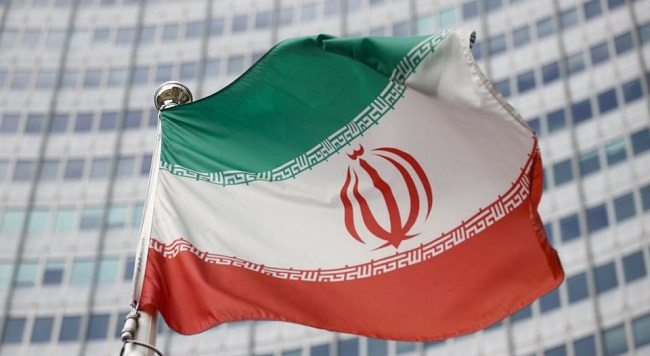
Iran has said it was not planning to attend the next round of talks with the United States in Pakistan, amid escalating tensions over a naval blockade and renewed military confrontations.
State media on Sunday quoted Iranian sources as saying “there are currently no plans to participate in the next round of Iran-US talks,” despite moves by US President Donald Trump to dispatch negotiators to Pakistan on Monday.
The development followed heightened friction between both countries, with the ongoing US blockade of Iranian ports emerging as a major sticking point. The situation worsened after an American destroyer fired on and seized an Iranian vessel that allegedly attempted to evade the blockade.
Tehran has vowed retaliation, with the Tasnim news agency reporting that Iran sent drones toward US military ships after its vessel was intercepted.
Earlier, the Fars and Tasnim news agencies, citing anonymous sources, said “the overall atmosphere cannot be assessed as very positive,” stressing that lifting the US blockade remains a key precondition for any meaningful negotiations.
Similarly, state-run IRNA pointed to Washington’s “unreasonable and unrealistic demands,” noting that “in these circumstances, there is no clear prospect of fruitful negotiations.”
Iran, the United States, and Israel are approaching the end of a two-week ceasefire that halted hostilities triggered by US-Israeli strikes on Iran on February 28. So far, only one round of talks—a 21-hour session held in Islamabad on April 11—has taken place, ending without a breakthrough.
Trump, however, expressed optimism, saying, “We’re offering a very fair and reasonable DEAL, and I hope they take it,” while also renewing threats against Iran’s infrastructure if an agreement is not reached.
The US president has faced mounting pressure to ease tensions after Iran moved early in the conflict to block the Strait of Hormuz, a vital global energy route responsible for transporting a significant share of the world’s oil and liquefied natural gas.
In response, Washington imposed a naval blockade on Iranian ports aimed at cutting off Tehran’s oil revenues. On Sunday, Trump disclosed that an Iranian-flagged cargo ship, Touska, attempted to breach the blockade.
“A massive ship tried to get past our Naval Blockade, and it did not go well for them,” Trump said, adding that a US destroyer forced the vessel to stop “by blowing a hole in the engine room.” He further stated that US Marines had taken custody of the ship.
According to Trump, the vessel is under US Treasury sanctions “because of prior history of illegal activity.”
Reacting, Iran’s ISNA news agency quoted a military spokesperson as warning that “the armed forces of the Islamic Republic of Iran will soon respond and retaliate against this armed piracy and the US military.”
Tasnim also reported that Iran deployed drones toward US naval forces following the seizure of the vessel.
Although Iran briefly reopened the Strait of Hormuz on Friday following a ceasefire between Israel and Hezbollah in Lebanon, it shut the route again the next day in protest against the continued US blockade.
Iran’s Revolutionary Guards warned that any unauthorised passage through the strait “will be considered cooperation with the enemy, and the offending vessel will be targeted.”
Iranian foreign ministry spokesman Esmaeil Baqaei described the blockade as “a violation” of the ceasefire and “illegal collective punishment of the Iranian people.”
Shipping activity in the strait has since dwindled, with tracking data showing the waterway largely empty after a brief window that allowed a handful of oil and gas tankers to pass.
Meanwhile, security has been intensified in Islamabad ahead of the planned talks. Authorities have announced road closures and traffic restrictions in both the capital and neighbouring Rawalpindi.
A White House official disclosed that the US delegation, expected to arrive Monday evening, would be led by Vice President JD Vance and include Middle East envoy Steve Witkoff and senior adviser Jared Kushner.
A major point of contention remains Iran’s stockpile of near-weapons-grade enriched uranium. Trump claimed on Friday that Iran had agreed to hand over about 440 kilograms of the material.
“We’re going to get it by going in with Iran, with lots of excavators,” he said.
However, Iran’s foreign ministry dismissed the claim, insisting the stockpile “is not going to be transferred anywhere” and that surrendering it “to the US has never been raised in negotiations.”