

An international civil society organisation (CSO), Global Rights, has urged the Corporate Affairs Commission (CAC), Senate President; Senator Godswill Akpabio, Speaker of the House of Representatives; Rt. Hon. Abbas Tajudeen, and Attorney General of the Federation; Lateef Fagbemi, to resolve some provisions of the Company and Allied Matters Act (CAMA) 2020 they consider unfair.
Apart from Global Rights, TAP Initiative, the Open Society Initiative for West Africa (OSIWA) and Network of University Legal Aid Institutions (NULAI) Nigeria have also challenged certain provisions of the CAMA in a public interest litigation, insisting that they undermine the constitutional right to a fair hearing in Nigeria.
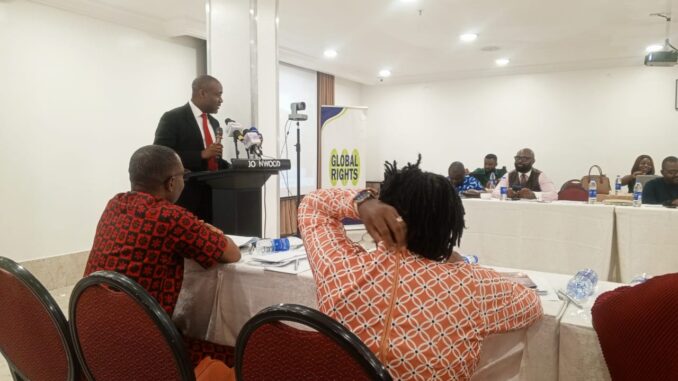
During a media roundtable on Friday in Abuja, the groups said some powers conferred on the CAC conflict with constitutional protections such as freedom of association, the right to fair hearing, and the safeguarding of civic space.
Speaking at the event, a project manager at Global Rights, Noya Sedi, said the legal action goes beyond the interests of CSOs, saying that any law capable of restricting civil liberties—whether affecting individuals or groups—should concern all Nigerians.
“The goal of the lawsuit is to ensure that regulatory authority, under CAMA 2020, remains within constitutional boundaries and does not unjustifiably limit the independence and functioning of incorporated trustees and non-profits,” she said.
The CSOs are kicking against specific sections of CAMA 2020, especially Section 824, which empowers the CAC to classify associations; Section 824(4), which grants it authority over objections to the registration of trustees; and Sections 850(1)(d) and 850(2)(e), which deal with the dissolution of organisations and withdrawal of registration.
Though the case initially suffered a setback at the Federal High Court in October 2025, the legal team has proceeded to appeal the ruling.
Speaking with journalists at the roundtable, Legal counsel to the plaintiffs, Prof. Sam Erugo (SAN), said the aforementioned provisions violate constitutional safeguards by allowing the CAC to penalise organisations without judicial oversight.
He said that disputes should be resolved through litigation rather than administrative sanctions, warning that unchecked powers could be misused.
He said the lower court dismissed the case on the grounds that the plaintiffs lacked locus standi—meaning they failed to demonstrate a direct personal impact from the contested provisions.
The SAN said courts often rely on such technical grounds in public interest cases to avoid delving into substantive issues, sometimes out of caution not to conflict with other branches of government.
He argued that the Constitution permits individuals to seek judicial protection where their rights may be threatened, even prospectively.
The organisations noted that, following a detailed review of the judgment, they filed a notice of appeal on January 2, with records subsequently transmitted to the Court of Appeal on January 29.
Also speaking, Barrister Innocent Lagi, said the law effectively makes the CAC the complainant, prosecutor, and judge in matters involving civil society groups, describing this concentration of authority as inconsistent with constitutional principles of fair hearing.
He said that any organisation accused of wrongdoing should be entitled to have its case heard before an impartial court rather than being subjected to unilateral sanctions by the regulator, adding that penalties such as fines or dissolution should only follow a judicial determination of liability.
Lagi further criticised the current practice, saying it allows the CAC to impose punishments without due process, thereby undermining a fundamental principle of justice, even as he questioned how mitigating circumstances could be considered in the absence of a proper hearing.