

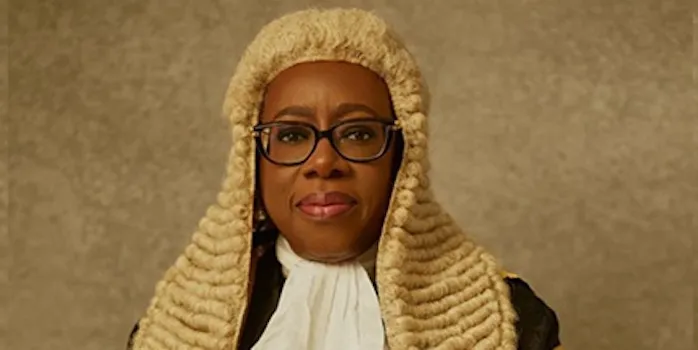
The Chief Justice of Nigeria, Justice Kudirat Kekere-Ekun, has urged judges and lawyers to maintain integrity in handling political disputes as Nigeria approaches the 2027 general elections, warning against conduct capable of undermining public confidence in the judiciary.
The CJN spoke on Monday at a special session of the Supreme Court marking the commencement of the 2026/2027 legal year in Abuja.
In her address, Kekere-Ekun said the judiciary must handle electoral disputes with impartiality and fidelity to the law, noting that the courts’ decisions would be subject to public scrutiny.
“Elections inevitably generate heightened political activity and strong emotions. They also bring before the courts disputes that may have significant consequences for individuals, political parties and the country.
“Judicial officers must remain conscious that every word they speak and every action they take during an electoral period will be subjected to scrutiny.
“They must therefore exercise restraint, avoid political association or conduct capable of creating an appearance of partiality and remain firmly within the boundaries imposed by their oath and the Constitution,” the CJN stated.
Kekere-Ekun warned that forum shopping, whether through filing cases in courts perceived to be favourable to a party or instituting multiple suits seeking substantially similar reliefs, could undermine the administration of justice.
She also urged lawyers to exercise greater professional responsibility when instituting proceedings arising from political and electoral disputes, particularly where related cases were already pending before other courts.
“There is also a need for greater professional responsibility by lawyers in the institution of proceedings arising from political and electoral disputes.
“Forum shopping, whether by the deliberate choice of commencing an action in a court or division perceived to be more favourable to a particular party or by the institution of multiple proceedings seeking substantially similar reliefs, can result in conflicting orders, undermine orderly judicial process and expose the Judiciary to avoidable embarrassment.
“It can also create the unfortunate impression that parties are seeking not justice according to law but a particular outcome from a particular court,” she said.
The CJN further warned that an excessive focus on political disputes could delay the determination of other cases, stressing that the judiciary must remain accessible to all litigants, regardless of the political prominence of their cases.
“There is, moreover, a broader institutional concern. It does not augur well for our judicial system or the administration of justice if the courts become so overwhelmed by political disputes that other cases in their dockets are consequently delayed or denied the timely attention they require.
“The judiciary must remain available to all litigants, and the urgency or public prominence of political litigation should not come at the expense of other legitimate claims awaiting determination,” she stated.