

Thursday marks one year since US President Donald Trump ordered the country’s withdrawal from the World Health Organisation (WHO) just hours after taking office.
According to an agreement between the US and the Geneva-based UN agency, the withdrawal is due to take effect on Thursday, after the US completed a mandatory one-year notice period.
Theoretically, one of the conditions for withdrawal specified in the agreement has not been met, as the US failed to pay its contributions in full as agreed.
However, the WHO has no means of demanding the money or refusing the withdrawal.
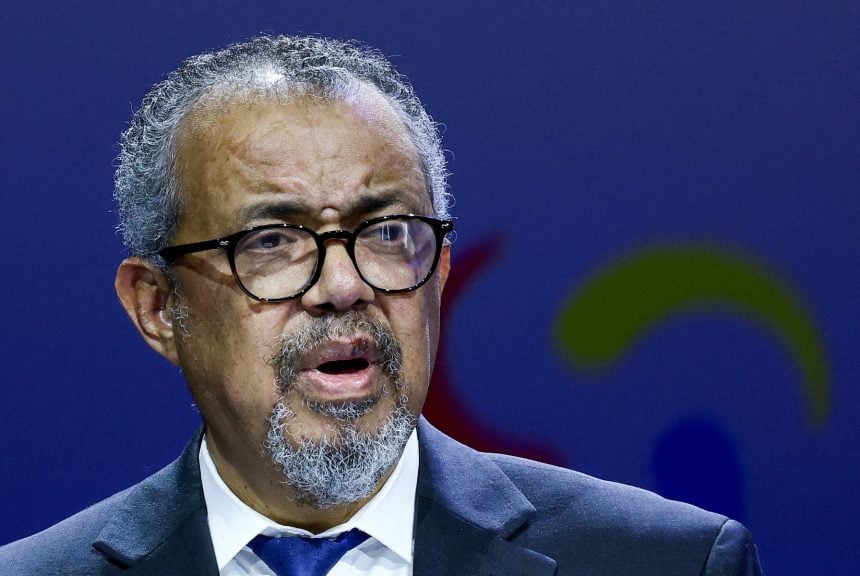
“I hope that the US will reconsider its decision and rejoin WHO,” Director-General Tedros Ghebreyesus said in Geneva, adding that everyone loses from the move.
“Withdrawal is a loss for the US and also a loss for the rest of the world,” Tedros said, adding that it is not about money but about cooperation and solidarity.
Among other things, the WHO operates early warning systems for outbreaks of potentially dangerous diseases.
It also coordinates the composition of flu vaccines for the coming season after analysing pathogens circulating worldwide.
The US is no longer participating in either of these activities.
The rest of the world must now do without important US expertise.
Trump’s anger with the WHO dates back to the coronavirus pandemic.
He attempted to have the US leave the organisation during his first term in office.
However, his successor, Joe Biden, became president before the one-year deadline was reached and reversed Trump’s order.
Trump accuses the WHO of misusing funds and mishandling the pandemic.
After Trump returned to the White House, the US did not pay outstanding membership fees for 2024 or 2025, totalling around $280 million.
For years, the US was by far the largest contributor.
It consistently paid many times its fixed membership fee voluntarily, often covering more than 15 per cent of the organisation’s budget.
The WHO has been forced to implement a strict austerity programme.
By the middle of 2026, the number of employees is expected to have decreased by around a fifth to approximately 7,300, compared with the beginning of 2025. The budget has been cut by a similar amount.