
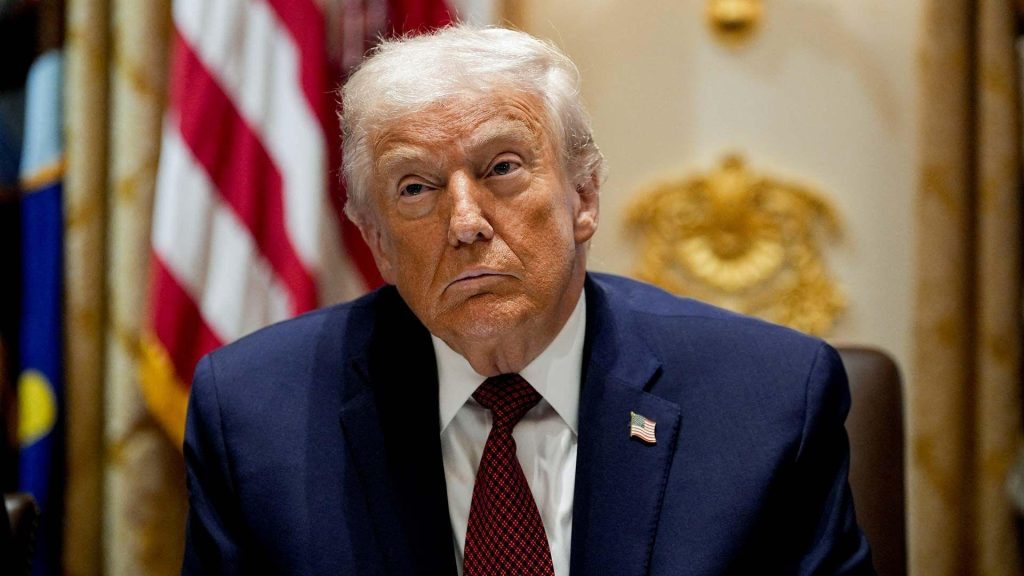
United States Customs and Border Protection, CBP, said it will halt the collection of tariffs that were issued under the International Emergency Economic Powers Act, IEEPA, following the Supreme Court judgment that struck down President Donald Trump’s global tariffs.
The agency said in a bulletin that it would end the collection of emergency tariffs issued by Trump under the Act after 12 a.m. ET today.
The Supreme Court had ruled last week that Trump violated federal law through his unilateral imposition of the tariffs.
Trump responded by railing against the justices who ruled against him and announced he would use a separate authority to impose a new 15 per cent global tariff.
According to the agency, duties imposed by Trump under Executive Order (EO) 14257, which relates to regulating imports with a reciprocal tariff, EO 14193, relating to duties imposed by the administration to address the flow of illicit drugs across the US’ northern border, would no longer be in effect, beginning today.
Others to be halted include duties imposed under EO 14194 that introduced duties to address the “situation at our southern border”, EO 14323, addressing threats to the US by the government of Brazil and EO 14329, which relates to duties imposed by the administration to addressing threats to the US by the government of the Russian Federation.
In its ruling last Friday, the the US Supreme Court held that Trump exceeded his authority when he relied on law reserved for national emergencies to impose the tariffs.
They held that the president required congressional approval to impose levies on imports, arguing that the emergency authority Trump attempted to rely on “falls short.”
They, however, stated that the ruling applied to only his Liberation Day tariffs, rather than individual tariffs he imposed on specific countries or products.
Delivering the ruling, Chief Justice John Roberts, said allowing Trump’s administration to prevail with its tariffs agenda “would replace the longstanding executive-legislative collaboration over trade policy with unchecked Presidential policymaking.”
He dismissed the argument from the administration that the president had the power to use tariffs to regulate commerce
“The president asserts the extraordinary power to unilaterally impose tariffs of unlimited amount, duration, and scope,” Roberts wrote for the court.
“In light of the breadth, history, and constitutional context of that asserted authority, he must identify clear congressional authorization to exercise it.
“The President must point to clear congressional authorization to justify his extraordinary assertion of the power to impose tariffs. He cannot,” Roberts said.
“When Congress grants the power to impose tariffs, it does so clearly and with careful constraints,” Roberts wrote. “It did neither here.”
“We claim no special competence in matters of economics or foreign affairs,” Roberts wrote. “We claim only, as we must, the limited role assigned to us by Article III of the Constitution. Fulfilling that role, we hold that IEEPA does not authorize the president to impose tariffs.”