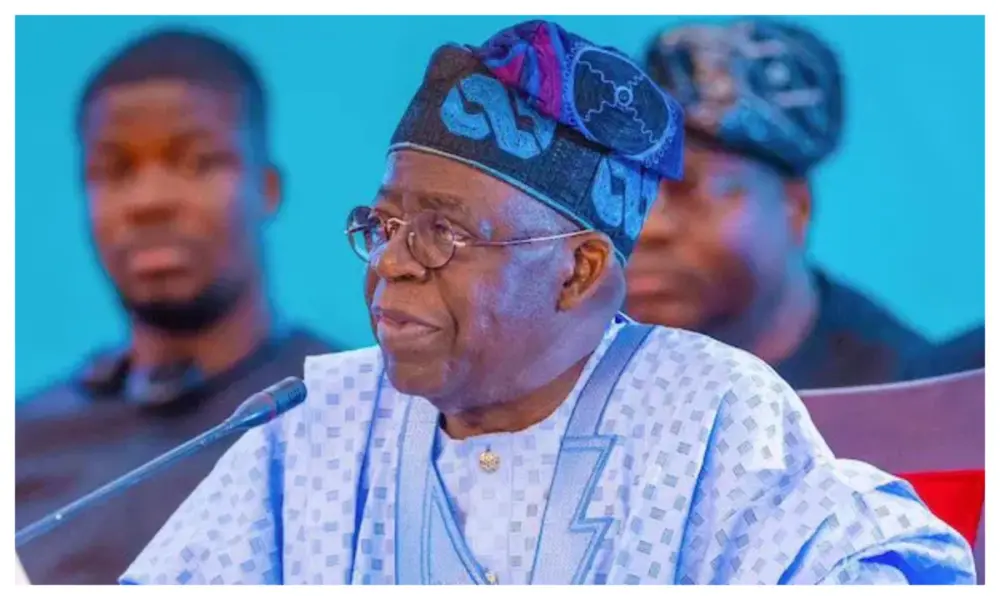
Despite decades of failed attempts at overhauling Nigeria’s flawed 1999 Constitution, President Bola Tinubu and key National Assembly leaders once again pledged commitment to reforms—offering lofty rhetoric but little in the way of concrete guarantees.
Speaking through the Secretary to the Government of the Federation (SGF), Senator George Akume, at a National Public Hearing in Abuja, Tinubu framed the exercise as a “golden opportunity” to improve governance, deepen federalism, and protect citizens’ rights. But for many observers, the pronouncements are beginning to ring hollow after repeated cycles of reform talk with minimal follow-through.
“The Constitution is the supreme law of the land. It is not static, but a living document that must continually respond to the realities, aspirations, and challenges of our people,” Akume said on behalf of Tinubu.
“I urge all participants to approach this exercise with a spirit of patriotism, responsibility, and constructive dialogue,” he added, claiming the administration would give the outcome “the deserved attention.”
But critics argue that such declarations have become predictable political theatre. Successive governments have used constitutional reform panels to placate public frustration while sidestepping fundamental changes, especially around decentralization, local government autonomy, and electoral accountability.
The President also praised the committee for engaging a wide range of stakeholders, but offered no clear timeline for actual implementation—raising further doubts about the administration’s seriousness.