

By Chinelo Audrey Ofoegbunam
Introduction
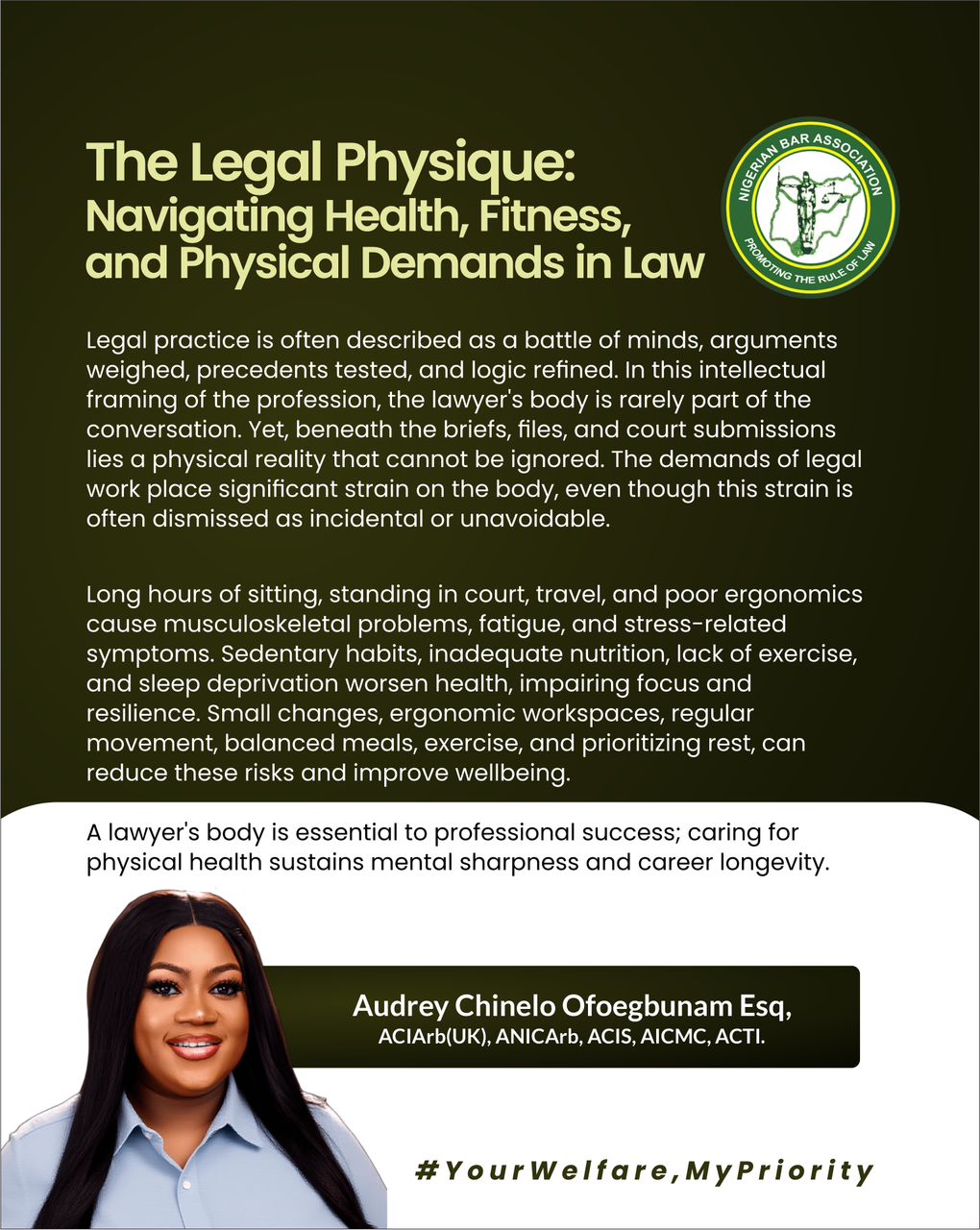
Legal practice is often described as a battle of minds—arguments weighed, precedents tested, and logic refined. In this intellectual framing of the profession, the lawyer’s body is rarely part of the conversation. Yet, beneath the briefs, files, and court submissions lies a physical reality that cannot be ignored. The demands of legal work place significant strain on the body, even though this strain is often dismissed as incidental or unavoidable.
The physical wellbeing of a lawyer is deeply connected to professional performance and long-term career sustainability. Concentration, stamina, clarity of thought, and emotional regulation are all influenced by physical health. When the body is neglected, productivity declines, fatigue deepens, and the risk of long-term health complications increases. Recognizing the body as an essential tool of the profession is the first step toward building a healthier, more sustainable legal practice.
1. The Physical Reality of Legal Work
The daily routine of a lawyer is physically demanding in subtle but persistent ways. Long hours are spent sitting at desks, drafting documents, reviewing files, or working behind computer screens. These periods are often followed by extended hours of standing in courtrooms, sometimes without adequate seating or breaks. The constant shift between sitting and standing, combined with lengthy commutes to courts and offices, places continuous strain on the body.
Courtroom practice introduces its own physical challenges. Lawyers may stand for prolonged periods while addressing the court, often in rooms with poor ventilation or acoustics. Raising the voice to be heard over inadequate sound systems leads to vocal strain, while maintaining formal posture for extended durations contributes to muscular tension. In busy court schedules, lawyers move rapidly between courtrooms, offices, and meetings, rarely pausing long enough to rest or stretch.
Travel fatigue further compounds these demands. Lawyers frequently commute long distances, sometimes across cities or states, to attend court sessions or client meetings. Early departures, late returns, irregular meals, and disrupted sleep patterns become routine. Over time, these physical stressors accumulate, quietly eroding energy levels and physical resilience.
2. Sedentary Practice and Its Hidden Consequences
Despite the appearance of constant movement, much of legal work is sedentary. Hours spent drafting pleadings, reviewing documents, conducting research, or attending virtual meetings involve prolonged sitting and screen exposure. Poor posture becomes habitual—rounded shoulders, strained necks, and stiff lower backs are common complaints among lawyers.
These physical habits carry hidden consequences. Chronic back pain, neck stiffness, wrist discomfort, and eye strain develop gradually, often ignored until they interfere with daily functioning. Musculoskeletal disorders linked to repetitive movements and poor ergonomics can become long-term conditions, affecting comfort and productivity.
Beyond musculoskeletal issues, prolonged inactivity poses serious cardiovascular risks. A sedentary lifestyle contributes to weight gain, reduced circulation, elevated blood pressure, and increased risk of heart disease. The absence of regular movement weakens stamina and reduces overall physical endurance, making long workdays even more exhausting. What appears to be a purely mental profession thus quietly taxes the body, underscoring the need for intentional physical care within legal practice.
3. Stress in the Body – When Mental Pressure Becomes Physical
In legal practice, stress is often treated as a mental state—pressure to meet deadlines, manage clients, or win cases. Yet stress rarely remains confined to the mind. Over time, it settles into the body, manifesting in ways that are both subtle and disruptive. Persistent fatigue, frequent headaches, muscle tension, digestive discomfort, and sleep disturbances are common physical signals of an overburdened legal mind.
The legal profession operates in a constant state of urgency. Tight timelines, adversarial encounters, and high-stakes consequences place the nervous system in a near-continuous state of alert. When the body remains in this heightened mode for extended periods, it struggles to fully relax. Muscles remain tense, breathing becomes shallow, and restorative sleep becomes elusive. Even during periods of rest, the mind replays arguments, deadlines, and unresolved matters, preventing genuine physical recovery.
This illustrates the powerful mind–body connection inherent in high-pressure professions. Mental strain triggers physical responses, and unresolved physical tension feeds back into mental exhaustion. Over time, chronic stress weakens the immune system, leaving lawyers more susceptible to illness and prolonged recovery periods. Energy levels decline, focus diminishes, and what once felt manageable begins to feel overwhelming. Without deliberate stress management, the body becomes the silent casualty of professional ambition.
4. Nutrition Under Pressure
Few aspects of a lawyer’s physical wellbeing are as consistently neglected as nutrition. Long court days, back-to-back meetings, and urgent deadlines often push proper meals aside. Breakfast is skipped in the rush to court, lunch is replaced with quick snacks or fast food, and dinner arrives late—if at all. Eating becomes reactive rather than intentional.
Court schedules are particularly disruptive to healthy routines. Lawyers may spend entire days moving between courtrooms, waiting for matters to be called, or dealing with unexpected adjournments. Access to nutritious food is limited, and convenience takes priority over quality. Over time, reliance on processed foods, sugary drinks, and caffeine becomes the norm rather than the exception.
The impact of poor nutrition extends beyond physical appearance or weight. Inadequate nourishment affects concentration, memory, and stamina—qualities essential to effective legal practice. Blood sugar fluctuations contribute to irritability and mental fog, while dehydration intensifies fatigue and headaches. A poorly fueled body struggles to sustain long hours of focused thinking, increasing the risk of errors and emotional exhaustion. Nutrition, though often overlooked, plays a critical role in maintaining the clarity and resilience required of the modern lawyer.
5. Exercise as Resistance – Reclaiming Strength in a Demanding Profession
In a profession that constantly demands mental sharpness and emotional control, physical exercise often feels optional—something to be postponed until “things slow down.” For many lawyers, that moment never arrives. Exercise becomes a casualty of deadlines, court sittings, and the unspoken expectation that work must always come first. Yet, in reality, movement is not a luxury; it is a form of resistance against the physical and mental erosion of legal practice.
Regular physical activity serves as one of the most effective buffers against stress, fatigue, and burnout. Exercise improves circulation, strengthens muscles strained by long hours of sitting or standing, and releases endorphins that counter anxiety and emotional exhaustion. For lawyers who spend their days under pressure, movement becomes a way to discharge tension that the body silently accumulates.
Importantly, exercise does not have to mirror athletic ideals or consume large blocks of time. A brisk walk after court, stretching between drafting sessions, home workouts, or even climbing stairs instead of using elevators can restore a sense of bodily agency. These small acts reconnect lawyers with their physical strength in a profession that often reduces the body to a mere vehicle for the mind.
By reframing exercise as part of professional survival rather than personal indulgence, lawyers can reclaim control over their health. In doing so, they strengthen not just their bodies, but their endurance, focus, and capacity to remain present in a demanding vocation that requires both mental clarity and physical resilience.
6. Rest, Recovery, and Sleep Deprivation
In legal culture, sleep deprivation is often worn as a badge of honor. Late nights preparing briefs, early mornings in court, and weekends sacrificed to urgent client demands are quietly normalized. Many lawyers accept chronic exhaustion as an unavoidable part of professional success, rarely pausing to question the long-term cost of this pattern.
Yet rest is not a luxury—it is a biological necessity. Sleep is the body’s primary repair mechanism. It is during rest that muscles recover, hormones regulate, memory consolidates, and cognitive clarity is restored. Without adequate sleep, reaction time slows, judgment becomes impaired, and emotional resilience weakens. A lawyer operating on constant fatigue may still appear functional, but beneath the surface, physical and mental systems are steadily deteriorating.
The challenge lies not only in workload but in boundaries. Many lawyers struggle to disengage from work even when the day ends. Phones remain within reach, emails are checked late into the night, and mental rehearsal of unresolved matters disrupts rest. Protecting recovery requires intentional limits—designated work cut-off times, technology-free periods, and the courage to prioritize sleep without guilt. Sustainable legal practice depends not on how little rest one can survive on, but on how well one recovers.
7. Preventive Health and Early Warning Signs
The body often whispers before it screams. Persistent back pain, recurring headaches, unexplained fatigue, frequent infections, or difficulty concentrating are early signals that something is amiss. Preventive health is about listening to these signals before they escalate into serious illness or burnout. Unfortunately, lawyers are trained to endure rather than attend to discomfort.
Many in the profession postpone medical attention, attributing symptoms to temporary stress or “just part of the job.” Court appearances take priority over check-ups, and deadlines seem more urgent than health concerns. This tendency to ignore early warning signs is compounded by a culture that prizes resilience and stoicism, often equating self-care with weakness.
Regular health screenings, physical awareness, and honest self-assessment are essential tools for longevity in legal practice. Preventive care is not an interruption to productivity; it is an investment in it. A lawyer who understands their physical limits, responds early to symptoms, and maintains routine health checks is better positioned to serve clients effectively over the long term. Ignoring the body does not make its needs disappear—it only delays the moment when they demand urgent attention.
8. Workplace Design and Physical Wellbeing
The physical environments in which lawyers work quietly shape their health over time. From cramped chambers with poorly positioned desks to courtrooms with broken seating and inadequate ventilation, workplace design often ignores the physical needs of legal practitioners. Many lawyers spend years working at desks that strain the spine, staring at screens positioned at unhealthy angles, or standing for long hours in courtrooms never designed with ergonomics in mind.
Yet small, thoughtful adjustments can significantly reduce physical strain. Ergonomic chairs that support posture, adjustable desks, properly positioned screens, and adequate lighting can prevent chronic pain and fatigue. Even simple changes—such as scheduled breaks, access to drinking water, or the ability to sit during prolonged proceedings—can improve daily comfort and long-term health.
Beyond physical tools, workplace culture plays a powerful role in physical wellbeing. Offices that discourage breaks, glorify exhaustion, or equate long hours with dedication indirectly harm their lawyers. In contrast, environments that normalize movement, rest, and self-care foster healthier, more productive professionals. When physical welfare is embedded into workplace norms, lawyers are empowered to care for their bodies without fear of judgment or professional penalty.
9. Movement, Balance, and Sustainable Practice
Law was never meant to be practiced in stillness. Yet modern legal work often traps lawyers in prolonged immobility—sitting at desks, driving long distances, or standing motionless in court. Over time, this lack of movement stiffens muscles, slows circulation, and erodes physical vitality. Sustainable legal practice requires reintroducing movement as a natural part of the working day.
Movement does not require dramatic lifestyle changes. Short walks between tasks, stretching during breaks, standing meetings, or gentle exercises before and after court sessions can counteract the effects of sedentary work. These moments of movement restore energy, sharpen focus, and reduce physical tension. They also serve as mental resets, allowing lawyers to return to their work with greater clarity.
Redefining productivity is central to this shift. True efficiency is not measured by hours spent seated or exhaustion endured, but by sustained performance over time. A lawyer who prioritizes balance—between work and rest, stillness and movement—is better equipped for the long journey of legal practice. Longevity in the profession belongs not to those who burn brightest and fastest, but to those who learn how to pace themselves.
Conclusion
The legal profession may be driven by intellect, but it is sustained by the body. Physical wellbeing underpins concentration, resilience, and professional longevity. Lawyers who care for their bodies are not indulging themselves—they are safeguarding their capacity to serve, think, and lead effectively.
By embracing movement, rest, preventive care, and healthier work environments, lawyers can practice without guilt and with greater balance. In a profession defined by endurance, the true measure of success lies not in how much one can endure, but in how wisely one preserves themselves. A healthy body is not separate from legal excellence—it is the foundation upon which it stands.
Connect with me on Social Media:
X: CIAO Legal
LinkedIn: Chinelo Audrey Ofoegbunam
Instagram: CIAO Legal
Facebook: Chinelo Ofoegbunam