

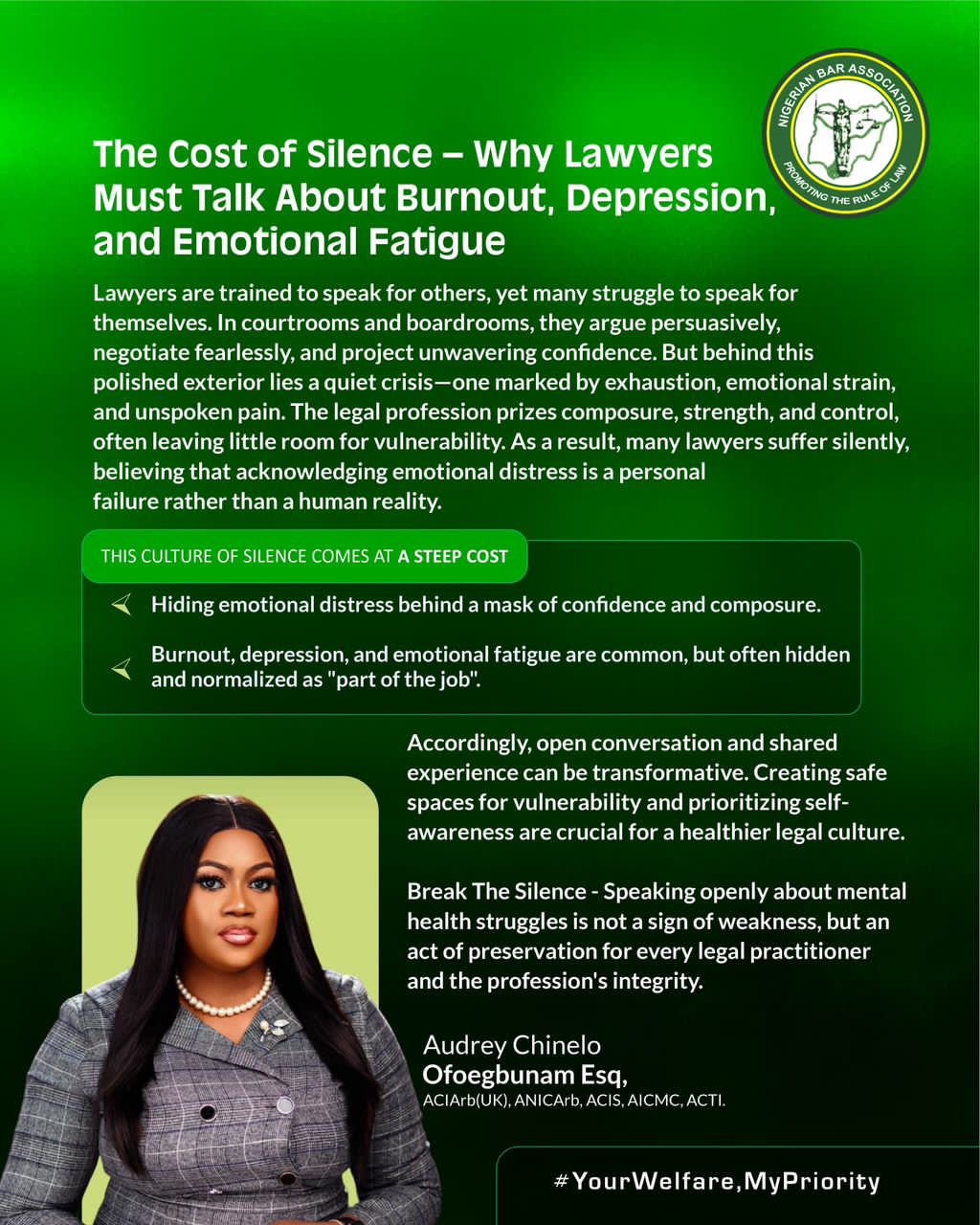
By Chinelo Audrey Ofoegbunam
Introduction
Lawyers are trained to speak for others, yet many struggle to speak for themselves. In courtrooms and boardrooms, they argue persuasively, negotiate fearlessly, and project unwavering confidence. But behind this polished exterior lies a quiet crisis—one marked by exhaustion, emotional strain, and unspoken pain. The legal profession prizes composure, strength, and control, often leaving little room for vulnerability. As a result, many lawyers suffer silently, believing that acknowledging emotional distress is a personal failure rather than a human reality.
This culture of silence comes at a steep cost. Burnout creeps in unnoticed. Depression disguises itself as productivity. Emotional fatigue becomes normalized as “part of the job.” When struggles are hidden, they grow heavier, more isolating, and more dangerous. The silence surrounding mental health in legal practice does not protect the profession—it erodes it from within. Talking about these issues is not a sign of weakness; it is an act of preservation, both for individual lawyers and for the integrity of the profession itself.
1. The Lawyer’s Code of Silence
From the earliest stages of legal training, lawyers are conditioned to maintain composure. The profession teaches precision, restraint, and emotional neutrality. Over time, these necessary professional skills harden into an unspoken rule: do not reveal struggle. Admitting emotional distress is often perceived as incompetence, fragility, or a lack of resilience.
This code of silence is reinforced by fear—fear of being judged by colleagues, losing clients’ confidence, or damaging one’s professional reputation. Many lawyers worry that acknowledging burnout or depression will mark them as unreliable or unfit for demanding work. As a result, they learn to mask distress behind efficiency, humor, or excessive productivity.
But silence does not eliminate suffering; it amplifies it. When lawyers suppress their emotional realities, they deny themselves the opportunity for support, understanding, and healing. The very culture that seeks to uphold professionalism inadvertently creates isolation, pushing lawyers to endure privately what could be managed collectively.
2. Burnout in Robes – When Passion Turns to Exhaustion
Burnout rarely arrives dramatically. It unfolds quietly, disguised as dedication. A lawyer who once felt energized by advocacy begins to feel numb. Tasks that once sparked interest now feel burdensome. The workday stretches endlessly, and rest no longer restores. Yet, many lawyers dismiss these signs as temporary fatigue, convincing themselves that perseverance will solve the problem.
Unlike ordinary tiredness, burnout is a state of emotional, mental, and physical depletion. It erodes motivation, concentration, and empathy. Lawyers experiencing burnout may become irritable, detached, or cynical, yet continue to function at a high level—making burnout difficult to recognize from the outside.
The danger lies in normalization. In a profession that glorifies long hours and relentless performance, burnout is often mistaken for commitment. But when passion turns into exhaustion, the lawyer’s wellbeing suffers, and the quality of legal service inevitably declines. Recognizing burnout early is not self-indulgence; it is professional responsibility.
3. Depression Behind the Desk
Depression within the legal profession often wears a professional mask. Many lawyers experiencing depression continue to meet deadlines, attend court, and deliver results. This “high-functioning” distress makes depression harder to detect and easier to dismiss—both by the lawyer and by those around them.
Unlike the stereotypes of withdrawal or inactivity, depression in lawyers may present as chronic fatigue, loss of joy, irritability, or a persistent sense of emptiness. Achievements no longer feel satisfying. Confidence fades quietly. The mind becomes a battleground of self-criticism and emotional heaviness, even as outward performance remains intact.
The tragedy of hidden depression is that silence delays help. Lawyers may convince themselves that they are simply stressed or that others have it worse. But untreated depression deepens over time, affecting judgment, relationships, and overall quality of life. A profession built on protecting rights must also protect its own practitioners by recognizing that mental health struggles are not professional failures—they are human experiences deserving of care and compassion.
4. Emotional Fatigue and the Weight of Constant Care
Beyond burnout and depression lies a quieter strain—emotional fatigue. Lawyers routinely absorb the anxieties, anger, fear, and trauma of their clients. Whether defending the accused, negotiating commercial disputes, or handling family breakdowns, lawyers are exposed to intense human emotion on a daily basis. Over time, this constant emotional engagement drains empathy and dulls emotional responsiveness.
Unlike physical exhaustion, emotional fatigue does not announce itself clearly. It shows up as detachment, irritability, or a growing sense of numbness. Lawyers may begin to feel disconnected from their work, their clients, and even themselves. The profession rewards composure, so this emotional depletion often goes unnoticed and untreated.
When emotional labour is not acknowledged or released, it accumulates. Lawyers begin to carry not only their own stress, but the unresolved emotional weight of others. Without intentional processing and support, emotional fatigue becomes a silent erosion of wellbeing—one that slowly undermines both personal satisfaction and professional effectiveness.
5. Why Silence Worsens the Problem
Silence is not neutral. In the context of emotional distress, silence intensifies suffering. When lawyers hide their struggles, they isolate themselves at the very moment when connection is most needed. What could be shared and softened becomes private and overwhelming.
Unspoken pain feeds self-doubt. Lawyers begin to believe they are alone in their struggles or that others are coping better. This perception fuels shame and discourages help-seeking. The longer distress remains hidden, the more it grows—often manifesting in physical symptoms, strained relationships, or declining performance.
Silence also distorts professional culture. When no one speaks openly, suffering appears rare rather than common. Younger lawyers assume emotional strain is something they must endure alone. Breaking silence does not create weakness; it creates visibility. And visibility creates the possibility of support, understanding, and change.
6. Breaking the Myth of the Invincible Lawyer
The legal profession has long celebrated the image of the invincible lawyer—unshaken, tireless, and emotionally impenetrable. While this myth may have once symbolized strength, it now acts as a barrier to well-being. The expectation of invulnerability discourages honesty and punishes humanity.
True resilience does not require emotional denial. It requires self-awareness, adaptability, and courage. Lawyers who acknowledge their limits are not less capable; they are more sustainable. Strength is not measured by how much one can endure in silence, but by the ability to seek support when needed.
Dismantling the myth of invincibility allows space for healthier professional identities. It encourages lawyers to value mental health alongside technical competence. When vulnerability is normalized, the profession becomes safer, kinder, and more resilient—benefiting both practitioners and the clients they serve.
7. The Power of Conversation and Shared Experience
Speaking openly about emotional struggles has a quiet but transformative power. When lawyers share their experiences of burnout, depression, or emotional fatigue, they dismantle the illusion that suffering is rare or shameful. Conversation reframes struggle as a shared professional reality rather than a personal failing.
Hearing another lawyer articulate feelings one has silently endured can be profoundly validating. It restores perspective, reduces self-blame, and reminds individuals that resilience is not the absence of struggle but the ability to confront it honestly. Peer conversations, whether formal or informal, become emotional first aid, offering understanding long before solutions are found.
In legal spaces where open dialogue is encouraged, empathy grows. Lawyers listen differently, support one another more intentionally, and create environments where well-being is recognized as integral to professional excellence.
8. Creating Safe Spaces Within the Profession
For meaningful conversations to occur, lawyers need safe spaces grounded in trust, confidentiality, and respect. These spaces may exist within law firms, mentorship circles, peer groups, or informal professional gatherings. What matters is not formality, but safety—the assurance that vulnerability will not be punished.
Safe spaces allow lawyers to speak without fear of judgment or professional consequences. They provide room for honesty, reflection, and mutual support. Over time, these environments foster stronger professional bonds and healthier workplace cultures.
Creating such spaces requires intentional effort and leadership. When senior lawyers model openness and compassion, they signal that well-being matters. The profession thrives when its members feel safe enough to be human.
9. Self-Awareness and Early Intervention
Resilience begins with self-awareness. Lawyers who regularly check in with their emotional state are better equipped to recognize early signs of burnout or depression. Subtle changes—persistent fatigue, loss of motivation, irritability, or emotional numbness—are often early warnings rather than personal shortcomings.
Early intervention prevents escalation. Seeking support at the first signs of distress is not an admission of failure; it is an investment in longevity. Whether through conversation, rest, or professional help, timely response protects both well-being and professional capacity.
By treating emotional check-ins as part of professional discipline, lawyers normalize care rather than crisis management.
10. Toward a Healthier Legal Culture
A healthier legal culture begins with honesty. When silence gives way to conversation, isolation gives way to community. The profession evolves from one that merely demands endurance to one that supports sustainability.
Changing culture requires collective commitment. Each conversation, each moment of empathy, each act of support contributes to a profession that values human well-being alongside intellectual excellence. Lawyers who speak openly do more than heal themselves; they create permission for others to do the same.
The future of legal practice depends not just on skill and knowledge, but on emotional sustainability.
Conclusion
Silence has a cost. It deepens burnout, isolates depression, and amplifies emotional fatigue. Conversation, by contrast, protects. It restores connection, reduces shame, and creates pathways to healing.
For lawyers, speaking about mental health is not a departure from professionalism—it is a reaffirmation of it. A profession dedicated to justice must also uphold care for its practitioners. When lawyers choose to speak, they choose strength, honesty, and collective resilience.
Breaking the silence does not weaken the profession; it strengthens it.
Connect with me on Social Media:
X: CIAO Legal
LinkedIn: Chinelo Audrey Ofoegbunam
Instagram: CIAO Legal
Facebook: Chinelo Ofoegbunam