
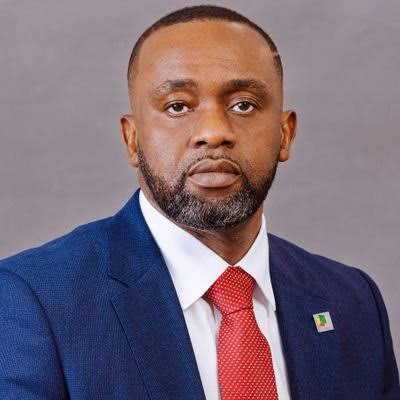
Former Chief Corporate Communications Officer of NNPC Ltd, Mr. Olufemi Soneye, has condemned a recent Canadian court decision labelling Nigeria’s two major political parties — the All Progressives Congress (APC) and the Peoples Democratic Party (PDP) — as terrorist organisations, warning that the ruling sets a “dangerous precedent” with far-reaching implications.
Soneye described the judgment as a “political earthquake” whose impact could “reverberate far beyond Canada’s borders,” cautioning that “if democratic nations don’t push back on this kind of overreach, they may one day find their own politics on trial in a foreign court.”
The controversy stems from a June 17, 2025 decision by Justice Phuong Ngo of the Federal Court of Canada, who upheld an earlier ruling by the Immigration Appeal Division (IAD) under Canada’s Immigration and Refugee Protection Act (IRPA). The IAD had denied asylum to Douglas Egharevba — a Nigerian who disclosed he had been a PDP member from 1999 to 2007 before joining the APC until 2017 — citing both parties’ alleged involvement in political violence, subversion of democracy, and electoral bloodshed.
According to court records, the IAD’s conclusion was based in part on incidents during the 2003 state elections and 2004 local government polls, where the PDP was alleged to have engaged in ballot stuffing, voter intimidation, and the killing of opposition supporters. Egharevba, who relocated to Canada in September 2017, was deemed inadmissible on grounds of security concerns tied to his political affiliations.
Reacting to the ruling, Soneye warned that the implications could extend beyond Canada, affecting Nigerians in the diaspora who have ever been affiliated with any political party.
“For Nigerians abroad, especially those who have ever held a party membership card, it signals heightened scrutiny, denied visas, and rejected asylum claims not only in Canada but potentially in other Western democracies that may follow suit,” he said.
He further stressed that branding established political parties as terrorist organisations would have severe consequences for political freedoms. “Even more alarming is what this means for democracy. Labeling established political parties as terrorist organisations undermines their legitimacy at home and abroad. It blurs the vital line between dissent and danger, between governance and extremism. Once such a label is applied, it can be wielded, domestically or internationally, as a tool to silence opposition, suppress political participation, and erode civil liberties,” Soneye warned.
He called on democratic nations and institutions to resist such broad and politically damaging classifications, warning that the erosion of political legitimacy anywhere poses a threat to democratic values everywhere.