


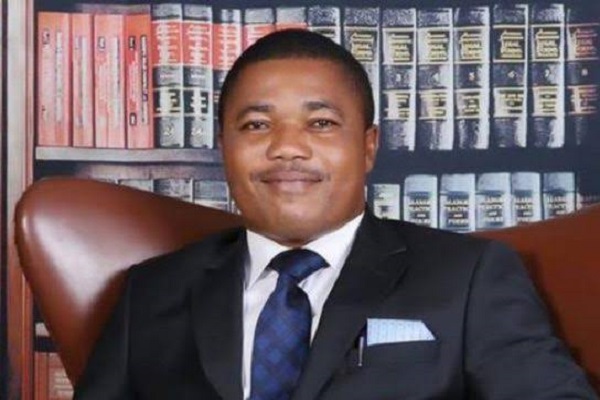
Ifeanyi Ejiofor, the lead counsel to detained leader of the Indigenous People of Biafra (IPOB), Nnamdi Kanu, has cautioned the Nigerian government against using military forces to suppress justice or use bullets as a substitute for dialogue in tackling agitations across the country.
The lawyer who issued the warning in a statement on Saturday, said no nation in the world has ever silenced a cry for justice through the barrel of a gun and does not see that happening in Nigeria no matter how hard the government tries.
In the statement shared on his X handle titled, ‘Boko Haram: An invented name and the unlearned lessons of history’, Ejiofor called on the government to return to the path of engagement, empathy, and reconciliation if it truly seeks lasting peace.
Ejiofor who was reacting to a recent comment by former President Goodluck Jonathan where he claimed that during his tenure, Boko Haram insurgents nominated late ex-President Muhammadu Buhari to represent them in peace talks, lamented that the federal government failed to adopt a similar approach when peaceful agitation emerged from Nigeria’s South-East between 2015 and 2017.
Ejiofor expressed his dismay that while governments at different levels strive to engage terrorists and bandits in peace dialogues, they have not replicated same agitators like Kanu who instead, have been clamped into detention since 2021 while IPOB has been prescribed.
“The proscription marked the beginning of an unending cycle of mistrust, violence, and alienation,” Ejiofor said.
“Rather than address the underlying grievances, the government chose a blanket suppression that inadvertently legitimised the use of force where empathy was needed
“Between 2015 and 2017, a haunting parallel emerged. During that period, the Nigerian State was confronted not by armed insurgents, but by thousands of young men and women from the South-East who marched peacefully, calling attention to what they perceived as long-standing structural and political marginalization. Rather than opening channels of dialogue, the state resorted to heavy-handed responses that left deep scars on the collective psyche of a region and its people.
“History will recall that the proscription of the global peaceful movement of the Indigenous People of Biafra (IPOB) in 2017, carried out under a cloud of midnight urgency, marked the beginning of an unending cycle of mistrust, violence, and alienation. Instead of addressing the underlying grievances, the situation was met with a blanket suppression that inadvertently legitimized the use of force where empathy was needed.
“The result, tragically, is the emergence of new and dangerous elements; misguided elements who have transformed it into criminal opportunism. These actors neither share the ideals nor the moral compass of the earlier movement; they are the by-products of a vacuum created by the absence of structured engagement.
“The truth remains that no nation ever silenced a cry for justice through the barrel of a gun. Sustainable peace is achieved only through honest dialogue, empathy, and a deliberate effort to separate legitimate grievances from acts of opportunism.
“It is never too late to return to the table of dialogue. The Federal Government must summon the courage to re-engage, to sift the wheat from the chaff, to distinguish genuine aspirations from criminality, and to restore trust where disillusionment now reigns.
“In the final analysis, a nation that refuses to talk to its children will one day be compelled to negotiate with their ghosts,” he added.