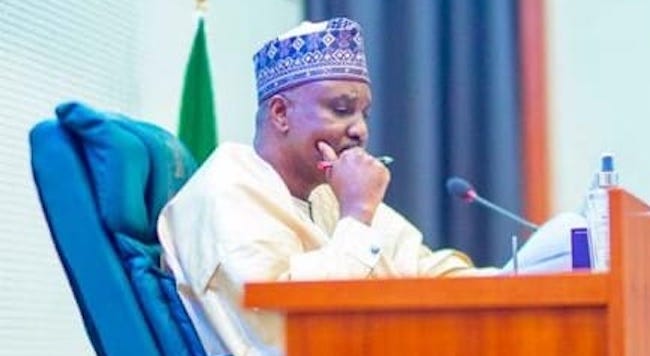
Speaker of the House of Representatives, Tajudeen Abbas, has attributed the persistent wave of violence across Nigeria to greed and corruption rather than religious divisions.
Abbas made the remark on Tuesday during the inauguration of the House Ad Hoc Committee on Border Security. Represented by the Minority Whip, Ali Isa, he said the House remains committed to ensuring that all Nigerians, regardless of ethnic or religious background, can live peacefully anywhere in the country.
According to him, the committee’s creation is part of the legislature’s broader effort to find practical solutions to insecurity and correct the “misrepresentation of Nigeria’s violence narrative,” which he said is driven by selfish interests and corruption rather than any religious agenda.
The Speaker’s comments come amid growing international scrutiny of Nigeria’s security challenges, including renewed concerns over alleged religious persecution.
On border security, Abbas warned that the country’s porous borders pose both an economic and existential threat, undermining public confidence in the state’s ability to protect its people and territorial integrity.
“As lawmakers, we are constitutionally obligated to ensure that agencies responsible for safeguarding our borders perform their duties effectively,” he said. “In many ways, borders define a nation; they determine who enters, how citizens are protected, how trade is managed, and how national security is maintained.”
He tasked the committee with identifying weaknesses in current operations, assessing how funds allocated to border agencies are spent, and investigating the role of compromised officials contributing to insecurity. Abbas also urged the committee to recommend legislative and policy reforms to strengthen coordination among relevant institutions.
“Securing our borders demands a whole-of-government and whole-of-society approach,” he added. “This includes cooperation among military, intelligence, and law enforcement agencies, alongside active participation from border communities.”
Abbas reaffirmed the House’s resolve to enhance border governance through oversight, legislation, and adequate budgetary support. He said findings from the committee would guide future reforms, including a review of key laws such as the Immigration Act and the Customs and Excise Management Act to align with modern global security standards.
In his remarks, Chairman of the Committee, Isa Anka, stressed the shared responsibility of protecting Nigeria’s sovereignty, noting that illegal activities such as arms smuggling, human and drug trafficking, and unregulated migration continue to threaten national security.
Anka listed several challenges undermining border security, including poor funding, obsolete equipment, difficult terrain, unmonitored entry routes, and misconduct among some security personnel. Despite the government spending over ₦9 trillion on security, he said, results have remained unsatisfactory.