

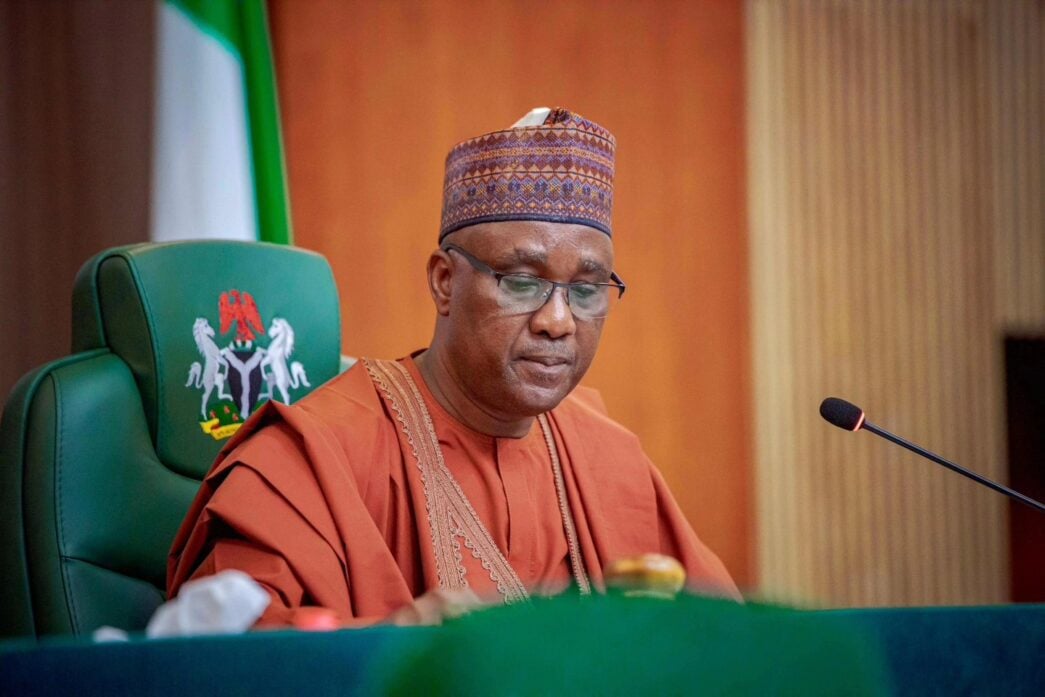
The Office of the Speaker of the House of Representatives has rejected as misleading claims by the Socio-Economic Rights and Accountability Project (SERAP) that Speaker Tajudeen Abbas owes Nigerians an explanation over the N18.6bn allocated for the construction of the National Assembly Service Commission (NASC) headquarters in Abuja.
In a statement issued on Monday by his Special Adviser on Media and Publicity, Musa Krishi, Abbas clarified that he has no role in the award, supervision, or payment of contracts within the National Assembly or its agencies.
“For the avoidance of doubt, the Speaker wishes to state unequivocally that he has no involvement, directly or indirectly, in the award, processing, supervision, or payment of any contract within the National Assembly bureaucracy or any of its agencies,” the statement read.
The Speaker’s office stressed that contractual matters fall strictly under the administrative bureaucracy of the National Assembly, which operates through its own statutory leadership and procurement structures. Krishi further noted that the NASC building project was conceived, awarded, and executed long before the current House leadership assumed office.
He insisted that linking Abbas or the House leadership to the project was “factually incorrect and misleading,” urging SERAP, the media, and the public to respect the institutional boundary between political leadership and administrative contract management.
SERAP had, on October 19, 2025, issued a public letter demanding that Abbas and Senate President Godswill Akpabio explain how the N18.6bn was spent. The demand followed revelations in the 2022 audit report of the Auditor-General of the Federation, published on September 9, 2025, which flagged irregularities in the project’s procurement and payment processes.
According to the audit report, the NASC paid N11.6bn in August 2020 to an “unknown construction company” for the project. In November 2023, an additional N6.9bn was reportedly disbursed for converting a roof garden into office space, bringing the total expenditure to N18.6bn.
SERAP described the contractor as a “fictitious construction company” and demanded full disclosure of its identity, directors, shareholders, and registered address. The group also called for the release of all procurement documents, including needs assessments, bid advertisements, bidders’ quotations, contract agreements, Tender Board minutes, and evidence of Federal Executive Council approval.