

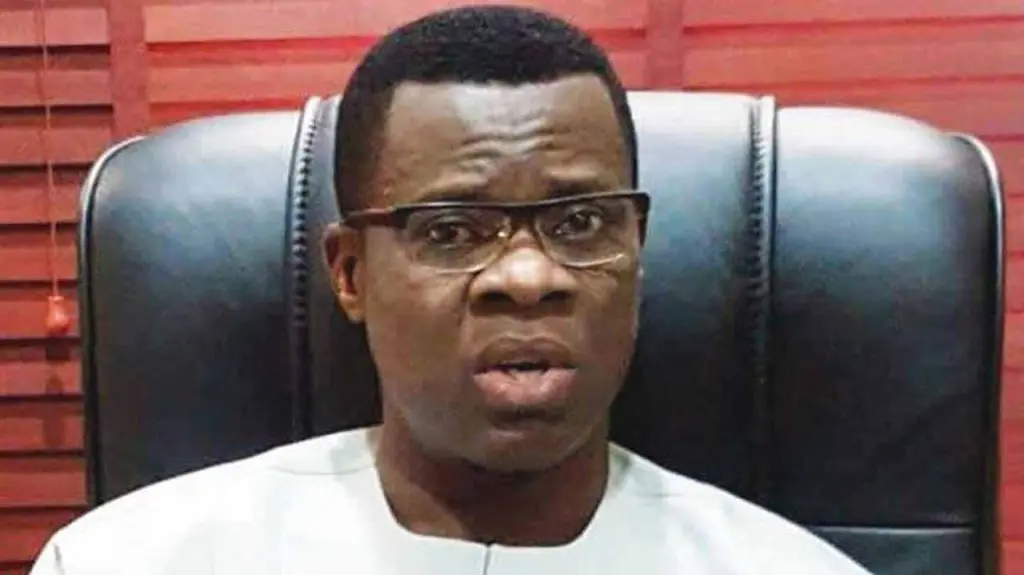
A former Resident Electoral Commissioner of the Independent National Electoral Commission (INEC), Dr Mike Igini, has declared that many individuals currently holding public offices in Nigeria should be facing criminal prosecution rather than occupying positions of authority.Buy Maps
Igini made the statement during an appearance Sunday Politics, where he discussed the challenges facing Nigeria’s electoral system ahead of the 2027 general elections. He described the forthcoming polls as a critical moment that would determine public confidence in INEC, the judiciary, politicians and other institutions involved in the democratic process.
According to him, the 2027 elections will serve as an important assessment of the conduct and accountability of those responsible for protecting Nigeria’s democracy.Check Voting Info
He argued that many political officeholders should be held accountable for their actions, insisting that the elections would provide an opportunity for Nigerians to judge the country’s political leadership.Buy Maps
The former electoral commissioner also expressed concern that Nigeria was gradually moving away from the rule of law towards a system in which individuals appeared to exercise power without sufficient regard for established legal principles. He lamented what he described as the weakening enforcement of existing laws.
Igini specifically highlighted Section 97 of the Electoral Act, which he said protects candidates from being compelled to support a political party, alleging that the provision was being violated repeatedly.Check Voting Info
Questioning the commitment of some political actors to democratic principles, he criticised what he perceived as efforts undermining the country’s democratic progress.
The former INEC official also raised concerns about alleged attempts by politicians to manipulate elections through the insertion of fake National Youth Service Corps (NYSC) members into lists of personnel assigned to electoral duties.
He maintained that serving NYSC members remained a suitable option for election assignments because they had personal stakes in the country’s future and could be held accountable for their conduct.
In contrast, he expressed reservations about relying on former corps members and other graduates recruited for election duties, suggesting that some might feel less vulnerable to disciplinary consequences.
Beyond electoral matters, Igini argued that Nigeria’s economic challenges could not be adequately addressed without first tackling problems within its political system. He stressed that the country’s development depended significantly on the integrity and effectiveness of its political processes.
He also acknowledged INEC’s efforts to improve public confidence in elections through technological interventions, including the Bimodal Voter Accreditation System (BVAS) and the INEC Result Viewing (IReV) portal.Consult Lawyers
According to Igini, these tools have contributed to changes in how elections are conducted in Nigeria, although concerns about electoral integrity and accountability remain central to preparations for the 2027 general elections.
As the country approaches another major electoral cycle, his comments have renewed attention on the responsibilities of electoral officials, the judiciary and political leaders in safeguarding democracy and ensuring credible elections.