
Rwanda’s High Commissioner to Nigeria, Moses Rugema, has called for urgent global action through stronger legal frameworks, improved education and greater accountability to combat the rising threat of genocide ideology and denial.
Rugema made the call on Tuesday night in Abuja at the 32nd commemoration of the 1994 Genocide against the Tutsi, tagged (Kwibuka 32), with the theme “Remember – Unite – Renew.”
The annual commemoration marks the beginning of Rwanda’s national mourning period from April 7 to 13, as well as 100 days of remembrance corresponding to the duration of the genocide, in which more than one million people were killed.
Rugema warned that genocide ideology, denial and distortion are not only persistent but are evolving rapidly, particularly through digital platforms and emerging technologies such as artificial intelligence.
He said, “It is spreading across borders with alarming speed, amplified by digital platforms and new technologies, including artificial intelligence.
“These tools, while powerful for progress, are also being misused to manipulate narratives and fuel division. This makes our collective responsibility to remember, educate and act more important than ever.”
The envoy stressed that remembrance must go beyond mourning, noting that it should serve as a standard for present-day actions and a commitment to prevent future atrocities.
He stated, “Stronger legal frameworks, better education, and greater accountability are urgently needed to counter these threats.”
He also underscored the role of the media and other stakeholders in preserving historical truth and countering misinformation and denial.
“Commemoration provides an opportunity to reflect on the responsibility of all, especially the media, in safeguarding historical truth by countering distortion and denial of the genocide and preventing the spread of hate speech,” he said.
Rugema described genocide as one of the gravest crimes in human history, defined not only by acts of violence but by the intent to destroy a people.
Reflecting on the 1994 genocide, he said it was not a spontaneous event but the result of decades of division, discrimination and dehumanisation carefully planned and executed.
“Long before 1994, Tutsis were subjected to repeated poverty, exclusion and prostitution. Many were forced into exile and an apartheid system. Qualifying ethnicity and normalising it.
“In just 100 days, more than one million people were killed in one of the fastest genocides in recorded history,” he said.
He added that Rwanda’s recovery efforts, including reconciliation, unity and community-based justice systems, have helped rebuild the nation, but warned that the forces that fuel division still persist globally.
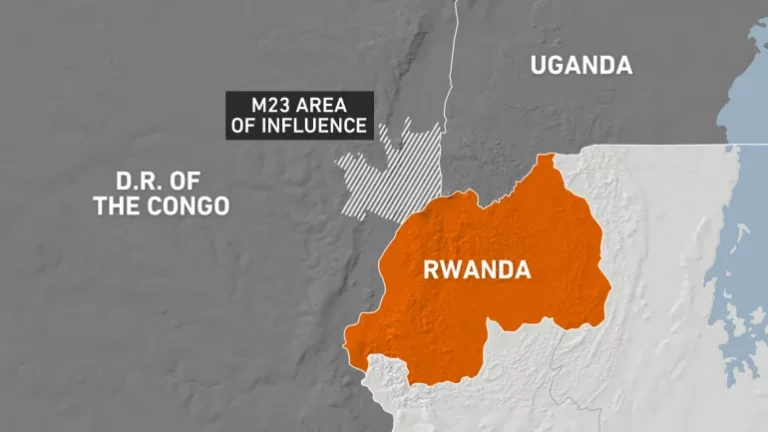
The envoy further raised concerns about ongoing threats in parts of the Great Lakes region, particularly targeted violence and extremist ideologies against Tutsi communities, including the Banyamulenge in eastern Democratic Republic of Congo.
“Genocide ideology, denial, and distortion remain a present-day concern, they are evolving and spreading rapidly across borders, amplified by social media and emerging technologies.
“In parts of the Great Lakes region, we are witnessing familiar warning signs, particularly targeted violence and extremist ideologies directed against Tutsi communities, including the Banyamulenge, in eastern Democratic Republic of Congo.
“Silence in the face of such violence is complicity,” Rugema warned, urging the international community to remain vigilant and proactive.
He also recalled the obligations of states under the 1948 Convention on the Prevention and Punishment of the Crime of Genocide and United Nations Security Council Resolution 2150.
“The responsibility to prevent genocide belongs to all of us,” he added.
The United Nations Women Country Representative to Nigeria, Beatrice Eyong, reading the speech of the United Nations Secretary General, António Guterres, called for renewed global commitment to prevent genocide, warning against the growing spread of hate speech and dangerous narratives.
She urged the international community to learn from past failures and act decisively while agreeing with Rugema that the atrocities were not spontaneous but carefully orchestrated through propaganda, division and dehumanisation.
“Long before the first blood was spilt, explicit propaganda flooded the airwaves, spreading lies, sowing hate and stripping people of their humanity,” Eyong said.
The UN envoy warned that similar threats persist today, amplified by digital platforms and emerging technologies.
“Today, digital platforms allow hate speech and incitement to violence to spread faster and further than ever before, fuelled by artificial intelligence and misguided algorithms,” she stated.
Eyong also acknowledged the failure of the international community to act during the genocide, urging nations not to repeat the same mistakes.
“We must do more than remember the dead. We must protect the living by defending truth and rejecting narratives that make violence seem acceptable,” she said.
She called on countries to uphold international law, strengthen institutions and promote unity, stressing that accountability and justice are key to preventing future atrocities.
“I call on all countries to become parties to the Genocide Convention without delay and to implement it fully,” Eyong added.