
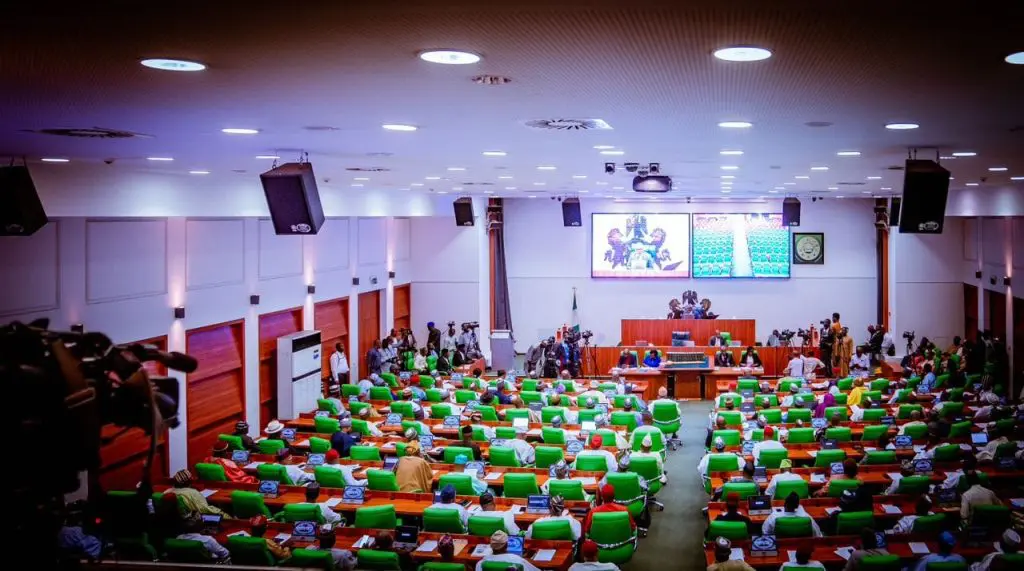
The House of Representatives Committee on Disability has commenced investigation into allegations of corrupt practices and contract inflation in the procurement process of the National Commission for Persons with Disabilities (NCPWD) following
Stakeholders in the sector had accused the management of the commission of irregularities in its operations, complaining about contract awards, project execution and administrative practices within the commission.
The Chairman of the House Committee on Disability Matters, committee Bashiru Dawodu, said the committee would get to the root of the allegations that several procurement activities and projects executed by the commission may have been inflated, raising concerns about transparency and accountability in the management of funds meant for persons with disabilities.
One of the stakeholders, Abdullahi Ibrahim, accused the commission of inflating the cost of certain projects and procurement contracts running into several millions of naira.
According to him, the situation has generated deep concerns within the disability community, saying “It is worrisome that the National Disability Commission is becoming the headquarters of corruption in the disability community because of what has been happening there”
Ibrahim cited what he described as a questionable procurement involving Point-of-Sale (POS) machines, claiming the contract value was allegedly exaggerated, saying “how can a disability commission pay about N97 million for 101 POS machines with starter packs when the actual cost is far lower?
He further alleged that some training programmes and equipment procurement exercises carried out by the commission were also awarded at highly inflated costs.
Members of the committee acknowledged the seriousness of the allegations but emphasized the need for verifiable documentary evidence to substantiate the claims.
Executive Secretary of the commission, Ayuba Burki Gufwan said his administration has taken steps to address procurement irregularities discovered shortly after he assumed office in August 2024.
He disclosed upon resumption after his appointment, he discovered that his predecessor had presided over the award of contracts during the interim period, a development he described as irregular.
“Upon assumption about two weeks after my appointment, I was shocked to discover that my predecessor, who should have handed over on the 6th, took decisive decisions on behalf of the commission as a former executive secretary,” he told the committee.
He explained that the commission’s Procurement Tenders Board (PTB) subsequently reviewed the process and declared the contracts illegal.
“So we summoned the meeting of the PTB and the decision was reached that all of the procurements that the former ES presided over were illegal, null and void. Those contracts were revoked and a new process was initiated for the 2024 procurement,” he said.
The Executive Secretary assured lawmakers that detailed documentation regarding the procurement process would be formally submitted to the committee for scrutiny.
“I will document everything and formally present it to you,” he assured the lawmakers.
Beyond procurement concerns, the commission’s head also outlined ongoing reforms aimed at expanding the commission’s presence and services across the country.
He noted that when he assumed office, the commission had no operational zonal offices despite provisions in its enabling law mandating nationwide coverage.
“I didn’t inherit one single zonal office. As a person with a disability, I understand the logistics of transportation and the challenges involved, which are often overwhelming,” he said.
He disclosed that the commission had since established regional offices in Plateau, Bauchi, Abia and Oyo states, covering the North-Central, North-East, South-East and South-West zones respectively, while plans were underway to open offices in the remaining regions.
“Our goal is to decentralize the operations of the commission and bring government services closer to persons with disabilities across the country,” he added.
The Executive Secretary also explained that limited funding had constrained the commission’s ability to host delegations of persons with disabilities who travel from different parts of the country to seek assistance.
“In most cases when people with disabilities come from far and near, they tell me they do not have accommodation or transport. The commission does not have those funds readily available, and it is for fear of embarrassment that we sometimes decline such visits,” he said.