


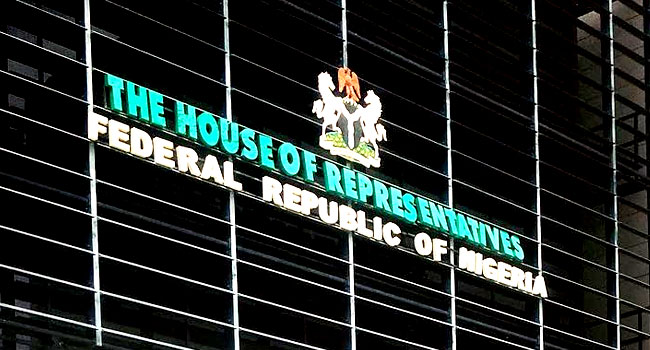
The House of Representatives has commenced deliberations on a petition arising from a dispute between Abuja Power Company Limited (APCL) and the Federal Ministry of Water Resources and Sanitation over the proposed Gurara II Hydropower Project in Niger State.
At a hearing in Abuja, the committee’s chairman said the matter pitting APCL against the Federal Government, represented by the Minister of Water Resources and Sanitation, falls squarely within the committee’s oversight mandate.
He disclosed that the committee had received a formal petition from APCL, through its legal representatives, regarding the Gurara II project, also known as the Gurara II multipurpose dam, located in Niger State.
Gurara II, also known as the Gurara II Hydropower Project, is a proposed multipurpose dam located in Niger State.
The dam axis is within a Federal Government irrigation zone situated off the Buarli Jere Junction road, leading towards Kaluniga and Kampacheng communities.
The Minister of Water Resources and Sanitation, Prof. Joseph Terlumun Utsev, appeared before the committee as the representative of the Federal Government, while APCL was represented by its legal team and a director of the company, Prof. George Momen, who stood in for the managing director.
Presenting the petition, APCL’s lead counsel, Oluwemi Okunbi, SAN, told the lawmakers that the dispute centres on the Gurara II project, which he said his client initiated as far back as 2004.
He alleged that APCL secured a Certificate of Occupancy (C of O) from the Niger State Government to develop the project but that the title was later revoked following alleged interventions by federal officials aimed at transferring the project to another company.
According to Okunbi, APCL had to approach the courts on two separate occasions to restore the revoked title, a process he said caused significant delays to the project.
He explained that the project was conceived as a multipurpose development encompassing irrigation, power generation and hospitality, with anticipated benefits for host communities and the wider economy.
Okunbi added that APCL repeatedly sought an amicable resolution with the Ministry of Water Resources and other relevant authorities, including the Office of the Attorney-General of the Federation, stressing that the matter was of national importance and should not be prolonged through litigation.
In its petition, APCL urged the committee to note that the concession or public-private partnership (PPP) arrangement allegedly awarded to a Chinese firm, CGC Nigeria Limited, violated the Public Procurement Act, the Infrastructure Concession Regulatory Commission (ICRC) Act and regulations governing unsolicited proposals.
The company prayed the committee to restrain CGC Nigeria Limited from taking any further steps on the project unless equivalent terms were first offered to APCL as the original project initiator.
In the alternative, APCL requested that, if the ministry opted not to proceed with its unsolicited proposal, the company be adequately compensated in accordance with extant laws, and that the project be advertised and procured through a competitive bidding process.
Prof. Momen, speaking briefly, confirmed that the prayers reflected APCL’s position.
Responding, the minister told the committee that Gurara II is a proposed 360-megawatt multipurpose dam project conceived after the completion of Gurara I.
He said the project was designed to support power generation, irrigation of about 8,000 hectares of land, fisheries, flood control and tourism.
On his part, the Minister explained that in 2010, the ministry engaged three consortia to conduct technical assessments of the project, with the expectation that it would be funded by the Federal Government.
He said due to funding constraints, the ministry later adopted a selective procurement process and awarded the project to CGC Nigeria Limited based on technical and financial evaluations.
The minister stated that APCL only emerged after the project had been procured, claiming that prior land allocation and incurred expenses had been incurred.
He added that upon assuming office, he invited both APCL and the Chinese firm to discuss the matter and advised them to reach an agreement on compensation.
Utsev, however, noted that the situation became complicated when APCL proceeded to court, stressing that the ministry could not engage in settlement talks while the matter remained under litigation.
“So long as this issue is in court, our hands are tied. If it is withdrawn from court, then we can sit as a family and resolve it amicably,” he said.
Several lawmakers raised concerns over due diligence, project ownership, the role of the Niger State Government, and whether APCL acted with lawful authority when it commenced work on the site.
Others cautioned that the committee must avoid delving into matters still before the courts, warning that doing so could prejudice ongoing judicial proceedings.
The committee is expected to review all submissions, including court documents and correspondence, before determining the next steps in resolving the long-running dispute over the Gurara II Hydropower Project.