

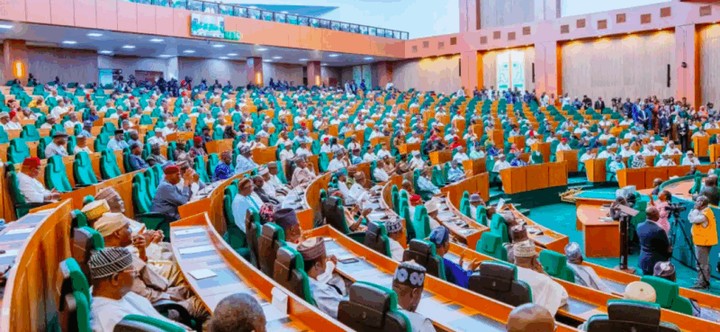
Tension heightened at the National Assembly on Monday after members of the House of Representatives failed to attend a crucial joint conference committee meeting with the Senate to harmonise the Electoral Act (Repeal and Re-enactment) Bill, 2026.
The absence of the House delegation stalled efforts to reconcile differences between both chambers, particularly over the controversial clause on electronic transmission of election results.
The meeting, originally scheduled for 11:00 a.m., did not hold as senators waited without their House counterparts. The Senate team later reconvened at the office of Senator Simon Lalong, chairman of the Senate Committee on Electoral Matters, but the stalemate persisted.
A second attempt in the afternoon also suffered setbacks, with only a few lawmakers present. Although House Committee Chairman Adebayo Balogun appeared briefly, other members were absent, leaving the harmonisation process in limbo.
At the centre of the dispute is Clause 60(3) of the proposed law. The House version reportedly makes electronic transmission of results from polling units mandatory. In contrast, the Senate adopted a more cautious position, raising concerns about uneven telecommunications coverage and power supply challenges across parts of the country.
The disagreement comes less than a year before the February 20, 2027 general elections and has reignited debate over the credibility of Nigeria’s electoral process.
Memories of the 2023 presidential election remain fresh, when delays in uploading results to INEC’s Result Viewing Portal (IReV) sparked widespread criticism, political tension, and prolonged court battles.
Telecommunications operators, however, have maintained that infrastructure is no longer the major obstacle. The Association of Licensed Telecom Operators of Nigeria (ALTON) has repeatedly stated that Nigeria has adequate network capacity to support electronic transmission, noting that even basic 2G networks can transmit election data effectively.
Industry statistics indicate that broadband penetration exceeded 50 per cent as of December 2025, with over 109 million active subscriptions nationwide. Major operators continue expanding fibre networks and upgrading infrastructure.
Analysts argue that beyond infrastructure, transparency, system testing, and public confidence will be critical ahead of 2027. They say clarity in the law and firm commitment from electoral authorities will determine whether the next general election restores public trust or deepens existing doubts.