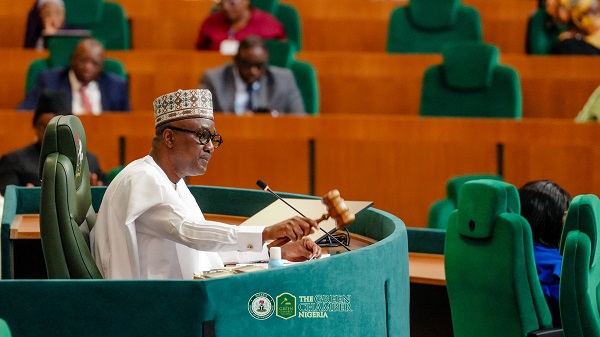
The House of Representatives yesterday began investigations of the concessioning and management of the nation’s sea and airports to determine whether it has delivered value for money and contributed to economic development of the country.
Speaking at the inaugural meeting of the ad-hoc committee set up to conduct the investigation, Speaker of the House of Representatives, Abbas Tajudeen said the House was determined to ensure that concession of the nation’s critical infrastructure was yielding the desired result
The committee is to investigate, examine, and appraise the performance of concessionaires operating federal air and sea port terminals, as well as related shipping activities, from 2006 to 2025, and to determine the benefits accrued to the Federal Government over the period.
The Speaker said the decision of the government to concession key national assets, particularly the seaports and airports, was driven by the desire to enhance efficiency, attract private sector investment, modernize infrastructure, improve service delivery, and ultimately increase government revenue while reducing operational burdens on the state.
He said nearly two decades after the commencement of these concession arrangements, it is both timely and imperative for the Legislature, as representatives of the Nigerian people, to undertake a comprehensive review of their outcomes.
He said: “for the avoidance of doubt, this exercise is not an attempt to undermine legitimate private sector participation. It is rather an expression of the House’s constitutional mandate to conduct oversight, ensure accountability, and safeguard national interest.
“Nigerians deserve to know whether these concessions have delivered value for money, complied with contractual obligations, enhanced national competitiveness, protected public assets, and contributed meaningfully to economic growth, employment, and revenue generation.”
The Speaker said further that the scope of the Committee’s assignment is broad and critical, including “an examination of the terms and conditions of concession agreements entered into from 2006 to 2025; an assessment of revenue flows, remittances, and other financial benefits accruing to the Federal Government and its agencies and a review of compliance with contractual, regulatory, and safety obligations by concessionaires.”
The committee is also to conduct an appraisal of infrastructure development, operational efficiency, service quality, and labour issues;
Identify the challenges, gaps, and systemic weaknesses within the concession framework; and formulate clear, practicable recommendations to improve policy, legislation, and future concession arrangements.
Turning to members of the committee, the Speaker told them that “the House has reposed enormous confidence in your integrity, competence, and sense of patriotism. You are expected to carry out this assignment with objectivity, professionalism, and transparency, guided solely by facts, documents, and the overriding national interest. Your work must reflect fairness to all stakeholders while remaining firm in the defence of public assets and public trust.
“I urge you to openly and constructively engage relevant stakeholders; Let your proceedings be thorough, evidence-based, and free from preconceived conclusions. Above all, ensure that your findings and recommendations will strengthen governance, deepen accountability, and enhance the sustainability of Nigeria’s transport and maritime sectors”.
He said the outcome of this investigation will not only shape public confidence in concessioning as a policy tool but will also inform future reforms in public-private partnerships across critical sectors of our economy. History will judge us by how faithfully we discharge this responsibility to the Nigerian people.
Chairman of the committee, Kolawole Akinlayo said the Committee was constituted in response to growing national concern over the management, performance, transparency, and value outcomes of concession arrangements governing some of Nigeria’s most strategic public assets.
He said these assets which include seaports, airports, terminals, and jetties are not ordinary commercial facilities, but are sovereign economic gateways, national security infrastructure, and critical enablers of trade, mobility, and development.
The Ekiti Lawmaker said the House recognizes the critical importance of the nation’s maritime and port infrastructure to economic growth, trade facilitation, and national revenue generation and resolved to establish this Committee to ensure a thorough and evidence-based review of the benefits accruing to the Federal Government from these operations.
Her assured that the Committee will engage relevant government agencies, regulatory bodies, and private sector stakeholders, including the Nigerian Ports Authority, concessionaires, the Nigerian Maritime Administration and Safety Agency (NIMASA), Nigeria Customs Service, the Nigerian Upstream Petroleum Regulatory Commission (NUPRC), the Bureau of Public Procurement, the Shippers’ Council, operators of crude oil and gas terminals, domestic vessel owners and charterers, importers, shipping companies and Banks.
He said: “Our engagements will focus on compliance with applicable laws, operational efficiencies, complaints of statutory breaches, and revenue performance, among other critical areas.
“Our objective is clear: to ensure that the Federal Government and the Nigerian people derive maximum benefits from our port and terminal operations, that revenues due are fully captured, and that operational lapses or inefficiencies are identified and addressed.
“This is not only an exercise in review but a critical step toward strengthening governance, promoting accountability, and fostering an enabling environment for sustainable growth in Nigeria’s maritime sector.”