
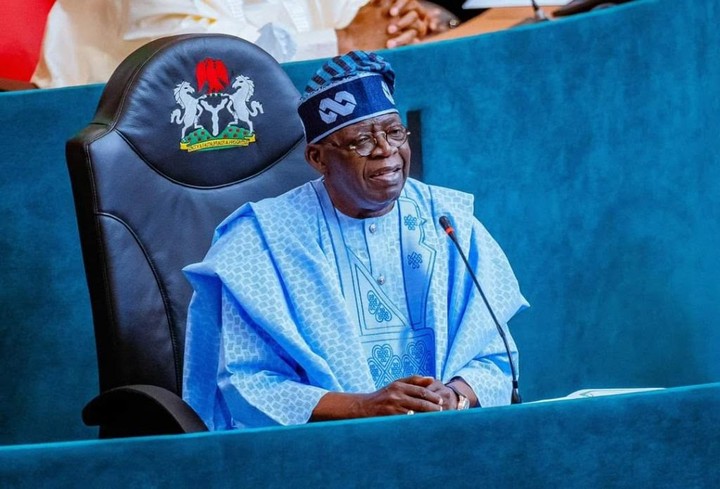
President Bola Ahmed Tinubu has described the removal of fuel subsidies as a necessary and difficult decision, explaining that it was undertaken to stabilise the economy and redirect public funds towards more impactful sectors.
The President stated this on Monday at the opening of the National Conference on Public Accounts and Fiscal Governance, organised by the Public Accounts Committees of the Senate and House of Representatives. He was represented at the event by the Minister of State for Finance, Dr. Doris Uzoka-Anite.
“In 2022 alone, Nigeria spent over N4 trillion on fuel subsidies, an amount greater than our capital expenditure allocation,” he said. “This was not only fiscally unsustainable but also unjust. The subsidy disproportionately benefited the affluent, encouraged smuggling, and fostered inefficiency. It was neither equitable nor strategic.”
He added that since the subsidy removal, the administration has reallocated funds to social safety nets, public transportation improvements, and key infrastructure projects.
“Most importantly,” the President stated, “we have strengthened our fiscal buffers, making Nigeria more resilient to external shocks.”
Tinubu also addressed long-standing structural challenges, citing inefficiencies, fiscal leakages, and the economy’s overdependence on oil revenue. He noted that recent reforms aim to correct these issues and build a more sustainable economic foundation.
“We are not here to dwell on the past,” he said. “We are here to chart a new course.”
He highlighted recently enacted tax legislation as part of the government’s reform agenda, saying these laws are designed to widen the tax base, especially by integrating the informal sector, streamline compliance for small and medium enterprises (SMEs), digitise revenue collection to curb leakages, and harmonise multiple tax regimes to improve the business environment.
According to the President, “These tax reforms are not just economic necessities; they are governance imperatives that lay the groundwork for a self-sustaining economy.”
He also cited initiatives such as the National Credit Guarantee Company, which he said will support local production, empower SMEs, and boost non-oil exports. These efforts, Tinubu said, are key to shifting Nigeria’s economic narrative from one of dependency to one of resilience and innovation.
“These efforts go beyond mere economic metrics,” he noted. “They are about creating jobs, fostering innovation, building economic resilience, and strengthening national security and long-term stability.”
On monetary policy, the President commended the Central Bank of Nigeria (CBN) for its role in stabilising the naira and curbing inflation, stressing improved coordination between fiscal and monetary authorities.
“There is now better synergy between both arms, and we are determined to reduce inflationary pressures by tackling structural bottlenecks, especially in the food supply chain,” he said.
President Tinubu concluded by urging the National Assembly, particularly the Public Accounts Committees, to uphold their constitutional mandate with “integrity, courage, and independence.”
“Oversight is not a political tool; it is a patriotic duty,” he stressed. “Every project must be guided by value for money, and every budget must reflect the new priorities of our people.”