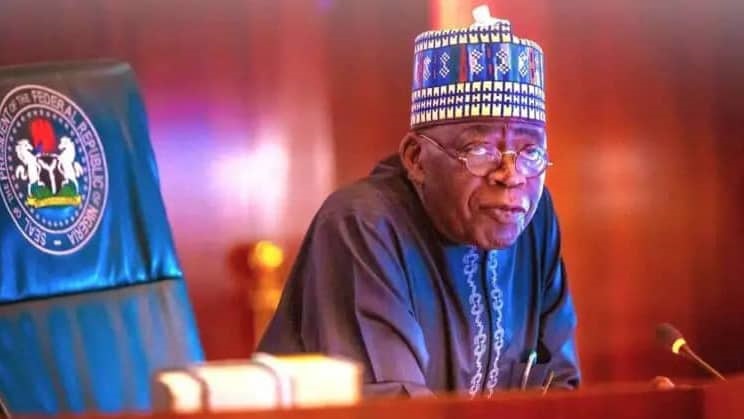
President Bola Tinubu has formally endorsed a comprehensive set of financial relief proposals put forth by the Nigeria Guild of Editors (NGE), aimed at rescuing the country’s struggling media sector. The endorsement came on Wednesday during the 21st All Nigeria Editors Conference (ANEC) held at the Presidential Villa in Abuja.
In his welcome address, the President of the NGE, Mr. Eze Anaba, highlighted the distress facing the media due to the country’s current economic realities. He urged the President to implement measures, including corporate tax relief for approximately ten years, Value Added Tax (VAT) exemption, tax deductions, and access to affordable financing for the industry.
Responding to the Guild’s requests, President Tinubu was supportive, stating: “I’ve listened to the request of President of the Guild – corporate tax relief, VAT extension for media, tax break, affordable loans from BoI (Bank of Industry), establishment of development grants for digitisation, repeal laws that inhibit press freedom, discuss it now.”
He then publicly backed the proposals: “You know, I, as your President, endorse your proposal. Media and safety data will be out soon.” Joking about the immediate endorsement, he added: “your request is in my pocket.”
Before the President’s response, Governor Hope Uzodimma of Imo State, while declaring the conference open, underscored a key democratic principle, saying “without electoral integrity, there would be no democracy.”
While committing to supporting the media financially, President Tinubu equally used the platform to urge Nigerian editors to uphold their ethical and patriotic duties. He stressed the importance of patriotism and fairness in their gate-keeping role, cautioning that irresponsible reporting and misinformation could destabilize the nation.
The President acknowledged the media’s historic role in democratic struggle: “Journalism in Nigeria has been more than a profession, it has been an instrument of national awakening. Their sacrifices form part of the foundation upon which our democracy rests.” He applauded the courage of journalists during the military era, honouring those who endured hardship for national ideals.
However, he cautioned that in the current age of social media, unverified claims pose a threat to unity. He asked editors to exercise their watchdog role with fairness, saying criticism must not compromise the country’s global image or national unity.
President Tinubu offered a guiding principle for journalists: “Verification must be your anchor. Balance must be your principle. Criticise government policy, but do so with knowledge and fairness. Let your aim be to help build, not destroy.”
Recalling the public criticism that greeted his early economic decisions, such as foreign exchange liberalization, the President defended the necessity of the reforms to combat corruption and foster long-term recovery.
He said: “When I assumed office and removed the arbitrage to stop corruption and strengthen the economy, you all dealt with me but today, we should celebrate that progress is being made. The days of darkness are ending; the economy is on the path to improvement.”
He added a warning on national cohesion, noting that dissent is natural but must be constructive: “Debate is part of our reality, but disagreement must never translate into weakening national unity. The national interest must be paramount.”
The President concluded by touching on security challenges, stating: “We are challenged by terrorism and banditry, but our forces are inspired. They put their lives on the line to defend our sovereignty.” He urged editors to remain conscious of Nigeria’s image on the global stage: “This is our country, how we project Nigeria to the outside world matters. “Let us choose clarity over confusion, responsibility over recklessness, and hope over despair.”