


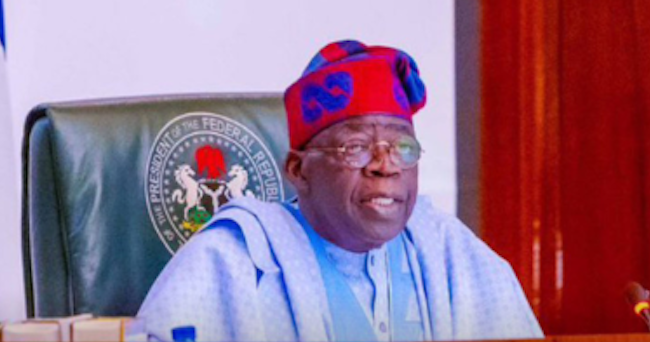
President Bola Tinubu has announced a sweeping ban on the importation of foreign goods that can be produced locally, signaling a major shift in Nigeria’s economic strategy. The directive, part of the newly approved **Renewed Hope Nigeria First Policy**, aims to bolster domestic industries, reduce reliance on imports, and promote local content in public procurement.
Speaking after Monday’s Federal Executive Council (FEC) meeting at the Presidential Villa, Minister of Information and National Orientation, Mohammed Idris, outlined the policy’s key components. Described as a bold and transformative framework, the policy mirrors the “America First” approach of former U.S. President Donald Trump, prioritizing Nigerian-made goods and services across all government activities.
“This policy fosters a new business culture that is confident, bold, and very Nigerian,” Idris said. “It ensures government investment directly benefits our people and industries by reshaping how we spend, procure, and build our economy.”
### Key Policy Directives
The FEC approved several immediate measures to enforce the Nigeria First Policy:
– **Ban on Foreign Goods and Services**: No Ministry, Department, or Agency (MDA) can procure foreign goods or services available locally without a written waiver from the Bureau of Public Procurement (BPP).
– **Stricter Procurement Rules**: The BPP will revise and enforce rules prioritizing Nigerian-made products, maintaining a regularly updated database of high-quality local suppliers for all procurement decisions.
– **Expatriate Restrictions**: Expatriates will only be permitted to execute jobs in Nigeria if local contractors or artisans lack the capacity, subject to BPP approval.
– **Technology Transfer**: Unavoidable foreign contracts must include provisions for technology transfer, local production, or capacity development.
– **Procurement Oversight**: Procurement officers will be reverted to the BPP to ensure compliance and curb corruption. MDAs must resubmit procurement plans to align with the policy, with breaches leading to disciplinary action or contract cancellations.
### Ending Import Dependency
Idris highlighted Nigeria’s sugar industry as an example of neglected local capacity, noting that imports persist despite the existence of the Nigerian Sugar Council and local producers. “Contractors will no longer act as intermediaries sourcing foreign goods while Nigerian factories lie idle,” he said. “Government money must now work for Nigerians.”
The Attorney General of the Federation has been tasked with drafting an Executive Order to give legal backing to the policy, which is expected to take effect upon President Tinubu’s signature.
### Broader Economic Reforms
The Nigeria First Policy aligns with the Tinubu administration’s broader economic reforms, including subsidy removals, a new foreign exchange regime, and efforts to boost investor confidence. By prioritizing local content, the government aims to drive job creation, industrial growth, and sustainable development.
While the policy is poised to face implementation challenges and resistance from entrenched interests, Idris emphasized the administration’s commitment to enforcement. “This is a major shift in government policy. It puts Nigeria – not foreign companies or imports – at the heart of our national development,” he said.