

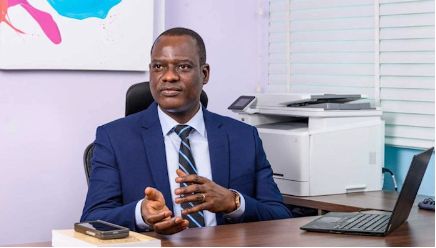
Minister of Finance and Coordinating Minister of the Economy, Mr. Taiwo Oyedele, has called for urgent reforms to the global financial system, saying Africa continues to face unfair treatment in international financing and investment.
Oyedele said one of the major issues discussed at the recently concluded Africa Forward Summit in Nairobi, Kenya, was the need to reform the international financial architecture to give African countries fairer access to capital and development financing.
In a statement shared on his WhatsApp platform on Wednesday evening, the minister said Africa continues to suffer from excessively high costs of borrowing due to what he described as unfair risk assessment and a “prejudice premium” placed on the continent by global financial institutions and investors.
According to him, the current global financial system has limited Africa’s ability to industrialise and compete effectively in the global economy.
He explained that African countries face several barriers, including high borrowing costs, restrictive financing conditions, limited access to long-term funding and inadequate financial support for productivity and value addition.
Oyedele said these challenges have made it difficult for many African nations to invest in industries, infrastructure and economic transformation needed for sustainable growth.
“The current global financial system limits Africa’s ability to industrialise due to high borrowing costs, restrictive financing terms, limited access to long-term capital, and inadequate financing for productivity and value addition,” he said.
The minister, however, noted that African countries must also take responsibility for improving their internal systems in order to attract more investment and build stronger economies.
He stressed the need for African governments to strengthen governance, maintain policy stability, respect contracts and uphold the rule of law.
Oyedele also called for deeper regional integration across the continent, warning that fragmented and smaller markets would struggle to compete in an increasingly integrated global economy.
“Africa must also do more internally to strengthen governance and policy stability, create investment-friendly systems, respect contracts and the rule of law, and deepen regional integration. Fragmented small markets cannot compete effectively in an integrated global economy,” he stated.
Read Also: Nigeria’s Climate Reality: Why Sustainable Industrialization Must Be Viewed as an Economic Imperative
He further stressed the importance of mobilising Africa’s domestic savings, including pension funds, to support long-term development and economic expansion.
According to him, Africa must position itself as a serious investment destination capable of attracting a share of the more than $120 trillion in global private capital currently seeking profitable opportunities around the world.
Oyedele said the continent should no longer be viewed only as an area requiring aid and emergency financing, but as a place where investors can support productive sectors and generate long-term returns.
“With over $120 trillion in global private capital seeking opportunities, Africa must position itself as an investment destination, not just a development conversation,” he said.
The minister added that financing across Africa should focus more on supporting value addition, infrastructure development, skills acquisition, regional value chains, technology and innovation rather than simply exporting raw materials.
He maintained that Africa’s long-term future depends on productivity, economic integration and value creation instead of dependence on external support.
“Africa’s future will not be built on dependency, but on productivity, integration, and value creation,” Oyedele stated.