

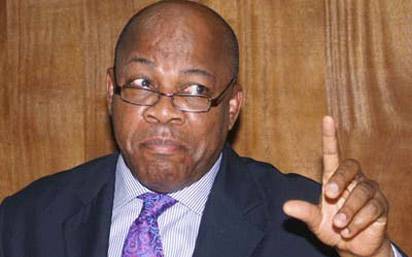
Renowned human rights lawyer and Senior Advocate of Nigeria, Dr. Olisa Agbakoba, SAN, has called on the National Assembly to urgently amend the Electoral Act to provide clear statutory backing for real-time electronic transmission of election results ahead of the 2027 general elections.
Agbakoba made the call on Monday in a post shared on his X handle, where he faulted Nigeria’s electoral framework for what he described as recurring disputes arising from “persistent legal uncertainty” surrounding election outcomes. According to him, despite several amendments to the Electoral Act over the years, a central flaw remains unresolved — the absence of an explicit legal provision mandating electronic transmission of results.
“The 2023 election exposed a critical gap in our electoral legal framework. Despite INEC’s deployment of the IReV portal for electronic transmission of results, the Supreme Court ruled that this innovation lacks legal force,” Agbakoba said.
He explained that the apex court held that electronic transmission of results is not expressly provided for in the Electoral Act 2022 and exists only within INEC’s regulations and guidelines, which makes it non-binding in law.
Agbakoba argued that this gap places what he termed an “insurmountable evidentiary burden” on election petitioners. Drawing attention to the late Justice Pat Acholonu’s observation in *Buhari v. Obasanjo* (2005), he noted that verifying results from more than 176,000 polling units makes it practically impossible to successfully challenge presidential election outcomes, thereby undermining the essence of electoral justice.
He further referenced the June 12, 1993 presidential election as a model of transparency, noting that the Option A4 system allowed results to be openly verified at polling units. According to him, integrating that principle with modern electronic technology would enhance credibility, security, and efficiency in future elections.
“The current legislative process represents a monumental opportunity for the National Assembly to resolve this fundamental issue before the 2027 general elections,” he said. “Without this amendment, we risk perpetuating the same cycle of disputed elections, protracted litigation, and damaged democratic credibility that has plagued Nigeria’s Fourth Republic.”
Agbakoba urged lawmakers to decisively close the legal loophole by embedding mandatory real-time electronic transmission of results into the Electoral Act, stressing that doing so would protect the sanctity of the ballot and the will of the electorate.
“Democracy demands nothing less,” he concluded.