

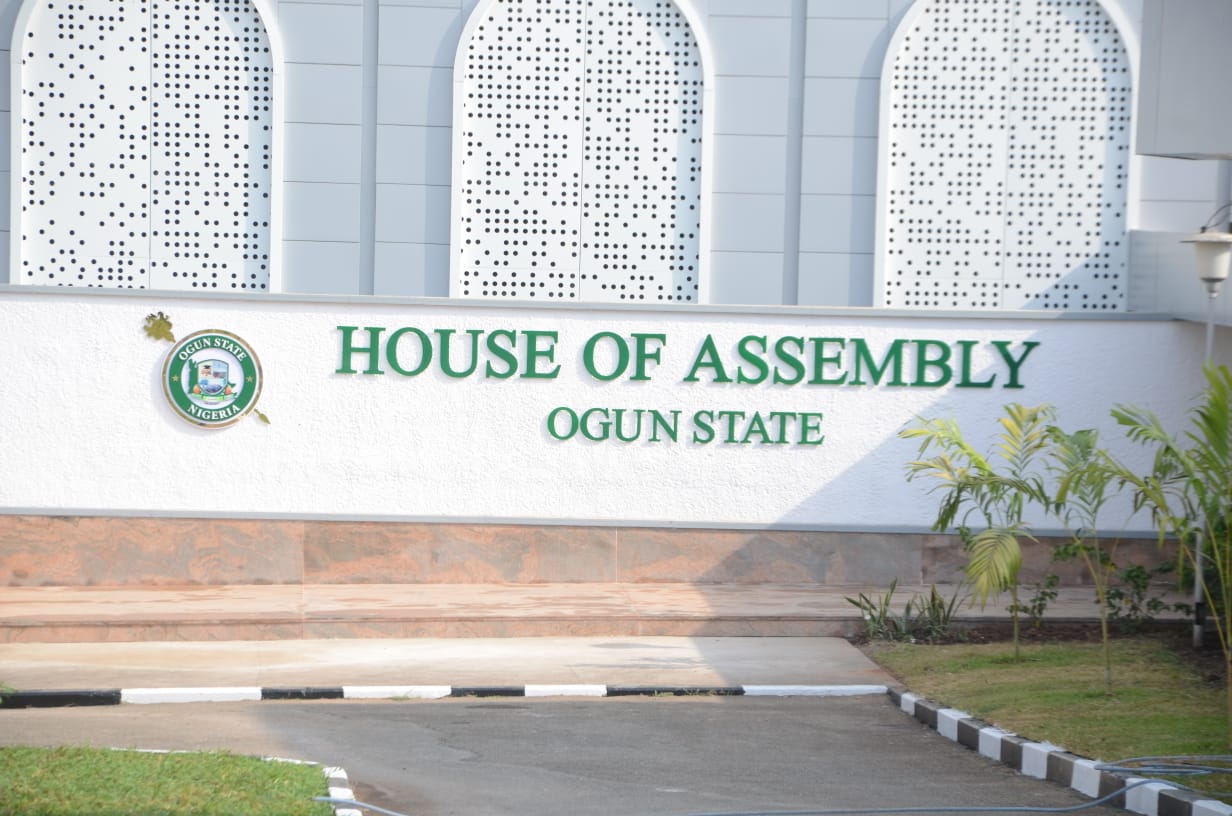
The Gender Composition Bill introduced by the Ogun State House of Assembly has passage through the First Reading, following its introduction by the House Majority Leader.
A non-profit organisation that promotes democratic transparency, accountability and good governance, AdvoKC, said the development marks a significant milestone, as a piece of legislation developed through civil society-led research and advocacy has now formally entered the legislative process of the Ogun State House of Assembly.
The state House of Assembly, on August 21, read for the first time, H.B. No. 037/OG/2026, the Gender Balance in Political and Public Offices Bill, 2026, popularly referred to as the Gender Composition Bill.
The Bill was conceived, supported, researched and drafted through AdvoKC’s Strengthening Women and Youth Political Power Through Promise Tracking, Policy Advocacy, and Public Participation project.
The Bill, if passed into law, would require that not less than 35 percent of appointments to political and public offices in Ogun State, including Commissioners, Special Advisers, Special Assistants, and positions on state boards, commissions, councils and agencies, be occupied by persons of either gender. It would further place a duty on the appointing authorities to provide evidence-based justification for any departure from this threshold and establish an annual reporting mechanism to the House of Assembly, to track compliance across ministries, departments and agencies.
The Bill is sponsored by the Majority Leader, Yusuf Sherif Abiodun, who adopted the draft and formally introduced it on the floor of the House following sustained engagement and dialogue around the proposed legislation.
Nigeria’s record on gender representation in political and public life remains a significant concern. Women continue to be substantially under-represented in political institutions, while several state Houses of Assembly have little or no female representation. Much of the national conversation on addressing this imbalance, including proposals such as the Reserved Seats for Women Bill before the National Assembly, has focused on elective office. The Gender Composition Bill takes a complementary approach by addressing appointive positions, where executive authorities have significant discretion over appointments.
By anchoring a minimum representation threshold in law, the Bill would provide Ogun State with a more durable framework for promoting gender balance in public appointments and tracking the composition of boards, commissions, councils and other government institutions.
Speaking on the development, Project Director, AdvoKC Foundation, Habib Sheidu, said: “This is an important moment for our work on gender representation and public accountability. Through our strengthening women and youth political power project, we researched the gaps in gender representation across political and public appointments, developed the proposed legislative framework and engaged with stakeholders around the need for reform. Seeing the bill introduced and passed first reading demonstrates what sustained policy advocacy, evidence and constructive engagement can achieve.
“We are pleased that the Majority Leader has taken up the bill and introduced it on the floor of the House. We will continue to support and follow the legislative process through the second reading, committee consideration, public hearing and third reading with the ultimate goal of seeing meaningful reform become law.”
Having passed the first reading, the bill will proceed to the second reading, where its general principles will be debated on the floor before it may be referred to the relevant House Committee for further scrutiny and possible public hearing.
The foundation will continue to monitor the progress of the bill and provide updates to the public at each stage of the legislative process and engage relevant stakeholders to sustain momentum towards its passage and eventual assent.