
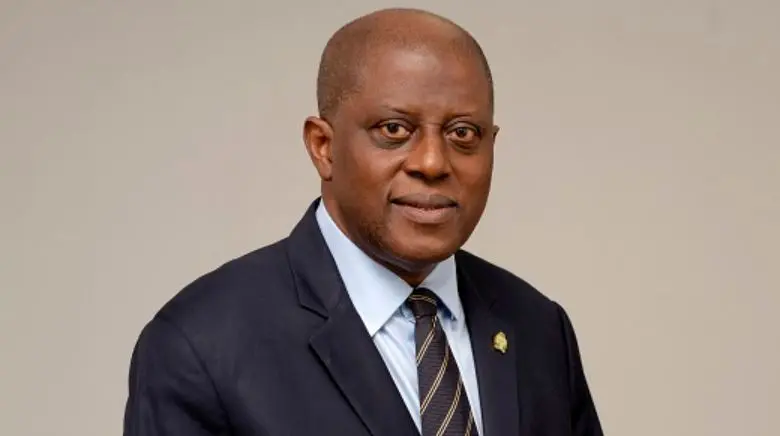
The Governor of the Central Bank of Nigeria (CBN), Olayemi Cardoso, has said Nigeria’s economy is now stronger and better prepared to handle global economic shocks, as recent reforms begin to restore investor confidence.
Cardoso made this known while speaking at the Africa Capital Forum in London on Tuesday, held on the sidelines of President Bola Ahmed Tinubu’s state visit to the United Kingdom.
Addressing investors and development partners, the CBN Governor said the apex bank had taken deliberate steps to strengthen the country’s financial system through disciplined monetary policies and institutional reforms.
According to him, “we have created stronger capacity to withstand shocks,” adding that the bank is also reviewing its policies to ensure they are more predictable and reduce uncertainty for investors.
He explained that the ongoing review is aimed at building a system where policies are clear and consistent. “We are reviewing our policies with a view to developing meaningful policies and establishing a predictable policy framework to minimise discretion,” Cardoso said.
The CBN Governor also announced that the bank has concluded work on a new Payments System Vision for Nigeria, which will soon be launched. He said the initiative is designed to position Nigeria as a major player in digital payments and cross-border transactions across Africa.
Speaking on developments in the foreign exchange market, Cardoso said there is now improved transparency and liquidity. He noted that a new foreign exchange manual has removed several previous restrictions and made it easier for businesses and investors to operate.
He also gave an update on the bank recapitalisation programme, stating that more than 30 banks have already met the new capital requirements, while verification is ongoing for others. According to him, about 28 per cent of the funds raised came from foreign investors, a sign of growing confidence in Nigeria’s financial system.
Cardoso further disclosed that diaspora remittances have increased significantly, helping to strengthen the country’s foreign exchange reserves and making them more stable in the face of global economic changes.
“Our focus going forward is to protect the hard-earned stability we have accomplished so investors and stakeholders can plan with confidence,” he said.
He assured that the CBN under his leadership will continue to operate with openness and transparency, maintain regular communication, and improve standards in order to avoid past policy mistakes.
On digital finance, Cardoso said the apex bank is working closely with Nigeria’s fintech companies to remove regulatory challenges and support innovation that will expand financial inclusion, not just in Nigeria but across Africa.
He also spoke on the need for stronger cooperation between monetary and fiscal authorities, noting that such collaboration is important for achieving sustainable economic growth. He said the inclusion of fiscal authorities in the CBN Board and the Monetary Policy Committee has helped improve coordination.
Cardoso added that inflation has dropped, exchange rate stability has improved, and ongoing reforms have positioned Nigeria for stronger economic growth driven by local investment, reforms in the oil sector, and renewed global trust.
“We will continue to maintain stability, not only on inflation, but in the FX market, with more transparency and consistent reporting,” he said, adding that the bank remains watchful to ensure inflation is kept under control.
He concluded that Nigeria’s economic reforms have moved the country from a period of stabilisation to one focused on attracting investment, urging global investors to see Nigeria as “an economy to watch very closely” as its banking system strengthens and growth opportunities expand.