


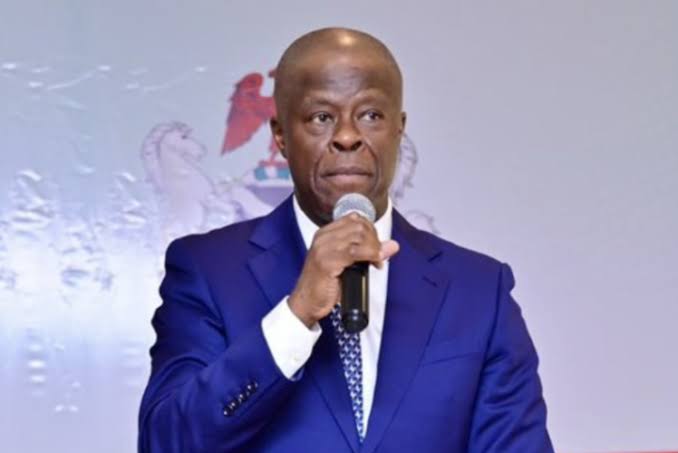
Wale Edun, minister of finance and coordinating minister of the economy, says Nigeria must reduce its dependence on borrowing and build a stronger, more reliable domestic revenue.
Edun spoke on Tuesday at the Nigerian Revenue Service (NRS) leadership retreat in Abuja.
“And of course, we need to reduce our dependence on debt. And so, revenue mobilisation within this context is a developmental imperative,” Edun said.
The minister also said the country can no longer depend on foreign funding to sustain its economy as global capital flows to developing countries continue to shrink.
According to Edun, the global financial system is increasingly fragmented, with countries turning inward and retreating from multilateral cooperation.
He said data from 2024 showed that developing countries paid about $163 billion in debt servicing, while overseas development assistance stood at $42 billion and foreign direct investment at $97 billion.
“When you add what came in and compare it to what went out, you can see clearly that we are giving more to the world than we are getting back,” Edun said.
According to the minister, the trend means Nigeria’s fiscal sustainability will depend largely on what it can generate internally rather than external borrowing or aid.
“The primary anchor of our fiscal sustainability is our own fiscal effort — our ability to generate revenue, create savings and invest those savings meaningfully,” he said.
Edun said high global interest rates, rising debt service costs and repeated external shocks from COVID-19 to geopolitical tensions have narrowed financing options for countries like Nigeria.
He said the shift made domestic revenue mobilisation not just a policy objective but a developmental necessity.
‘NRS POSITIONED AS THE ENGINE ROOM OF TINUBU’S REFORMS’
Edun further said the NRS is at the heart of President Bola Tinubu’s economic reform agenda.
The minister said the agency was not operating on the margins of reform but was central to Nigeria’s efforts to strengthen its fiscal position and reduce dependence on debt.
“You sit at the very centre of what we are trying to do in terms of fiscal strength,” he told NRS leadership at the retreat.
He said the success of ongoing reforms, including subsidy removal, public financial management reforms and economic diversification, depends largely on the ability of the revenue authority to deliver higher and more predictable revenues.
“No fiscal reform can deliver results if compliance is weak or uneven. Yet compliance cannot be achieved through enforcement alone. It is carrot and stick,” he added.
Edun said domestic revenue mobilisation was critical as Nigeria faces high global interest rates and rising costs of commercial borrowing, including eurobonds.
According to Edun, sustainable revenues would enable the government to invest in infrastructure, education and healthcare, strengthen social safety nets and reduce fiscal vulnerability.
He also linked revenue performance directly to macroeconomic conditions, noting that economic growth expands the tax base, exchange rate movements affect customs revenue, and inflation influences compliance behaviour.
“The connection between macroeconomic conditions and revenue performance is direct and unavoidable,” he said.
“Economic growth expands the tax base. Exchange rate dynamics affect customs revenue. Inflation influences compliance behaviour and affects the real value of collections.”
He urged the NRS to focus on digitisation, automation and data-driven decision-making to keep pace with changing business models and the digital economy.
Edun said Nigerians were watching closely and expecting the revenue reforms to translate into real-world outcomes.