


The Federal Government has expressed a renewed offensive against prolonged detention and prison congestion, charging the newly inaugurated Governing Board of the Legal Aid Council of Nigeria to aggressively expand free legal representation and deploy mechanisms aimed at reducing the population of awaiting-trial inmates across the country.
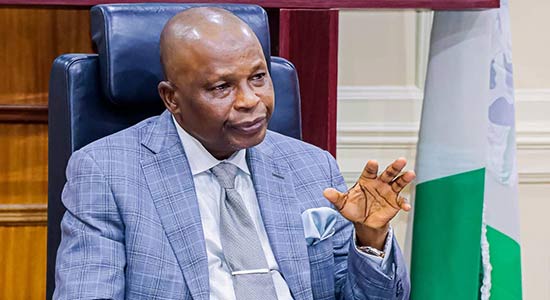
Attorney-General of the Federation and Minister of Justice, Prince Lateef Fagbemi (SAN), gave the directive on Wednesday in Abuja while inaugurating the Governing Board of the Legal Aid Council, describing access to justice as a national security imperative rather than a social welfare programme.
According to him, president Bola Ahmed Tinubu administration intends to make legal aid a central pillar of its justice sector reforms by using early legal intervention to tackle arbitrary detention, speed up criminal trials and ease pressure on correctional facilities.
Fagbemi directed the Board to provide strategic policy leadership that would enable the Council’s management to strengthen operational initiatives such as the Police Duty Solicitors Scheme (PDSS) and the Court Duty Solicitors Scheme (CDSS), both designed to ensure suspects obtain legal representation at the earliest stages of arrest and prosecution.
“The Legal Aid Council serves as the moral compass of our justice delivery system,” he said.
“In a society where economic disparities can hinder the assertion of basic rights, the Council ensures that poverty is never a bar to justice.”
He noted that Section 19 of the Legal Aid Act mandates the Council to visit correctional centres, police cells and detention facilities to monitor the welfare and legal status of awaiting-trial inmates.
According to him, effective implementation of that responsibility would not only protect fundamental human rights but also help decongest detention facilities and reduce delays in the administration of justice.
The Attorney-General linked the Council’s work directly to the Federal Government’s legal reform agenda, saying reforms were aimed at building a justice system that is more efficient, transparent, accountable and people-centred.
He said strengthening access to justice for indigent Nigerians would contribute to equitable social and economic development while boosting public confidence in the legal system.
Fagbemi also urged the Board to support ongoing reforms under the Administration of Criminal Justice Act by contributing to proposed legislative amendments that would keep Nigeria’s criminal justice framework aligned with emerging realities and international best practices.
Recognising funding constraints, the minister encouraged the Council to diversify its support base by building stronger partnerships with development partners, expanding pro bono collaborations with the Nigerian Bar Association, embracing legal technology and improving coordination with the judiciary, law enforcement agencies and civil society organisations.
He stressed that access to justice should not depend on an individual’s financial capacity.
“Access to justice is not a luxury; it is a prerequisite for national security, public trust and socio-economic harmony,” he said.
Fagbemi also reminded members of the Governing Board that their responsibility is to formulate policy and provide strategic oversight rather than interfere in the Council’s day-to-day administration.
He urged them to familiarise themselves with extant regulations governing the relationship between supervising ministries, governing boards and management of government agencies in order to avoid institutional conflicts.
According to him, the success of the Board will be judged by the quality of policies it introduces, the credibility it builds for the institution and the number of vulnerable Nigerians whose access to justice is improved.
The Attorney-General expressed confidence in the leadership of the Board Chairman, retired Justice Sulyman Durosinlohun Kawu, OFR, a former Chief Judge of Kwara State, saying his judicial experience and administrative competence would provide the strategic direction needed to strengthen the Legal Aid Council.
He pledged the continued support of the Federal Ministry of Justice through policy coordination, institutional strengthening and inter-agency collaboration before formally inaugurating the Board and wishing members a successful tenure