

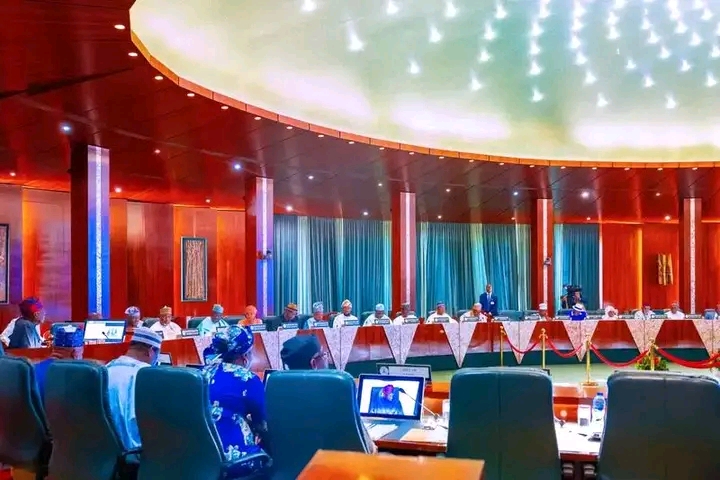
The National Economic Council (NEC) has called for the reinforcement of State Emergency Management Agencies (SEMAs) across Nigeria’s 36 states and directed the Federal Ministry of Finance to disburse emergency funds to mitigate the impacts of anticipated flooding. The resolution was announced in a statement by Stanley Nkwocha, Senior Special Assistant to the President on Media and Communications (Office of the Vice President), following NEC’s meeting on Thursday.
The directive followed a presentation by Zubaida Umar, Director General of the National Emergency Management Agency (NEMA), outlining the agency’s 2025 flood preparedness and response strategies. Umar highlighted NEMA’s progress since 2024, including the development of the National Disaster Risk Reduction Strategy and Action Plan (2024-2027) with United Nations support and the ongoing validation of the 2024 Nigeria Hazard Risk Countrywide Analysis. The agency has also enhanced civil-military coordination through partnerships with the military, Nigeria Police Force, Nigeria Security and Civil Defence Corps, and the Nigeria Red Cross.
NEC emphasized the need for local government areas and communities to take ownership of risk mitigation efforts, participate in awareness campaigns, and report early flood risks to authorities. To support these efforts, the council instructed the Federal Ministry of Finance to release funds to all states, the Federal Capital Territory, and select federal agencies for flood preparedness in 2025.
NEMA’s 2025 initiatives include expert analysis of meteorological forecasts, with flood predictions communicated to state governments between May and June. The agency has strengthened SEMAs, established Local Emergency Management Committees (LEMCs), and activated the Emergency Coordination Forum, involving security agencies for disaster response. On May 29, 2025, NEMA activated its Emergency Operations Centre, with national and zonal centers now operational. Search and rescue equipment has been deployed to high-risk states, and early warning messages are being disseminated to local communities through the National Preparedness and Response Campaign.
Despite these efforts, NEMA identified challenges hampering effective flood response, including weak drainage infrastructure, delayed data reporting from states, insecurity in flood-prone areas, limited SEMA functionality, and inactive LEMCs. Additional issues include poor compliance with urban planning and building codes, as well as inadequate environmental hygiene and waste management systems.
NEC urged state governments to fully operationalize SEMAs and LEMCs, enforce physical planning laws and building codes, institutionalize monthly environmental sanitation, and prioritize disaster preparedness funding in annual budgets. Social media discussions on platforms like X reflect public concern over recurring floods, with some users praising NEMA’s proactive measures, while others criticized systemic infrastructure failures. As Nigeria braces for potential flooding, stakeholders are pressing for coordinated action to safeguard vulnerable communities.