
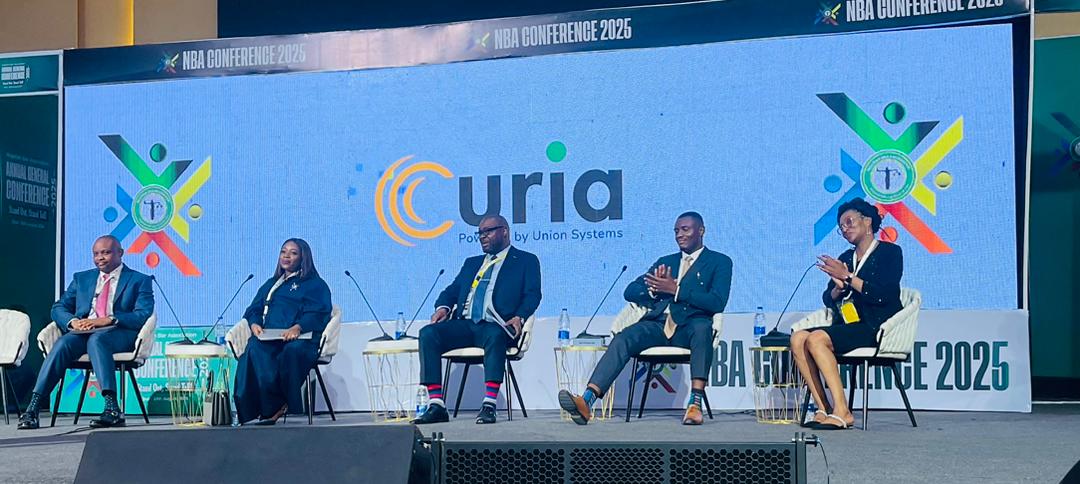
The Nigerian Bar Association (NBA) Annual General Conference in Enugu featured a thought-provoking breakout session on “Disruptive Artificial Intelligence,” where legal minds examined both the promise and pitfalls of AI in the legal profession. The session, moderated by Charles Omole, brought together a diverse panel of experts including Hassan Barnabas-Agbada, Ikechukwu Uwanna, Obele Akinnrianye, Obinnaya Agbo, and Rotimi Ogunyemi, who shared their insights on how AI is reshaping law practice.
Opening the conversation, Omole acknowledged the immense benefits AI brings to the legal field, such as predictive analytics and workflow efficiency, but cautioned that the ethical implications cannot be overlooked. He stressed the need for lawyers to maintain oversight, reminding participants that while AI can enhance productivity, responsibility for legal work remains firmly with human professionals.
Contributing to the discussion, Hassan Barnabas-Agbada highlighted that AI presents vast opportunities for the legal industry but warned of the risks of misuse, emphasizing the importance of human supervision. Echoing similar sentiments, Ikechukwu Uwanna noted that although AI provides strong starting points for drafting and analysis, many lawyers fail to review outputs critically, a practice he said could compromise both quality and accountability.
From a different angle, Obinnaya Agbo expressed optimism about the speed at which young lawyers are embracing AI, particularly in document analysis, legal research, and client connections. However, he underscored the dangers of misapplication, noting that while the right AI tools save time and improve efficiency, misuse could erode trust in legal services. Obele Akinnrianye added that beyond law practice, AI is transforming classroom management and creating new business opportunities, though plagiarism among students remains a troubling side effect.
The discussion also explored regulatory and educational reforms. Uwanna advocated for the creation of a legal-sector-specific framework to regulate AI, even before national laws catch up, while Hassan Barnabas-Agbada disclosed that the NBA Section on Legal Practice (NBA-SLP) had already developed guidelines for AI use, which have gained adoption. Obele emphasized the urgent need to retool the Nigerian Law School curriculum to include interdisciplinary and technology-driven training, preparing future lawyers for AI-enabled practice.
Looking ahead, Rotimi Ogunyemi reflected on AI’s rapid evolution—from basic chatbots to agentic AI capable of reasoning and execution—and stressed that governance structures must keep pace to ensure both legal services and society benefit from the technology. The session closed with consensus among panelists that AI must remain a tool, not a substitute for legal judgment. As Uwanna concluded, “lawyers must take ownership of AI outputs,” while Hassan reinforced that “AI is only an assistant—it cannot replace the judgment of a lawyer.”