


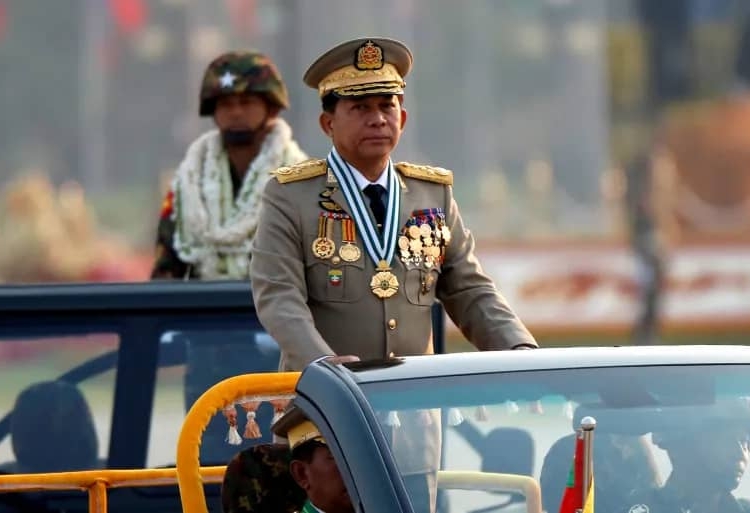
Myanmar’s new president, Min Aung Hlaing, has pardoned former president Win Myint as part of a sweeping amnesty that also affects thousands of prisoners across the country.
The pardon of Win Myint, who had been detained since the 2021 military coup, was confirmed in an official statement from the presidency, which said he had been “granted a pardon and the reduction of his remaining sentences under specified conditions.”
The move comes alongside a broader clemency order approved by Min Aung Hlaing, one of his first major acts since assuming the presidency, covering 4,335 prisoners, according to state broadcaster MRTV.
In a related development, the sentence of detained former civilian leader Aung San Suu Kyi has also been reduced. Suu Kyi, who is serving a 27-year prison term on charges widely criticised by her allies as politically motivated, had her sentence cut by one-sixth, her lawyer told Reuters.
However, uncertainty remains over whether the 80-year-old Nobel laureate will be moved to house arrest or continue serving her sentence in detention. She has not been seen in public since her trials concluded, and her whereabouts remained undisclosed.
The mass amnesty also included a significant policy shift on capital punishment. A government communique stated that all death sentences would be commuted to life imprisonment, while life sentences would be reduced to 40 years. Other prison terms will see a one-sixth reduction.
As Fresh Facts About Mandelson Resurface
South Africa’s Opposition Leader Julius Malema Risks Losing Parliamentary Seat
Additionally, 179 foreign nationals were among those set to be released and deported.
Amnesties are not uncommon in Myanmar, often coinciding with national celebrations such as Independence Day and the traditional New Year in April. However, this latest move comes just a week after Min Aung Hlaing was sworn in as president in the capital, Naypyidaw, following years of military rule.
In his inauguration speech, he declared that “Myanmar has returned to the path of democracy and is heading towards a better future,” while acknowledging ongoing challenges facing the country.
Despite the announcement, scepticism remains among families of detainees and human rights groups. Outside Yangon’s Insein Prison, relatives gathered in anticipation, hoping their loved ones would be among those freed.
“My brother has been imprisoned for a political case,” one relative told AFP. “I am hoping that he might be included in today’s release, but we cannot expect much because he wasn’t included in previous pardons.”
Analysts note that previous amnesties have largely excluded political detainees. Data from advocacy groups indicate that fewer than 14 per cent of those released since the 2021 coup were held on political charges, despite more than 30,000 arrests linked to the military takeover.
Human rights organisations have continued to call for the unconditional release of Suu Kyi and other political prisoners, arguing that sentence reductions fall short of addressing what they describe as politically motivated prosecutions.