


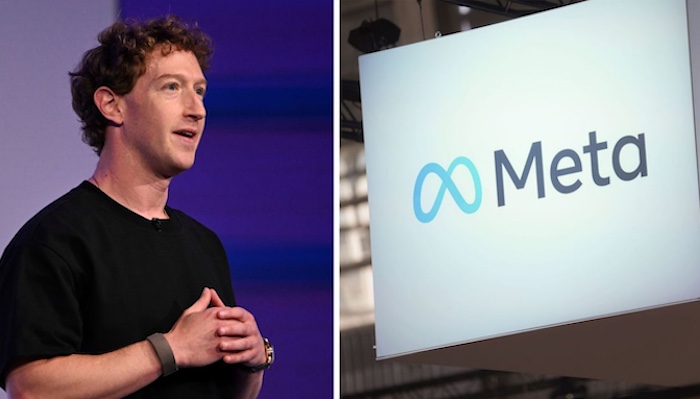
Meta continues to record strong financial growth despite mounting legal battles, public criticism over child safety and concerns about privacy, with its expanding user base and artificial intelligence investments helping sustain its commercial success.
The technology giant, which owns Facebook, Instagram and WhatsApp, has maintained its market position even as allegations about the impact of its platforms on young users intensify scrutiny of its business practices.
Meta chief executive Mark Zuckerberg recently showcased the company’s artificial intelligence ambitions at its annual Meta Connect event, unveiling products including the Muse AI assistant, smart glasses and a wearable artificial intelligence device.
However, the presentation focused largely on the company’s future in artificial intelligence rather than Facebook and Instagram, the platforms that helped establish Meta as a technology powerhouse valued at approximately $2 trillion.
The company faces growing legal challenges over allegations that its platforms were designed to encourage addictive behaviour among young users. Court proceedings have brought internal communications, corporate documents and whistleblower accounts into the public domain, raising further questions about what executives knew about the potential risks.
Zuckerberg’s personal reputation has also come under pressure. A Pew Research Center survey published last year found that approximately two-thirds of Americans viewed him unfavourably.
The controversy has received renewed attention following the release of The Social Reckoning, a film examining allegations that Meta executives knew their products could harm young people.
Critics have increasingly compared the company’s position with that of the tobacco industry, arguing that businesses can remain profitable even when their products face widespread criticism over potential harm. The comparison has raised questions about whether sustained public opposition could eventually threaten Meta’s commercial success.
So far, however, the company’s financial results and user figures suggest that the controversy has done little to undermine demand for its services. Engagement across its platforms remains strong, while its artificial intelligence products are attracting considerable interest.
The contrast between Meta’s commercial success and its reputational difficulties raises questions about whether legal pressure and declining public trust will eventually affect its business or whether its financial strength will allow it to withstand the criticism.
Meta’s legal difficulties have intensified as regulators, families and public authorities challenge its efforts to protect younger users.
Last summer, Reuters reported that the company had allowed its chatbots to engage children in romantic or sensual conversations and provide inaccurate medical information. Meta subsequently revised its policies, acknowledging that such responses should not have been permitted.
In March, a California jury awarded $6 million to a 20years old woman who alleged that her use of Instagram and YouTube contributed to mental health problems.
Around the same period, a New Mexico jury found against Meta in a separate case involving child safety. Jurors concluded that the company had failed to adequately warn the public about risks its platforms posed to children and imposed a penalty totalling $942 million.
The judge described Meta as a public nuisance, drawing comparisons with environmental pollution.
Meta has disputed the findings and is appealing both verdicts.
In May, the company joined several social media businesses in settling a lawsuit brought by a Kentucky school district, which alleged that platform design had contributed to a youth mental health crisis. Meta reportedly agreed to pay $9 million, the largest amount among the defendants.
The company also reached a major settlement this summer with 48 US states, the District of Columbia and three US territories. The agreement, reportedly worth $18 billion, resolved another significant legal dispute without Meta admitting wrongdoing.
During the five days trial, Meta maintained that it had invested substantial resources in research and initiatives intended to make its platforms safer for younger audiences.
Under the settlement, the company agreed to introduce measures including two-hour daily usage limits for young users, restrictions on nighttime access, muted notifications during school hours and additional safeguards.
Further legal challenges remain, including a case scheduled to begin in Los Angeles concerning allegations that social media platforms contribute to addiction among young users.
Pressure is also mounting internationally. Australia introduced a ban on social media access for children below a specified age in December last year, adding to broader efforts to restrict young people’s access to the platforms.
Public opinion reflects similar concerns. A Reuters/Ipsos survey found that 85 per cent of Americans believed social media could be addictive for children, while 61 per cent supported greater government oversight.
Alison Taylor, an associate professor at New York University’s Stern School of Business, has argued that a significant loss of public trust can create a difficult cycle for companies attempting to rebuild their reputations.
Despite the legal pressure, Meta continues to report growth across its services. The company said the number of people using some of its applications, including Instagram and WhatsApp, increased by three per cent year on year, while its second-quarter revenue rose by 28 per cent compared with the same period in 2025.
Meta has acknowledged the need to adjust its approach to younger users, although it has said teenagers account for less than one per cent of its revenue. TikTok and Google’s YouTube remain major competitors in the battle for younger audiences.
Some market observers have also viewed the settlement involving 48 states as favourable to Meta because it allowed the company to resolve the dispute without admitting liability. It also avoided further proceedings that could have exposed additional internal documents and required senior executives, including Zuckerberg, to testify.
Investors appeared to respond positively to the outcome. Meta’s shares rose four per cent immediately after the settlement announcement and gained more than 25 per cent over the following month.
The performance suggests that investors remain confident in the company’s ability to generate revenue despite the controversy. Critics, however, argue that Meta has so far managed to withstand reputational damage without losing a substantial portion of its audience.
Patrick Moorhead, founder and chief executive of Moor Insights & Strategy, said Meta was in a stronger position than he had anticipated despite the criticism.
A major source of that resilience is the company’s advertising business. Revenue generated from advertising across Facebook, Instagram and its other platforms provides the financial resources needed to fund investments in artificial intelligence, virtual reality and emerging technologies.
Meta recorded revenue of $60.8 billion and profit of $15.9 billion in the second quarter of this year.
Those earnings have supported investments ranging from its earlier metaverse ambitions to a major expansion of artificial intelligence infrastructure, giving the company considerable capacity to pursue new technologies even as it confronts legal costs, regulatory scrutiny and questions about its public image.
Artificial intelligence is increasingly central to Meta’s next phase of growth. However, the strategy could also require users to give the company access to more of their personal information, potentially intensifying concerns about privacy.
Last month, Meta introduced Muse, its new AI personal assistant application. Unlike conventional chatbots that generally respond to individual prompts, an AI agent can carry out tasks involving several stages and continue working on a user’s behalf over an extended period.
Early demonstrations have attracted attention. A technology reporter for The New York Times, after testing the application for two weeks, described being impressed by its capabilities, reporting that it contacted a dental insurer, ordered groceries and organised credit card spending in a spreadsheet.
Such functions could make AI assistants more useful in everyday life. However, their effectiveness may depend on users granting access to sensitive information, including payment details, purchase records and email accounts.
That creates a significant challenge for Meta, whose handling of personal information has been questioned for years.
The Cambridge Analytica scandal, in which Facebook user data was accessed and used by a political consulting firm, remains one of the most prominent controversies in the company’s history.
More recently, a New Mexico jury found that Meta had misrepresented aspects of how Facebook used personal information. The company disputed the verdict and said it would defend itself against what it described as attempts to mischaracterise its record.
These controversies could influence whether consumers feel comfortable allowing Muse to manage increasingly personal aspects of their lives.
Nevertheless, early adoption figures suggest substantial interest in the application. During its first month, Muse reportedly recorded more than five million downloads and over three million weekly active users. Its initial uptake in North America was also said to be outpacing ChatGPT’s early adoption in the market.
Zuckerberg’s broader strategy involves integrating Muse with Meta’s expanding range of AI smart glasses, allowing users to access what he describes as personal superintelligence without needing to use their hands.
The plan reflects the company’s ambition to make artificial intelligence available through devices that people can use throughout their daily activities, rather than relying exclusively on smartphones and computers.
Meta is investing heavily in smart glasses as it seeks to establish a leading position in the emerging consumer technology market.
Kate Winick, a principal analyst at Forrester who covers social media and influencers, said the company’s investment appeared designed to position it as a major player in the sector.
However, the devices have attracted criticism because their cameras can potentially record people without their knowledge. Some critics have labelled the products “pervert glasses”, arguing that their discreet recording capabilities could facilitate invasions of privacy.
Meta has introduced measures designed to prevent users from disabling or obstructing the indicator light that signals when the glasses are taking photographs or recording videos.
Zuckerberg has also announced audio-only smart glasses, which could appeal to consumers concerned about the privacy implications of wearable cameras. Even so, critics remain unconvinced that the company’s safeguards are sufficient.
Brooke Istook of the Heat Initiative, a campaign group focused on online child safety, questioned why consumers should entrust Meta with their most sensitive information while concerns about the safety of its products for children remain unresolved.
At the Meta Connect event, Zuckerberg sought to address privacy concerns by highlighting security features incorporated into the company’s new AI systems.
He discussed plans for a personal virtual machine, a protected computing environment hosted within Meta’s cloud infrastructure where users’ information would be stored. Zuckerberg said the system was designed to protect customer data and could eventually prevent Meta itself from accessing that information.
The company said the virtual machine was expected to launch later this year, alongside additional privacy protections.
Winick noted, however, that users still need to activate several available safeguards themselves, raising questions about how widely those protections will be adopted.
Further concerns emerged after social media users reported incidents in which Muse allegedly accessed emails without permission. Meta rejected claims that the assistant accesses email accounts without users’ consent.
For some industry observers, convenience may ultimately outweigh privacy concerns for a substantial proportion of consumers.
Moorhead argued that users would continue embracing a product if they believed its benefits justified the compromises, pointing to the enduring popularity of Facebook and Instagram despite years of criticism.
That argument reflects a broader challenge for Meta’s critics: public dissatisfaction does not necessarily translate into reduced usage, particularly when consumers continue to find the company’s products useful.
However, the stakes could become higher as Meta moves beyond social networking and advertising into AI assistants capable of handling personal communications, financial information and everyday tasks.
The company’s advertising revenue provides a strong financial foundation for this expansion, but developing and operating advanced AI systems requires substantial investment.
According to its most recent financial statement, Meta has accumulated $83.7 billion in long-term debt as it expands its technology infrastructure.
Despite the financial demands, Meta executives remain confident that AI assistants will become a central part of the company’s future.
Andrew Bosworth, Meta’s chief technology officer, told the BBC that the company’s vision centred on developing an agent capable of working on behalf of users and helping them achieve their personal goals.
The strategy marks a significant expansion of Meta’s ambitions beyond social networking and digital advertising. It also places greater emphasis on persuading consumers to trust the company with information that goes well beyond what they share on conventional social media platforms.
Ultimately, Meta’s ability to sustain its growth will depend on more than advertising revenue, an expanding user base and advances in artificial intelligence. It will also need to convince consumers, regulators and families that its products can deliver convenience and innovation without compromising privacy or child safety.
For now, strong financial results and sustained user engagement suggest that Meta’s legal battles and reputational problems have not substantially weakened its business. Whether that resilience continues as artificial intelligence becomes more deeply integrated into its products will depend on how effectively the company balances innovation and commercial ambitions with privacy and public accountability.