
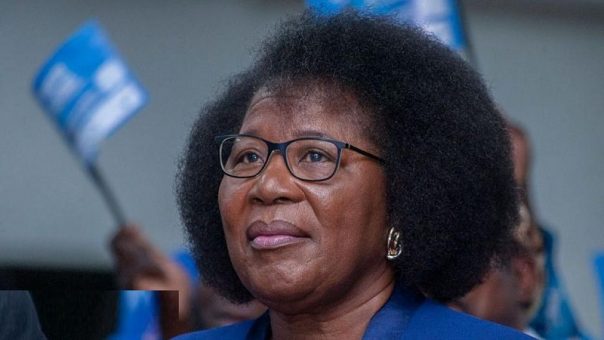
The Vice President of Malawi, Jane Ansah, has called for a comprehensive and coordinated strategy to advance women’s rights across Africa, stressing that legal frameworks alone cannot deliver meaningful change.
Ansah, represented by her daughter, Hamacuda Janet Ansah, made the call in Enugu during the 60th birthday celebration of Nigerian human rights advocate, Joy Ezeilo.
In her keynote address, she emphasised the need for integrated approaches that address social, economic, institutional, and cultural barriers to gender equality.
“Women’s rights are not peripheral but central to sustainable democracy and development,” she said, urging governments to move beyond policy declarations to concrete reforms.
Ansah acknowledged progress made through legal instruments such as the Violence Against Persons Prohibition Act and the Child Rights Act, but noted that inequality persists due to weak enforcement, institutional gaps, and entrenched patriarchal norms.
She warned that Africa’s plural legal systems—comprising statutory, customary, and religious frameworks—often hinder women’s access to justice, leaving many without adequate protection.
According to her, issues such as gender-based violence, harmful traditional practices, and economic exclusion require coordinated, multi-sectoral responses.
Ansah further identified economic disempowerment as a major obstacle, citing limited access to land, credit, and financial systems as factors that continue to marginalise women, particularly in rural communities.
She also drew attention to emerging challenges, including digital inequality, climate change, and migration, which disproportionately affect women and girls.
On climate change, she noted that although women play a critical role in sustaining livelihoods, they remain highly vulnerable to environmental shocks and are often excluded from key decision-making processes.
Highlighting Ezeilo’s contributions, Ansah said the legal scholar’s work demonstrates the importance of bridging law, policy, and practice in achieving lasting transformation.
“She remains a beacon for all who believe in justice. Her legacy shines in the minds she has shaped and the hope she has inspired,” Ansah said.
In his tribute, Enugu State Governor Dr. Peter Mbah described Ezeilo as “an icon whose life reflects courage and service.”
Represented by the Commissioner for Agriculture, Patrick Ubru, Mbah praised her contributions as a former United Nations Special Rapporteur on trafficking in persons and founder of the Women’s Aid Collective (WACOL), noting that her work has protected abused women and vulnerable groups.
“Her life is a testament to service and sacrifice. She chose justice over comfort and humanity over silence,” he said.
Also speaking, former Minister of Education, Oby Ezekwesili, described Ezeilo as a rare personality whose influence transcends borders.
“She has become a garment for many – wrapping the poor, the violated, and the voiceless in the warmth of her advocacy,” Ezekwesili said, commending her lifelong commitment to using the law as a tool for justice.
The event drew widespread acclaim for Ezeilo’s decades-long impact in advancing human rights, strengthening institutions, and advocating for the protection of vulnerable populations across Africa and beyond.