

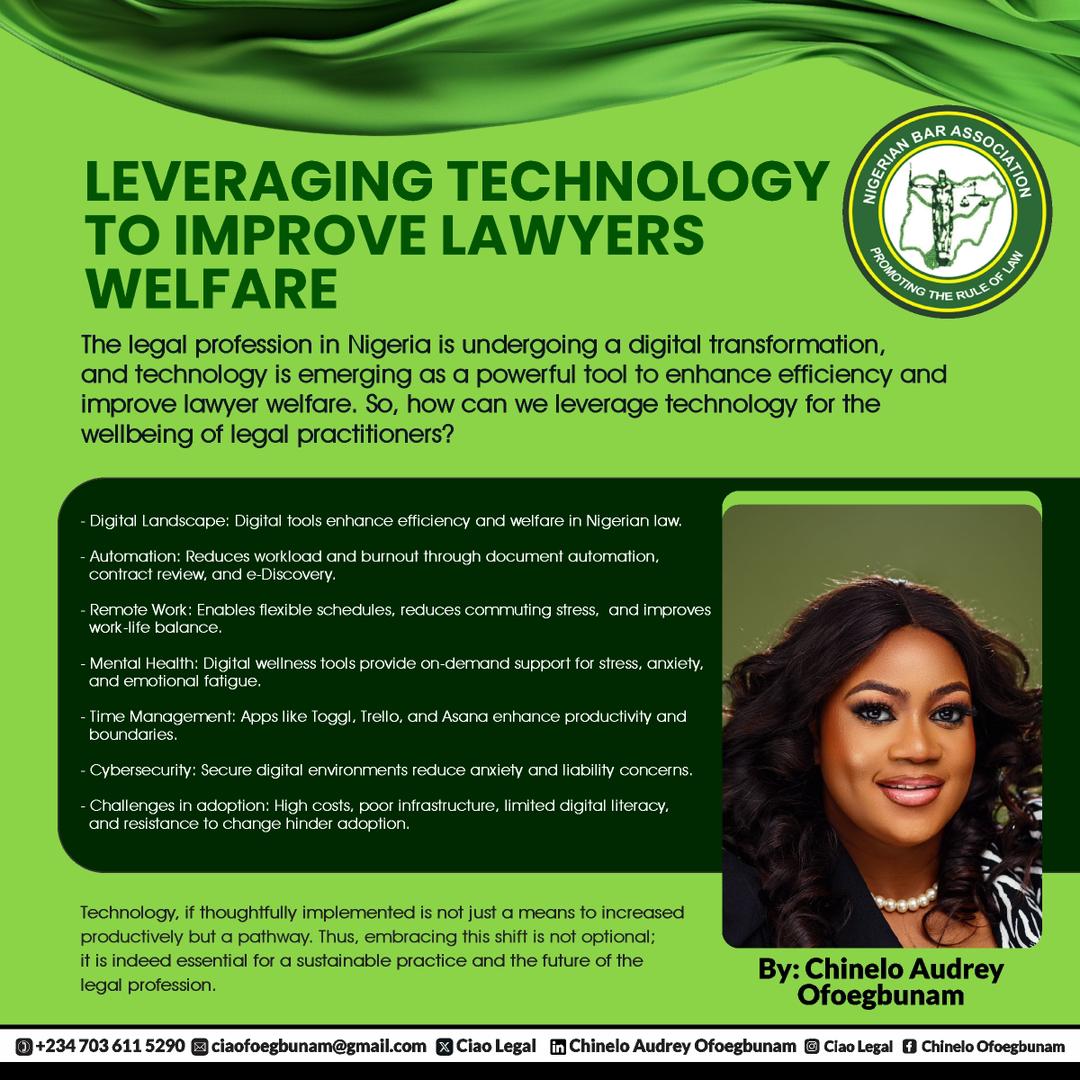
By Chinelo Audrey Ofoegbunam
The legal profession in Nigeria, like elsewhere, is undergoing a digital transformation. As the practice of law becomes increasingly complex and demanding, technology is emerging as a powerful tool not only to enhance efficiency but also to improve the welfare of legal practitioners. In this article, we explore how technology can be leveraged to support lawyers’ well-being, streamline workloads, and foster a healthier, more productive legal environment.
1. The Digital Landscape in the Legal Sector
The last decade has seen a steady rise in the use of digital tools among Nigerian lawyers from legal research platforms and virtual court proceedings to cloud-based document management systems. While these tools primarily aim to improve professional efficiency, their impact on welfare is significant when used strategically.
2. Alleviating Workload Through Automation
One of the primary stressors for lawyers is the heavy workload and long hours. Legal tech solutions such as:
Document automation tools, contract review software and e-Discovery platforms can reduce the time spent on routine tasks, allowing lawyers to focus on higher-value work and minimize burnout.
3. Remote Work and Flexible Schedules
The COVID-19 pandemic accelerated the adoption of remote work technologies. Platforms like Zoom, Microsoft Teams, and legal case management software now enable:
* Flexible working hours
* Reduced commuting stress
* Better work-life balance
For lawyers with families or health concerns, remote work options can drastically improve quality of life.
4. Mental Health and Wellness Apps
Digital wellness tools are increasingly accessible, including:
A. Mental health apps (e.g., Calm, Headspace)
B. Online therapy platforms
C. AI-based stress monitoring tools
These apps provide on-demand support, helping lawyers manage stress, anxiety, and emotional fatigue discreetly and conveniently.
5. Time and Task Management
Time-tracking and task management apps (like Toggl, Trello, and Asana) help lawyers plan their days better, prioritize tasks, and set boundaries—key components of avoiding burnout and enhancing daily productivity.
6. Cybersecurity and Data Protection
Technological security is also a welfare issue. Lawyers handling sensitive data must feel secure in their digital environment. Investing in:
A. Encrypted communication tools
B. Secure cloud storage
C. Cybersecurity training
These helps reduce the anxiety surrounding data breaches and professional liability.
7. Challenges in Adoption
Despite its benefits, the integration of technology in Nigerian legal practice faces challenges, such as:
A. High cost of legal tech solutions
B. Poor internet infrastructure in some regions
C. Limited digital literacy among older practitioners
D. Resistance to change within traditional law firm structures
These barriers must be addressed to ensure inclusive and effective adoption of legal technology.
Technology, when thoughtfully implemented, is not just a means of increasing productivity, it’s a pathway to better lawyer welfare. From reducing administrative burdens to supporting mental health and promoting work-life balance, the digital revolution in law offers immense potential for the Nigerian legal profession. Embracing this shift is not optional; it is essential for a healthier, more sustainable legal practice.
Connect with me on Social Media
X: CIAO Legal
Linkedln: Chinelo Audrey Ofoegbunam
Instagram: CIAO Legal
Facebook: Chinelo Ofoegbunam