
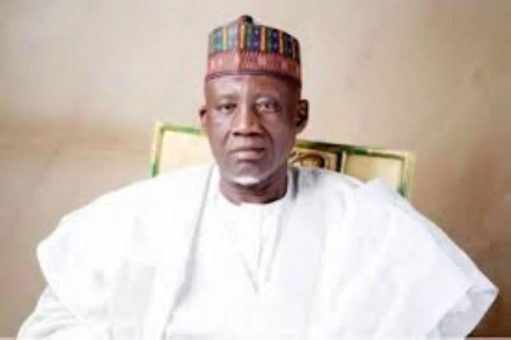
Minister of Labour and Employment, Muhammad Maigari Dingyadi, said on Monday that the Ministry has concluded work on reforming the nation’s labour laws and appealed to the National Assembly to expedite the passage of such laws
Speaking at the inaugural national dialogue on the legislative agenda of the 19th House of Representatives, the minister emphasised the need for legislative support to reform the labour laws to conform to international standards.
He said the bills will soon be forwarded to the National Assembly, while praising the leadership of the House for convening the inaugural National Policy Dialogue on the Legislative Agenda, describing it as a clear indication of the legislative commitment towards making a positive impact on our national development.
The Minister said the Dialogue represents a viable platform for stakeholders to engage in meaningful discussions on critical issues affecting the nation, especially as it draws participation from “policy makers, experts in various sectors, technocrats and key players in diverse fields.
He said, “I make a passionate plea to the House of Representatives to facilitate the speedy passage of national labour laws. Listing among them the Labour Standards Bill, the Collective Labour Relations Bill, and the Occupational Safety and Health Bill.”
“When enacted, these bills will not only reposition Nigeria’s labour administration system, but will create an enabling environment for robust investments, enhanced productivity and attainment of social justice,” he added.
Deputy Speaker of the House, Benjamin Kalu, said the Dialogue was a “historic step in the collective effort to reposition the People’s House as a truly proactive, responsive, and people-centred institution.”
“Today, we gather not merely as policymakers but as custodians of Nigeria’s democratic future.”
“Under President Bola Ahmed Tinubu’s Renewed Hope Agenda, Nigeria is witnessing a paradigm shift: a nation transitioning from potential to performance, from challenges to solutions, and from despair to hope”, he said.
Kalu spoke on the eight thematic pillars of the Legislative Agenda, which align with the President’s eight-point plan, including reforms in good governance, national security, social sector development, economic diversification, fiscal federalism, environmental sustainability, law reform, and inclusive governance.
“We salute Hon. Speaker Abbas Tajudeen for orchestrating this legislative surge,” he said, also commending Hon. Cyril Hart Godwin and Hon. Chinwe Nnabuife Clara for leading the charge in evaluating the implementation of the Agenda.”
“The Dialogue, the first of its kind, aims to foster inclusive engagement, strengthen feedback loops between lawmakers and the public, and promote transparency in legislative work. By year’s end, it is expected to yield stakeholder-informed policy briefs, enhance understanding of the Agenda, and be institutionalised as an annual event”.
The Deputy Speaker also acknowledged the support of development partners, including the European Union, UK International Development, PLAC, and the National Assembly Library Trust Fund.
“Your expert guidance and technical assistance have been indispensable. As we embark on today’s sessions, let us seize this unique opportunity to interrogate, refine, and co-create the legislative toolkit that will carry Nigeria forward,” he concluded.
Executive Director of Policy and Legal Advocacy Centre (PLAC), Clement Nwankwo described the Dialogue as historically significant, calling it “a veritable platform for the robust articulation, analysis and appraisal of parliamentary activities towards a peaceful, prosperous, stable and sustainable nation.”
He praised the House’s eight-point Legislative Agenda, describing it as a contract with the Nigerian people and a roadmap in complementing the efforts of the Executive in navigating the nation out of turbulent waters to the safe shores of national economic prosperity.
“The 10th House shone green flags as the beacon and the bastion of our democracy. It heralds a new era of purposeful alignment with global parliamentary best practices, benchmarked by the key indicators of strategic focus, measurable impact, and parliamentary objectivity,” he stated.