
By Stephen Azubuike
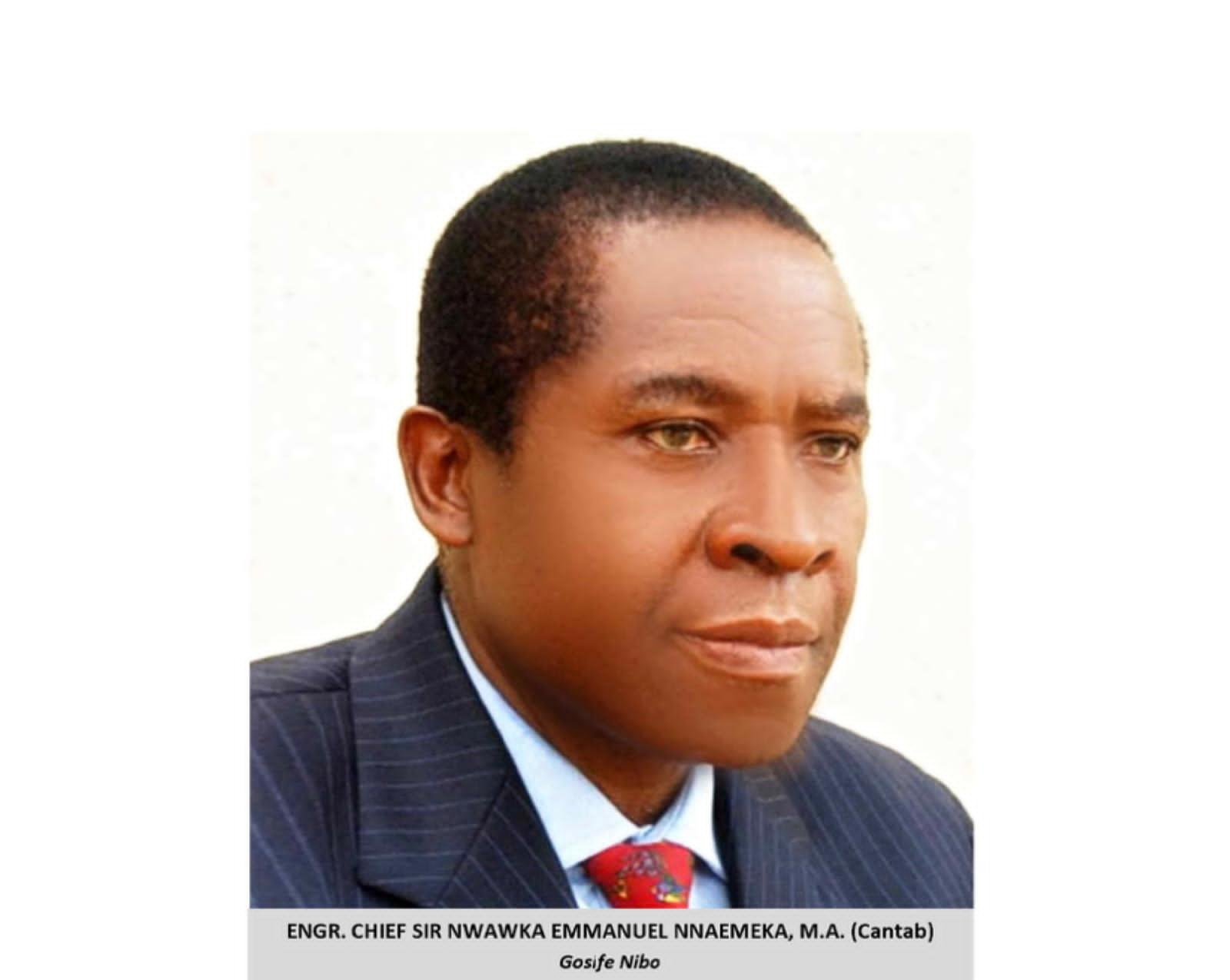
The news which recently made the rounds is that the Anambra State High Court, Awka Division, had “convicted and sentenced the Managing Director of Orient Petroleum Resources Plc, Nnaemeka Nwawka, and the Registered Trustees of Sage NebefeifeF oundation to 14 years imprisonment each for fraud involving N25 billion.”
The Economic and Financial Crimes Commission (EFCC)—the prosecuting agency of the government involved in the case—also published the news on its verified social media handles.2
Interestingly, to my knowledge, none of the media outfits made available a certified true copy of the court Judgment. It is hoped that the Anambra State Judiciary would adopt the technological drives of the National Industrial Court of Nigeria in ensuring speedy web upload of court judgments.
Was there a conviction for “N25 Billion Fraud”?
A careful perusal of the media reports raises a certain degree of doubt concerning the accuracy of the report against the Defendants. For instance, while the reports claimed that the Defendants were convicted for “N25 billion fraud”, the reports also stated that the Court ordered them “to refund the sum of N140,900,000 (One Hundred and Forty Million, Nine Hundred Thousand Naira) to Orient Petroleum Resources Plc.“ This is less than 0.6% of N25 billion. Thus, looking at the huge difference, it is quite doubtful whether indeed the Court expressly convicted the Defendants for “N25 billion fraud” as claimed by the reports.
Curiously, the possibility of inaccurate reporting becomes more probable when one considers the information at the tail end of the reports where it was stated that the criminal prosecution itself was instigated by a petition submitted to the EFCC by one investor, Cletus Ibeto, who had alleged that he was a victim of fraud having invested N25 billion in Orient Petroleum Resources Plc.
Going by this, a reporter who is not sufficiently meticulous may easily conclude that the Court’s conviction verdict aligns with the complainant’s claims or allegations. But this is not always the case. Indeed, it is one thing for a complainant to make an allegation, and another thing for the court to make a definite finding of fact after hearing the case and evaluating the evidence before it.
You may wonder whether the amount of money which is the subject of an alleged fraud is relevant. The truth is, the amount of money involved in a fraud case is critical, as it directly impacts the legal classification. It is also reckoned with when considering the severity of sentencing. The scope of recovery efforts may also be influenced by the amount of money involved. As a matter of fact, the EFCC has little interest in investigating an allegation of fraud bordering on sums the agency considers meager or insignificant.
It is true that an act of fraud by someone in a high position of trust (e.g., a CEO) can affect one’s reputation irrespective of the exact amount involved. But interestingly, the greater the amount of money involved in a fraud case, the more severe the reputational damage to the fraud perpetrator. More so, larger amounts of money tend to generate more media coverage, which ultimately raises increased public concern and professional ruin.
In view of the foregoing, one is justified to inquire into the issue of whether the figure of N25 billion as widely reported by the media formed an integral part of the Court Judgment or verdict in the case of the Managing Director of Orient Petroleum Resources Plc; or whether the huge sum was quoted in the headlines to drive wider media coverage with its attendant increased reputational consequences.
Were the Defendants Jailed?
Again, the reports stated that the Defendants were jailed for 14 years. This can be seen right from the title of the reports. The natural implication of this is that the individual involved is expected to have found himself a new home in prison where he would be spending the next 14 years. There was nothing in the report which talked about whether the Court granted the Defendants an option of fine. Meanwhile, information from a reliable source is that the Defendants were given an option of fine by the Honourable Court which was immediately paid and that the MD walked home free without serving a minute of jail term. If this is true, the public deserves to know the reason the media excluded the information about the option of fine. Was this deliberate or a mere inadvertence?
Another crucial question is, if a defendant was given an option of fine after conviction as an alternative to imprisonment, and the fine is paid, can the defendant still be rightly said to have been jailed? The answer is no. The defendant is not considered to have been “jailed” in the strict sense of it. People who have been jailed are found in prisons serving their jail terms or in their homes following a release from prison after serving their terms.
Aside from the issue of jail term, and option of fine (which was excluded from the media reports), the reports also stated that “the Defendants were convicted on a 10-count charge.” This information tends to suggest that the Defendants were convicted on all 10 counts in the charge. But the information from a reliable source is that the Court dismissed 6 counts but convicted the Defendants on 4 counts upon which the option of fine was given, taken, and paid. And nonetheless, an appeal has been lodged on behalf of the Defendants against the Court’s decision on those counts.
Justice Beyond Media Trial
Media trial or trial by media refers to media coverage of court cases, mostly criminal matters, in a manner that creates or influences public perception of guilt or innocence of an accused person before or after court judgment. In his paper , Hon. Justice Peter
Akhihiero of the High Court of Edo State observed that “Trial by media” is a phrase which refers to the impact of media coverage on a person’s reputation by creating a widespread perception of guilt or innocence before, or after, a verdict in a court of law.
Thus, trial by media goes beyond media coverage before judgment is delivered to include post-judgment coverage. Trial by media generally has the potential of interfering with the course of justice and threatens the constitutionally guaranteed presumption of innocence. Where it involves post-judgment coverage that inaccurately reports court’s verdict or misrepresents judicial pronouncements in a given case, trial by media may prejudice the rights of an accused person or even a convict.
Under Nigerian law, an accused person still enjoys certain rights. Notwithstanding criminal conviction, the person retains fundamental rights including the right to human dignity. This right protects against inaccurate or sensationalized media reporting of the court verdict.
The law permits media freedom for the reporting of judicial proceedings in public interest, and in order to ensure transparency, accountability, and public trust in the judicial system. However, in exercising this freedom, the reporting must be fair, accurate, and without malice.
The fact that a person has been held criminally liable does not automatically deny such a person the benefit of a fair and accurate reportage devoid of any trace of malice. More so, a defendant still reserves the constitutional right of appeal against any unfavourable court decision.
Media trial is a common practice in Nigeria. But the courts have warned against such practice. In fact, in 2017, Justice Gabriel Kolawole of the Federal High Court in Abuja (as he then was) had halted the trial of Colonel Nicholas Ashinze, a former aide to the ex-National Security Adviser, Colonel Sambo Dasuki (rtd.), along with seven others for an alleged N1.5 billion corruption case. The Court at the time insisted that it would not resume until the EFCC retracts the misrepresentation of the court’s proceedings that the defendants were being tried for N36.8 billion fraud instead of N1.5 billion. In its publication, the EFCC also wrongly referred to Nicholas Ashinze as a retired military officer, whereas he was a serving army colonel at the material time. The court also criticised the EFCC and other news media for dishing out falsehood to the general public.
Flowing from the above, it is clear that if, as reasonably suspected, the Managing Director of Orient Petroleum Resources Plc was not “jailed for 14 years for N25 billion fraud” as was reported in the media, that would amount to falsehood which should be strictly discouraged. The Defendants are entitled to a fair and accurate reporting of the Court’s verdict by the media.
Conclusion
Persons involved in fraudulent activities must face the law and the media may play their role. Nevertheless, it is of significant importance to preserve and promote the integrity of media reporting of judicial proceedings in public interest. The fundamental rights of accused persons including those found criminally liable must be respected. Accordingly, there is a need to uphold the established principles of fairness, accuracy and absence of malice in media reporting of court proceedings and verdict.