


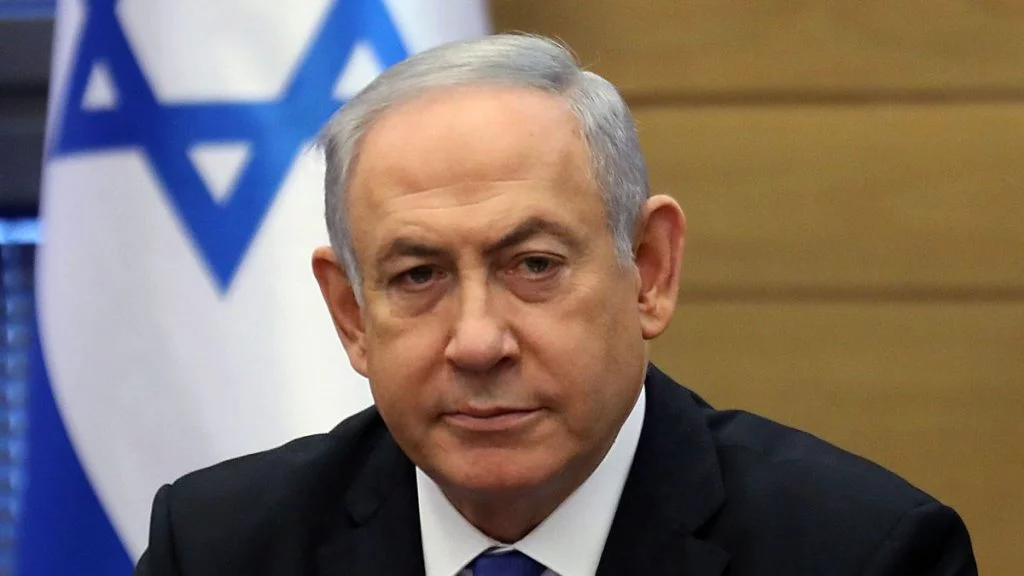
Israeli Prime Minister Benjamin Netanyahu has rejected US President Donald Trump’s 15-point plan for Gaza, insisting that Israeli forces will not withdraw until Hamas is “genuinely” disarmed.
Trump’s Board of Peace said last month that it had reached an agreement for the “complete disarmament” of Hamas and other armed groups in Gaza.
However, Hamas said handing over its heavy weapons was conditional on Israel ending “all forms of aggression” and withdrawing its forces from the territory.
On Sunday, a senior Board of Peace official maintained that the US-backed plan remained the only way forward.
Israel has continued to carry out strikes on Gaza since agreeing to an initial ceasefire in the territory last October.
“Israel rejects the 15-point document,” Netanyahu said at a cabinet meeting on Sunday.
The Israeli military “will not carry out any withdrawal until Hamas is genuinely disarmed and will continue to thwart threats against our forces and our citizens”, he added.
A Hamas official told the BBC on Sunday that the group “reaffirms it commitment” to the agreement and was ready “to engage seriously and responsibly in implementing” the 15-point plan.
The official called on mediators to ensure “that all parties comply with what has been agreed”.
Israel’s rejection deals another blow to Trump’s Gaza peace plan, which was announced in September last year.
The plan proposed the creation of the Board of Peace to oversee its implementation, alongside the disarmament of Hamas, the withdrawal of Israeli troops and the reconstruction of Gaza.
Netanyahu’s position was not unexpected, but his public rejection highlights the difficult position facing the Israeli leader.
He has expressed opposition to parts of Trump’s plan while also seeking to maintain ties with the US president, Israel’s closest ally.
It is just over a week since Trump announced what he called a “monumental step toward lasting peace and security”, after saying Hamas had agreed for the first time to disarm on the condition that Israel withdraws its forces from Gaza.
On Sunday, Netanyahu made clear that such a withdrawal would not happen under his government.
He said Hamas had to disarm first and insisted it could not be some “fictitious disarmament” but had to be genuine.
Any disarmament and withdrawal of Israeli forces would likely have to take place in phases.
Netanyahu said he was now discussing the way forward with US officials.
“They have ideas; some of them are acceptable to us and some are not, and we know how to stand our ground on these matters,” he said.
With Israeli elections just months away and pressure from members of his right-wing coalition to maintain a tough position on Gaza, Netanyahu is unlikely to make major concessions.
Far-right members of the coalition have called for a new cabinet vote to end the Gaza plan.
National Security Minister Itamar Ben Gvir has also dismissed the draft as “not acceptable”.
Nickolay Mladenov, a senior diplomat tasked with implementing Trump’s peace plan, defended the proposal on Sunday and said discussions were continuing in the hope of a “positive outcome”.
The Board of Peace’s high representative for Gaza told Israel’s Channel 12 that Israel had been asked “to give the process a chance”.
He said the plan was “the only way forward” to ensure there was no repeat of the 7 October 2023 attack by Hamas.
Mladenov said the plan was built around a process that was “verifiable, that is reversible, that at each stage can be stopped, and that we have built up with a very clear-eyed understanding of what are the challenges ahead”.
He also said Israel would not be required to withdraw until it could be verified that Hamas was taking steps towards disarmament.
According to the United Nations, about 1.9 million people, or 90% of Gaza’s population, have been displaced since the war began.
The conflict was triggered by the Hamas-led attack on southern Israel on 7 October 2023, in which about 1,200 people were killed and 251 others were taken hostage.
Israel responded by launching a military campaign in Gaza, during which more than 73,000 people have been killed, according to the territory’s health ministry. The United Nations considers the ministry’s figures reliable.