


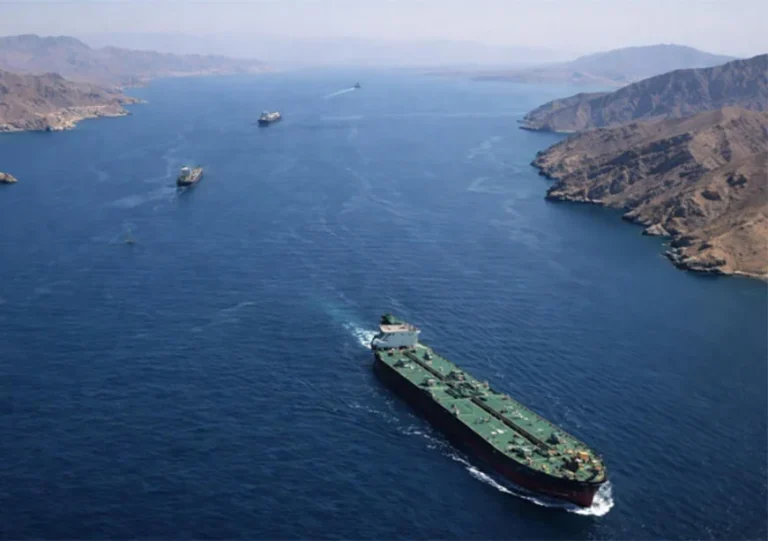
Iran’s parliament has moved to strengthen Tehran’s control over shipping through the strategic Strait of Hormuz, approving a provision that would allow the country to charge vessels from countries it authorises to transit the waterway, as the United States prepares to intensify economic pressure on Tehran.
The development came as Iran’s newly appointed Supreme National Security Council secretary, Mohsen Rezaei, issued a stark warning to Gulf countries against joining Washington’s economic campaign, threatening that Tehran would prevent oil from leaving the Persian Gulf if regional states supported the US.
The moves have further raised the stakes in the conflict between Iran and the United States, with shipping through the Strait of Hormuz already severely disrupted and global energy markets exposed to the possibility of prolonged supply constraints.
The Iranian parliament’s National Security and Foreign Policy Commission approved Article 3 of a proposed law on the security and development of the Strait of Hormuz.
The provision would permit Tehran to collect fees from vessels belonging to countries that Iran authorises to pass through the waterway.
The proposed charges would cover maritime and navigation services, environmental services, fuel supplies under special circumstances, insurance, safety and security services, as well as other services provided to vessels during transit.
Trump Says US Will Guide Ships Through Strait Of Hormuz Under ‘Project Freedom’
Commission spokesperson Hassan Qashqavi said the authorised vessels would be required to pay for the services.
“Based on Article 3, a fee will be charged for services including maritime, environmental, fuelling under special conditions, insurance, safety, and other services provided in the Strait of Hormuz,” he said. The payments could be made in Iranian rials or another currency designated by Tehran.
The measure is contained in a proposed “Strategic Action Plan to Ensure the Security and Development of the Strait of Hormuz,” with Iranian state media reporting that the parliamentary commission approved the provision on Sunday.
However, the proposal must still be considered by the full parliament before being forwarded to the Guardian Council, which reviews legislation for compliance with Iran’s Constitution and Islamic principles.
Where disagreements remain between parliament and the Guardian Council, the Expediency Council could be called upon to resolve them.
Qashqavi maintained that the proposed legislation recognised freedom of navigation under international law while also protecting the sovereignty and security interests of countries bordering the Strait of Hormuz.
He referred to the 1982 United Nations Convention on the Law of the Sea and cited Oman’s position on the relationship between international maritime rules and national sovereignty.
“The Persian Gulf and the Strait of Hormuz have their own rules and conditions, and in this regard, after accepting the 1982 Convention on the Law of the Sea, the country of Oman immediately issued a political declaration emphasising that the provisions of this convention should not violate the country’s national sovereignty and national security,” he said.
The proposed fee regime comes at a time when Iran is already exercising greater control over access to the waterway.
Tehran has allowed some vessels to transit the strait while restricting wider commercial movement. It recently granted permission for a number of Iraqi oil tankers to cross Hormuz, underscoring the selective nature of access during the conflict.
Rezaei Threatens Gulf States
As Tehran moved to formalise its control over the waterway, Iran’s security chief, Rezaei, warned Gulf countries against supporting Washington’s economic campaign.
“If the countries surrounding Iran join the Americans in their economic war, not a drop of oil will leave the Persian Gulf and the Strait of Hormuz,” Rezaei said, according to Iran’s Tasnim news agency.
“We will also target other oil export routes from the Persian Gulf,” he added.
The warning came as President Donald Trump’s administration prepared to move the conflict into a new phase centred on economic pressure, sanctions and restrictions on countries and companies continuing to trade with Iran.
Rezaei also criticised Trump’s handling of the conflict, arguing that the US attacks had increased global interest in acquiring nuclear weapons.
“Trump’s recklessness, with his attacks on Iran, has increased the desire of people around the world to acquire nuclear weapons, especially when they saw that membership in the International Atomic Energy Agency and the (Nuclear Nonproliferation Treaty) NPT was ineffective in preventing attacks from the United States,” he said.
“Trump has created nuclear insecurity instead of nuclear security,” he added.
Rezaei said Iran had accepted international nuclear safeguards, remained a member of the NPT and complied with inspections.
“Iran is the only country that is ahead of all other countries in its commitment to nuclear regulations,” he said.