


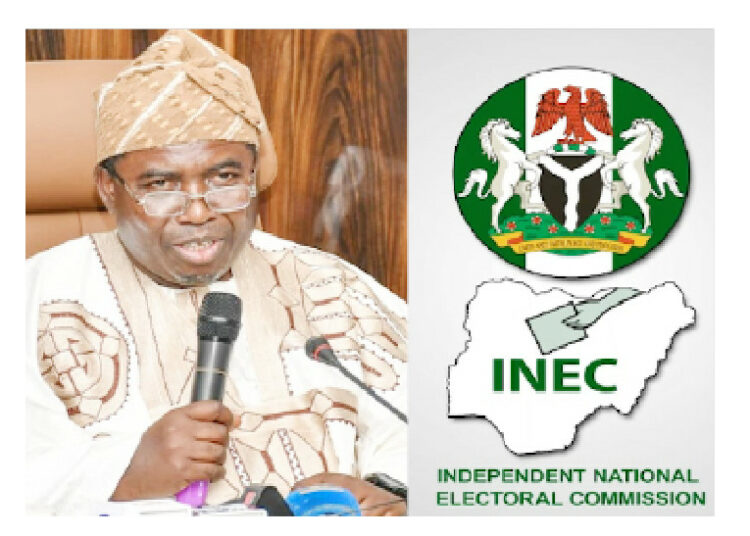
The Independent National Electoral Commission (INEC) says it has not yet received the full judgment of the Federal High Court that nullified major parts of its revised timetable for the 2027 general elections, insisting it cannot take any official position until the ruling is studied.
The court decision has triggered mixed reactions among political parties. While the African Democratic Congress (ADC) described the judgment as a validation of its position, the Peoples Democratic Party (PDP) called it a relief. However, the Nigeria Democratic Congress (NDC) warned that the ruling could destabilise opposition parties and create fresh internal crises.
The controversy comes at a time when INEC is also facing questions over the credibility of the APC presidential primary, which produced over 10.9 million votes for President Bola Tinubu — more than the total votes he secured nationwide during the 2023 general election. Concerns intensified after a viral video from the ward of Deputy Speaker Benjamin Kalu in Abia State appeared to show vote figures rising sharply within seconds despite a small number of voters present. INEC has yet to respond publicly to the video.
Speaking, INEC Deputy Director of Publicity, Wilfred Ifogah, said the commission was still waiting to obtain the court judgment delivered by Justice M.G. Umar in Suit No. FHC/ABJ/CS/517/2026.
According to him, the commission cannot decide whether to appeal the ruling or adjust its timetable until the judgment is fully reviewed. INEC Director of Voter Education and Publicity, Victoria Eta-Messi, had earlier expressed a similar position.
The ADC welcomed the ruling, insisting it confirmed the party’s argument that INEC’s guidelines contradicted both the Constitution and the Electoral Act. ADC spokesman Bolaji Abdullahi said the judgment created more flexibility for political parties, although the party would not alter its own timetable.
He added that the ADC still expects defections from the ruling APC in the coming weeks, suggesting the judgment could encourage dissatisfied politicians to switch parties.
The Tanimu Turaki-led faction of the PDP also praised the ruling, describing it as a “breather” that would allow more people to participate in the party’s internal processes.
PDP spokesman Ini Ememobong argued that parts of the Electoral Act 2026 conflict with the Constitution and accused INEC of tightening timelines beyond what the law intended. He said the judgment would give political parties more time to organise primaries and accommodate aspiring candidates if INEC chooses not to appeal.
Ememobong also defended broader political participation, arguing that individuals should be free to associate with multiple political groups provided they do not contest elections on different platforms simultaneously.
In contrast, the Abdulrahman Mohammed-led PDP faction, currently recognised by INEC, adopted a more cautious approach. The faction said it would wait for a detailed legal review before making any official comment on the judgment.
The Nigeria Democratic Congress (NDC) expressed the strongest concerns about the ruling. Party chieftain Ladipo Johnson warned that the judgment could become a “Greek Gift” for opposition parties.
According to Johnson, many opposition leaders fear that politicians who lose APC primaries may take advantage of the extended timetable to defect to rival parties, potentially causing internal divisions and leadership struggles.
He warned that such defectors could arrive with their own political loyalists and financial influence, creating instability within smaller opposition parties that have already settled their internal arrangements.
The differing reactions highlight the varying political calculations among the parties. While the ADC sees the ruling as an opportunity to attract influential APC defectors, the PDP views it as extra time to strengthen internal processes. The NDC, however, believes the judgment could expose opposition parties to infiltration and conflict.
INEC now faces mounting pressure over both the court ruling and questions surrounding the APC primary results. Critics argue that the commission’s silence on the controversial vote figures and its delayed response to the judgment create the impression that it is struggling to assert its independence.
The commission’s next move whether to appeal the ruling or adjust its timetable is expected to shape the political landscape ahead of the 2027 general elections.