


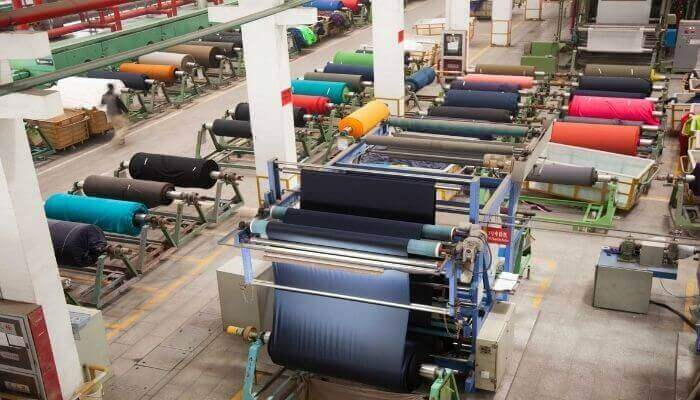
India is ramping up support for Nigeria’s textile industry revival, aiming to reduce reliance on massive imports and rebuild a sector that once employed over 500,000 people directly.
The push came at the India-Nigeria Textile, Trade and Investment B2B Forum, hosted by the High Commission of India in Abuja alongside the Abuja Chamber of Commerce and Industry (ACCI) Trade Centre and partners.
Data from the National Bureau of Statistics (NBS) showed that Nigeria’s textile and apparel imports surged to N1.06 trillion in 2025—up from N726.18 billion in 2024 and N377.47 billion in 2023—while exports plummeted from N36.98 billion in 2024 to just N16.55 billion in 2025.
Held on Thursday at the Indian High Commission, the event, themed “Reviving the Textile Industry in Nigeria”, spotlighted cotton production, manufacturing, garment chains, machinery, technology, trade, market access, and skills development.
High Commissioner Abhishek Singh stressed the forum’s role in revitalising Nigeria’s once-thriving industry, which he said would add economic value, create jobs, and boost competitiveness.
The focus was on areas such as cotton production, textile manufacturing, garment value chains, machinery, technology, trade, market access, and skills development, which are at the centre of Nigeria’s quest for industrialisation.
President of the Abuja Chamber of Commerce and Industry, Chief Emeka Obegolu, in his remarks, said the revival has become incumbent on all stakeholders, both public and private, as textiles represent far more than fabric but jobs, innovation, cultural identity, and economic transformation.
Represented by the director general of ACCI, Agabaidu Jideani, Obegolu noted ACCI’s strategic interest in the textile sector as the voice of the private sector in Nigeria’s Federal Capital Territory and beyond.
He said that ACCI’s interest in textiles is deliberate and strategic for the value chain moving from cotton production to finished garments, strengthening backward integration, particularly in cotton farming and sourcing and reducing import dependence while ensuring sustainability.
According to him, “the textile sector offers immense potential for job creation and SME development. From tailoring clusters to fashion enterprises, this industry can absorb thousands of young Nigerians and empower women entrepreneurs across the country.
“ACCI continues to champion the promotion of “Made-in-Nigeria” textiles. Our rich heritage, Ankara, Adire, Aso-oke, positions us uniquely to build a globally recognized textile identity rooted in culture and creativity.”
He described Nigeria–India partnership as a pathway to transformation, adding that it brings together Nigeria and India, two countries with strong historical ties and complementary strengths.
“India’s global leadership in textile machinery, technology, and manufacturing expertise presents a valuable opportunity for Nigeria. Through this partnership, we can bridge critical gaps in textile machinery and industrial technology, facilitate technology transfer and capacity building, unlock financing opportunities for textile investments and expand access to international markets and export channels”
President of the Nigerian Association of Chambers of Commerce, Industry, Mines, and Agriculture (NACCIMA) Engr. Jani Ibrahim, in his remarks, lamented the pathetic state of the textile industry in Nigeria, which, at its height in the 1980s, was among Nigeria’s largest manufacturing employers, adding that the sorry state of the industry has made Nigeria import-dependent and requires urgent revival.
“Nigeria imported textiles and textile articles worth approximately N1.06 trillion in 2025, up from N726.18 billion in 2024 and N377.47 billion in 2023, according to NBS-referenced trade data. Our domestic demand is robust—but far too much of the value it generates is being captured outside our economy.
“Even more telling, Nigeria’s textile exports reportedly declined from N36.98 billion in 2024 to N16.55 billion in 2025, even as imports rose sharply. This is not a mere trade statistic; it is an urgent call to rebuild productive capacity. Every naira spent on imported fabric represents a missed opportunity for Nigerian cotton farmers, ginners, spinners, weavers, dyers, garment makers, logistics providers, designers, exporters, and young entrepreneurs across the country,” he said.
He added that India offers a compelling partnership pathway, saying “India is one of the world’s foremost textile economies—the sixth largest exporter of textiles and apparel globally in 2023, with textiles and apparel accounting for 8.21 per cent of India’s total exports in 2023–24.
He therefore called for a productive partnership with India, one that connects “Indian machinery suppliers, textile technology firms, garment manufacturers, technical training institutions, and investors with Nigerian businesses through concrete joint ventures. We need arrangements that translate Indian experience into Nigerian industrial opportunity.
“We must invest seriously in skills. Textile revival will not happen without trained machine operators, designers, pattern cutters, technicians, quality controllers, and production managers at scale. We must expand access to finance. Textile manufacturing is capital-intensive. Patient finance, credit guarantees, equipment leasing, and targeted industrial funds are not optional—they are essential,” he said.
In his keynote address, ACCI first deputy president and national vice president (India) of NACCIMA, Prof Adesoji Adesugba, said Nigeria’s textile use to provide direct jobs for over 500, 000 people at its peak but completely deteriorated in the preceding years due to poor policies, lack of finance, poor power supply among others.
He therefore called for proper policy execution, discipline, continuity and collaboration as the only ways to restore the sector to its former glory.