
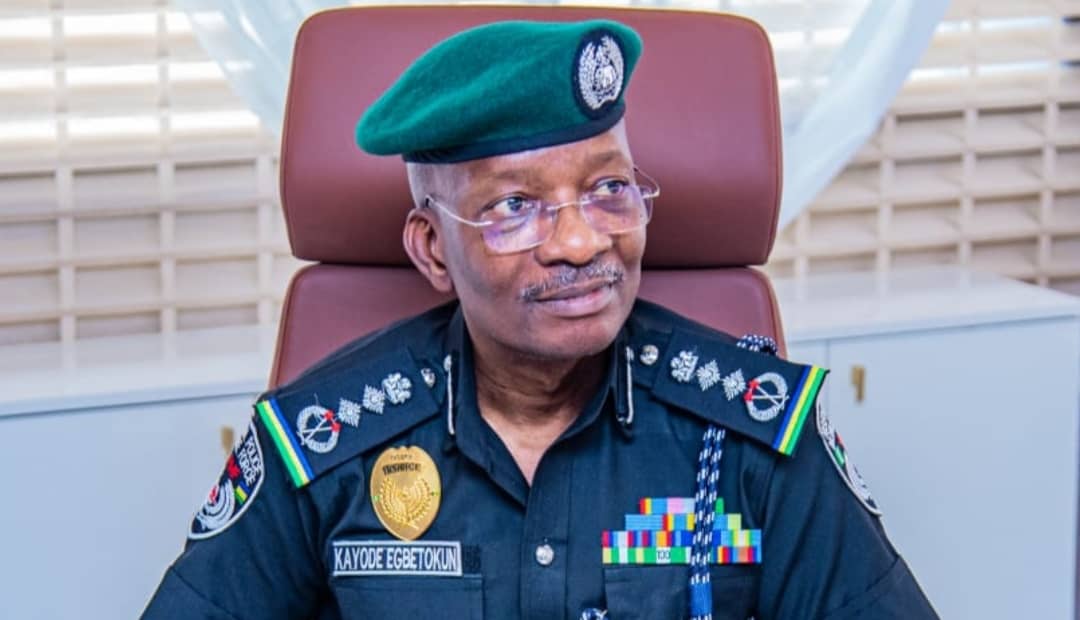
The Inspector-General of Police, Kayode Egbetokun, has dismissed allegations that security agencies, particularly the police, manipulate electoral outcomes in Nigeria.
Speaking at the third National Democracy Stakeholders Summit held in Abuja on Monday, the police chief described such claims as unfounded and damaging to the credibility of security institutions.
Egbetokun, represented at the event by the Commissioner of Police for the Federal Capital Territory, Adewale Ajao, stressed that the Nigeria Police Force remains a neutral entity during elections, with responsibilities limited to ensuring peace and protecting electoral infrastructure.
“The idea that the police are involved in rigging is pure imagination,” he said. “We are not partisans, we are not umpires. We don’t count votes; we only monitor the process while INEC does the collation.”
The comments come against the backdrop of persistent public suspicion and tension following Nigeria’s 2023 general elections, during which widespread accusations of vote suppression, rigging, and violence dominated national discourse. The All Progressives Congress (APC) candidate, Bola Ahmed Tinubu, emerged victorious with 8,794,726 votes, ahead of the Peoples Democratic Party’s Atiku Abubakar and the Labour Party’s Peter Obi, who garnered 6,984,520 and 6,101,533 votes respectively.
Both opposition candidates rejected the outcome, alleging electoral malpractice and questioning the integrity of the process.
Egbetokun acknowledged the public concerns but maintained that the police had been undergoing institutional reforms aimed at strengthening professionalism and democratic accountability.
“We have renewed inter-agency synergy, including with INEC, civil society organisations, and the media,” he explained. “Our officers are undergoing continuous training to keep them aligned with democratic standards. I believe the results are becoming evident in off-cycle elections.”
Turning to the increasingly polarising debate on gun ownership, IGP Egbetokun warned against the push for liberalising arms possession laws. While some citizens argue for the right to bear arms as a means of self-protection, Egbetokun cautioned that such measures could backfire.
“You can’t solve violence with violence,” he said. “The solution lies in dialogue, tolerance, and mutual surveillance. Armed citizenry will only compound our security challenges.”
He urged Nigerians to learn from global examples where arming civilians failed to produce lasting peace.
“Insecurity is a global crisis, and Nigeria is having its fair share. The answer is collaboration, not more weapons on the streets,” he added.