


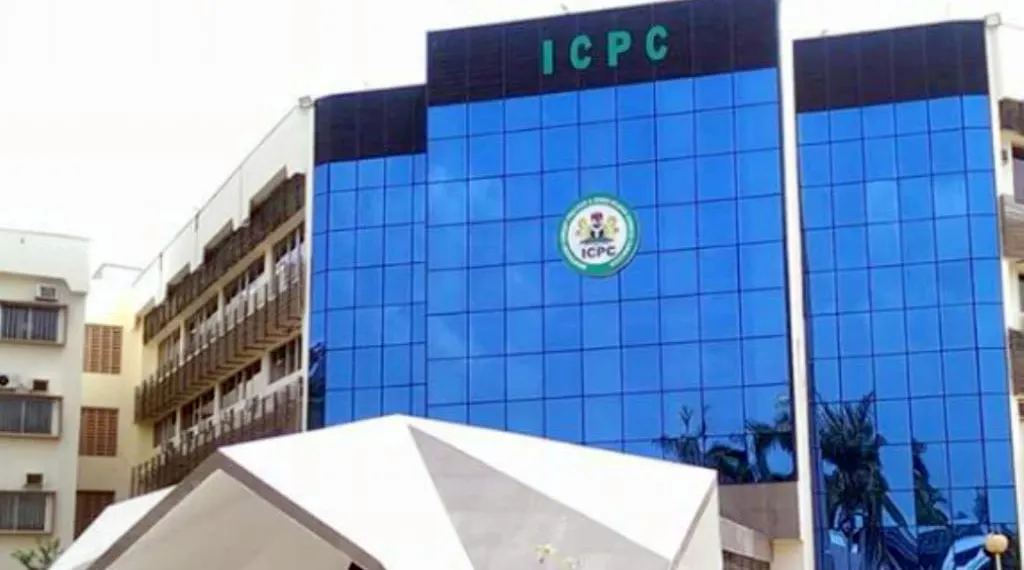
Nigeria’s anti-graft watchdog has begun tracking road contracts worth ₦36 trillion across the 36 states and the Federal Capital Territory, in what the Independent Corrupt Practices and Other Related Offences Commission (ICPC) described as the largest project-monitoring exercise in the country’s history.
ICPC Chairman, Dr Musa Adamu Aliyu (SAN), raised the alarm in that the scale of procurement corruption uncovered in recent years shows that Nigeria’s development will remain stagnant unless transparency becomes the foundation of public contracting.
Aliyu, represented by the Commission’s Secretary, Sir Clifford Okwudiri Oparaodu, spoke at a one-day Special Engagement for Directors and Heads of Procurement in Ministries, Departments and Agencies (MDAs), held at the Commission’s headquarters in Abuja.
Anchoring his warning on the staggering value of ongoing road contracts now under ICPC scrutiny, Aliyu said corruption in procurement remains the single biggest obstacle to Nigeria’s progress.
“Public procurement consumes between 10 and 25 per cent of Nigeria’s GDP. It is the point where budgets become real projects, or disappear into private pockets,” he said.
The ICPC boss disclosed that the Commission, working with the Federal Ministry of Works, is currently tracking road projects nationwide with cumulative contract sums totalling ₦36 trillion, noting that early findings show gaps that enable inflation, substandard execution and abandonment.
He said the scale of the ongoing review underscores the government’s determination to tackle procurement fraud beyond isolated cases.
According to him, contract splitting, over-invoicing by up to 300 per cent, phantom projects, round-tripping of identical contracts, and collusion between officials and contractors remain rampant despite existing regulations.
“Project abandonment has become a national crisis. Mobilisation funds vanish; projects sited on private properties; vehicles and equipment are converted to personal use. These are not anomalies, they are patterns,” he added.
Aliyu highlighted the Commission’s Constituency and Executive Projects Tracking Initiative (CEPTI), launched in 2019, which physically monitors projects across communities.
He said CEPTI had compelled hundreds of contractors to return to sites, restored schools, ensured functioning health centres and water facilities, and illuminated rural communities with solar streetlights.
But more importantly, he said, CEPTI exposed structural corruption often concealed under official paperwork, making the current nationwide road-tracking exercise even more urgent.
Aliyu insisted that transparency remains the only viable antidote to procurement fraud.
He listed key disclosure mechanisms that MDAs must adopt, including: publication of annual procurement plans, bidding criteria, list of all bidders, contract award details, progress reports with evidence, and final handover certificates.
“Transparency is not optional. It is essential to national development,” he said.
He also called for open competitive bidding as the default process, multi-stakeholder evaluation panels, capacity verification of contractors and standardised contract templates with enforceable penalties.
Aliyu described e-procurement as a transformative tool capable of eliminating face-to-face interactions, creating immutable audit trails and enabling real-time monitoring.
However, he cautioned that technology alone cannot combat corruption without political will, funding, capacity building and effective change management.
“Corruption thrives in darkness; let us flood the system with light. Millions of Nigerians waiting for roads, water, healthcare and electricity depend on our collective action,” Aliyu said.
Director-General of the Bureau of Public Procurement (BPP), Dr Adebowale Adedokun, praised ICPC’s enforcement efforts and announced that the federal government had approved a new Debarment Policy empowering agencies to blacklist contractors who abandon or deliver substandard projects.
“This is the first time Nigeria will formally bar violators from future contracts,” he said, adding that procurement audits would be intensified in collaboration with ICPC.
Director-General of the Nigerian Building and Road Research Institute (NBRRI), Prof. Samson Duna, commended ICPC for instilling discipline across MDAs and called for more capacity-building to complement compliance.
Chairman of the House Committee on Anti-Corruption, Hon. Kayode Akiolu, praised the Commission’s shift toward prevention, warning that many practices Nigerians consider “normal” are actually corrupt acts.
He said the National Assembly would support reforms, including improved testing laboratories for quality assurance in construction.
Earlier, ICPC Secretary Sir Oparaodu reminded procurement officers of their responsibility to ensure value for money, especially under new monetary thresholds.
He urged MDAs to prioritise transparency in needs assessment, bidding and project implementation.