
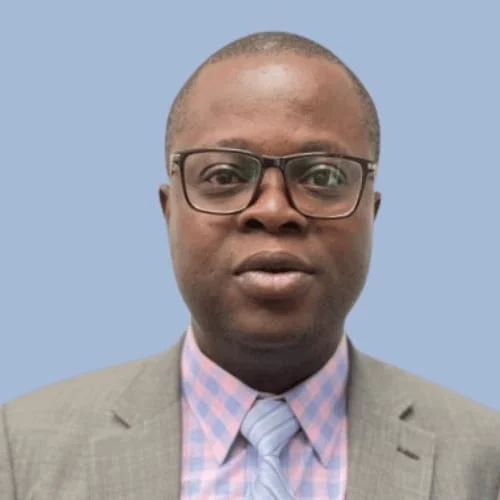
A constitutional lawyer, Adebisi Adeyemo, has stated that no Nigerian citizen can be barred from participating in elective politics based on chieftaincy expectations or eligibility for a traditional stool.
The position comes amid concerns over alleged administrative and customary attempts to restrict the political ambitions of high chiefs in Oyo State, including Bolaji Adewoyin, Sarafadeen Alli, and Kola Babalola.
The Oyo State Governor, Seyi Makinde, is scheduled to formally present the staff of office to Adewoyin, Alli, and Babalola as newly elevated crown-wearing Obas in Ibadanland.
However, the Olubadan of Ibadanland, Oba Rashidi Ladoja, on Thursday affirmed that the trio had informed him that they would not be available for the planned coronation ceremony.
In a statement on Friday, Adeyemo stressed that the 1999 Constitution remains the supreme legal authority on matters of political participation, regardless of chieftaincy attainment.
Citing Section 1 of the Constitution, the legal expert emphasised that the Constitution overrides all other authorities and persons, rendering any action inconsistent with its provisions null and void.
He further referenced Sections 65 and 106, which guarantee the rights of qualified citizens to contest elective offices, noting that Sections 66 and 107 clearly outline the only grounds for disqualification, none of which includes chieftaincy status or expectations.
“Any attempt to introduce additional disqualification criteria outside the Constitution is legally untenable,” Adeyemo stated.
Adeyemo also addressed the role of the Ministry of Local Government and Chieftaincy Matters, asserting that the ministry lacks the constitutional authority to restrict political rights or enforce customary expectations as binding legal obligations.
According to him, any such interference would be considered ultra vires, constitutionally invalid, and subject to judicial review.
Drawing a legal distinction, the lawyer explained that eligibility for a traditional stool does not equate to a legal obligation.
“Individuals who are merely eligible or nominated for a throne retain full political rights. Only those who have been formally installed as traditional rulers may be subject to expectations of political neutrality,” he clarified.
Adeyemo reinforced his argument with historical examples demonstrating the coexistence of traditional status and political participation.
He cited Oba Adesoji Aderemi, the Ooni of Ife, who served as Governor of the Western Region from 1960 to 1962 while maintaining his traditional position, illustrating that traditional authority does not conflict with political engagement.
He also referenced MKO Abiola, who held multiple chieftaincy titles yet contested and is widely regarded as having won the 1993 presidential election.
Similarly, Nnamdi Azikiwe, he noted, held several traditional titles and rose to become Nigeria’s first President without any constitutional impediment.
In addition, Oba Adedotun Aremu Gbadebo was cited as an example of personal choice in accepting traditional rulership, having voluntarily ascended the throne after a distinguished career in public service.
Applying these principles, Adeyemo maintained that Adewoyin, Alli, and Babalola retain their full constitutional rights to contest elections, participate in governance, and associate politically.
He described any attempt to restrict these rights based on chieftaincy expectations as legally unfounded, administratively improper, and constitutionally void.
The legal expert urged stakeholders in Oyo State to respect constitutional provisions and avoid actions that could generate unnecessary tension.
“Political disagreements must remain within lawful bounds, and misinterpretation of the law must not be used as a tool for conflict,” he cautioned.
Adeyemo concluded that the Constitution provides no ambiguity on the issue.
“Chieftaincy expectations cannot be imposed as legal obligations. Political participation is a fundamental constitutional right, and any attempt to curtail it outside the provisions of the Constitution is null and void,” he said.
Quoting former United States President Abraham Lincoln, he added, “Elections belong to the people. It is their decision.”
He reiterated that the rights of the affected high chiefs remain fully protected under the law and called for strict adherence to constitutional principles in the interest of peace, stability, and democratic progress.