
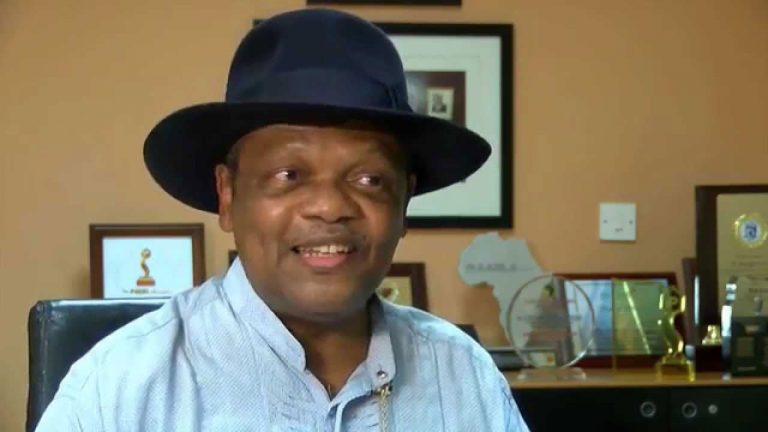
The President of Anap Foundation and founder of Stanbic IBTC Bank, Mr. Atedo Peterside has criticised recent Supreme Court rulings on the ADC’s leadership disputes, arguing that they raise concerns about consistency and fairness in the judiciary, and insisting that access to swift justice in Nigeria remains uneven and largely dependent on privilege.
In an interview on Friday, Peterside alleged that ordinary Nigerians face long delays in court processes, contrasting them with privileged individuals who, in his view, receive faster judicial attention.
“I heard about this Supreme Court ruling, but with all due respect, I don’t trust our judiciar,” he stated.
Adding, he said: “All I can tell you is that only some Nigerians get prompt hearing from our judiciary. The rest of us, including you and I, if we brought a similar case as the fellow from ADC that came to court, you’d be lucky to get a hearing in even six months. An ordinary Nigerian cannot go to court and get a quick hearing on a matter like this. Only people who are highly privileged or sponsored by the powers that be get all this attention and quick response,” he lamented.
Speaking on the heightened attention around the ADC, Peterside said the ongoing disputes and court-related developments have unintentionally boosted the party’s visibility and public sympathy.
“Nigerians historically have a bit of a David and Goliath mentality. When they see an INEC or federal government agencies appearing to bully one of the opposition parties, it increases their sympathy for that opposition party. The worst thing that APC or INEC could have done to ADC was to ignore them. Then they would have been struggling to tell the nation that they are the most credible opposition party. But by going after them in this way, you make everybody believe that there’s something about the ADC that warrants all this attention.”
Addressing opposition politics, Peterside said the PDP has weakened after the exit of Atiku Abubakar and David Mark, adding that opposition power has now shifted elsewhere— the ADC.
“As soon as the major presidential candidates from the last election who were in opposition—Atiku, Peter Obi, Kwankwaso—all gathered and joined one party, that party became the major opposition party. So I think PDP, with Atiku having left the party and David Mark leaving the party, PDP, forget about what the court says, PDP is no longer the PDP of the past. Whatever PDP had has probably transmuted into ADC. That’s my own estimation,” he stated.
Peterside, sharing his opinion about the 2027 presidential election, said the race is shaping into a two-horse contest between the APC and ADC, adding that ADC has emerged as the main opposition platform.
“If I were a betting man, I would say it’s a two-horse race between APC and ADC,” he said.
Warning that Nigeria’s democratic stability depends on credible political competition, Peterside said any move toward a single dominant party system would undermine national stability. He cautioned that restricting meaningful electoral contest could trigger serious consequences.
“I think if this government and INEC make the mistake of going into a general election with only one major party, I don’t want to predict what will happen to the nation, but all bets are off in terms of stability. That’s my assessment. So I would advise whoever has ears to listen— If you want stability in a political system, you have to give a semblance, make people believe that some change is possible, that you’re willing to allow some contest, meaningful contest. Once you make it clear that for whatever reason or through whatever manipulation of the system you won’t allow that, then all bets are off. We’ve seen it before. We saw when Abacha created an environment where he was heading to be the sole candidate. Those things can’t endure; they won’t endure. So I hope whoever has ears is listening,” Peterside warned.
Speaking on ADC’s membership trends, the Anap president said registration is stronger in northern states like Kaduna, Kano and Adamawa, noting weaker participation in the South-East so far.
“It is the states that are not so sophisticated in terms of technology and all that who are registering the most. So it is like people are being mobilized and are coming out to register in all those states in the Northwest and the Northeast. Of course Kano is probably influenced by Kwankwaso who joined ADC recently. So that is building up as well. I don’t see the influence of Peter Obi. The ‘Obidients’ are educated, sophisticated, but they are not taking part. They are not registering in ADC. I don’t know whether Peter Obi has reached out to them to register or whether they are waiting for the last minute. Because people who are educated sometimes get so clever they want to wait for the very last minute, they want to hear what the court has said. But so far it’s not showing. If I was a betting man and these numbers remain the way they are, it looks as if the ADC has a very strong North influence and not so strong in the South so far. Of course, at the last minute, people can register. You can see 5 million youth decide to register in the last week from the Southeast or from Lagos and the South-South. Of course, that changes everything,” he explained.
Speaking on global oil market tensions, Peterside said Nigeria is unlikely to benefit much from rising oil prices due to forward sales, unless high prices persist for a long period.
“I don’t think Nigeria is going to enjoy a phenomenal windfall from higher oil prices because I think I keep on hearing that a good chunk of our oil was sold forward in all kinds of arrangements involving NNPC. So it’s the party that bought the oil forward who benefits from the upside. Of course, if the high prices stay for a very long period, then we get the benefit.”
He further noted that the immediate impact has been higher domestic fuel costs, particularly aviation fuel, which he said recorded a sharp spike due to limited suppliers and weak regulatory control.
“In Nigeria, aviation fuel prices between the end of February (which was the last day of February when the war began) to the end of March, in Abuja, we are talking about an increase of over 150% in aviation fuel prices. And I know people are always surprised that why is aviation fuel so special? It’s a very simple reason: aviation fuel is almost a natural monopoly or an oligopoly. You have to buy fuel from the people that have the facilities at the airport, and they are always very few. So they can take advantage; also, the person supplying them can take advantage of the situation,” he said.
He added that rising diesel and petrol prices are increasing business costs, concluding that the short-term outlook offers more economic pressure than benefit for Nigeria.
“The other thing, of course, is that even diesel prices, petrol prices have gone up. So many companies are going to witness rising costs. So in the very short term, I don’t see any benefits accruing to Nigeria from this war in Iran. If anything, it’s rising costs for various businesses on account of the war.”
Commenting on the reported exit of Finance Minister Wale Edun, Peterside said it remains unclear whether it was a resignation or dismissal, but confirmed the outcome reflects a leadership change regardless of the label. He said the development points to deeper fiscal pressures in the economy rather than stability.
“It was the same authorities that told us he was sacked that told us that he resigned. I think it’s probably a bit of both because usually, ministers don’t resign until the boss agrees to let them go. So one thing is sure: he has gone. But in any case, the problem with the economy is that there’s a severe fiscal imbalance.
“There’s a serious crisis there. But apart from the revenue—I don’t want to talk about just government—apart from government not having the revenue and therefore we’re witnessing a fiscal imbalance or fiscal crisis, the bigger thing is the number of people being thrown into poverty is increasing all the time. And we also have an income distribution problem,” he highlighted.
Responding to questions on the Tinubu administration’s economic reforms, Peterside reiterated that Nigeria is facing a deep fiscal imbalance that could leave a very large budget deficit if not corrected.
” I think I already mentioned the fiscal imbalance. If we are not careful, this current year, barring a miracle, may finish off with a 35 trillion Naira deficit or something like that,” he warned.
He argued that despite subsidy removal and exchange rate adjustments, government spending remains misaligned with available revenue.
“So the government from the first day was going ahead as if, because they removed fuel subsidy, because they had allowed the Naira to adopt a realistic exchange rate, they could spend all the money. But that’s not really true. They didn’t have the money. And it shows. If they had the money, they would be able to fund all the CAPEX. What people forget is that the way President Buhari’s government funded the fuel subsidy was largely by borrowing.
“So we didn’t have the revenue then, we don’t have the revenue now. Then a combination of state capture and corruption has made them prioritize funny projects. That’s why health will suffer, and defense, military spending… they won’t get what they need, because people are prioritizing what seems to be their own pet projects through state capture and corruption. And then finally, the impact we see is the distorted income distribution,” Peterside said.
In his closing remarks, Peterside called on leaders to cut costs and lead by example, criticising wasteful government spending amid widespread hardship.
“I would beg them and plead with them that let those at the top live by example. Let them begin the belt-tightening right from Aso Rock, right from Abuja, right from the Villa. Let them show that they understand what 130 million Nigerians are going through. They should not exempt themselves from the pain. They should lead by example and stop all this wastage and reckless… we see people going to the airport and 100 cars in a convoy, or 50, and all that. Who’s paying for their fuel? Why are we sending those kinds of signals at a time when 130 million Nigerians are dirt poor? They should tighten their own belt and take it seriously and live by example,” he urged.