

Hungary says it is expelling seven Ukrainian bank workers arrested on Thursday while transporting $80m (£60m) worth of cash and 9kg of gold in cash-transport vehicles to Ukraine.
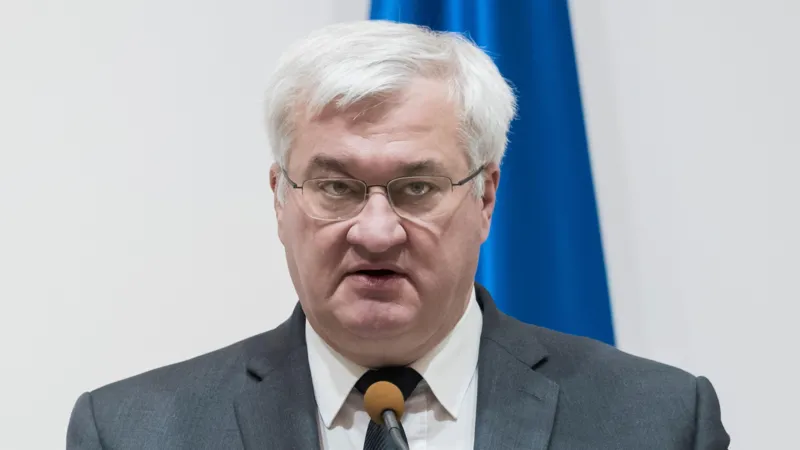
After Ukrainian Foreign Minister Andriy Sybiha accused Budapest of taking the group hostage and stealing money, Hungary’s tax authority said they had been detained on suspicion of money laundering.
Ukraine’s state savings bank, Oschadbank, said they had been part of a regular transport between Austria and Ukraine and were “unjustifiably detained”.
Hungary’s tax authority said it was conducting criminal proceedings and added that the transport was being overseen by a former general of Ukraine’s intelligence service.
“This year alone, more than $900m, €420m and 146 kg of gold bars were transported through the territory of Hungary to Ukraine,” the national tax and customs administration said in a statement on Friday.
It is not yet clear what has happened to the enormous sums of cash and the gold seized on Thursday, but Polish Foreign Minister Radek Sikorski said “they’ve stolen the money”.
Relations between Ukraine and Hungary have deteriorated during Russia’s full-scale invasion of Ukraine and have descended into a war of words over a halt to Russian oil supplies through the Druzhba pipeline in Ukraine.
The arrest of the bank workers comes deep in Hungary’s election campaign, with Prime Minister Viktor Orbán trailing in opinion polls with little more than a month before the vote.
Hungarian reports described how black-clad officials from Hungary’s TEK counter-terrorism centre raided the Ukrainian-registered vehicles on Thursday and then their convoy headed to Budapest.
Sybiha accused Orbán of dragging Ukraine into its “domestic politics and electoral campaign”, adding that Kyiv would not tolerate “this state banditism”.
His opposite number in Budapest, Foreign Minister Péter Szijjártó, asked why such enormous sums were being moved in cash: “If this is truly a transaction between banks, why was it not carried out by transfer?”
Orbán made no mention of the seven bank workers in his regular radio appearance on Friday, although he did say “transit shipments” important to Ukraine would be halted until a row over Russian oil supplies was sorted out.
Orbán, seen as Russia’s closest ally in the EU, has accused Ukraine of deliberately halting Russian oil through the pipeline. Kyiv says the pipeline was damaged in a Russian air strike in January, but Orban says satellite images indicate there is no reason why the pipeline should not be working and has threatened to “force the Ukrainians to restart deliveries”.
Map showing two strands of a pipeline from Russia into Europe in red. One strand goes through Hungary into Ukraine before connecting to another strand going into Russia.
The Hungarian leader has also blocked a €90bn (£78bn) EU aid package seen as vital for Ukraine’s financing in a bid to force the resumption of oil supplies.
Orbán has repeatedly opposed EU funding for Ukraine, arguing it prolongs the war. He has focused much of his election campaign on an anti-Ukraine message.
Last month he ordered increased security for Hungary’s energy infrastructure, making unsubstantiated claims that Kyiv was preparing “further actions to disrupt” the energy system.
Ukrainian President Volodymyr Zelensky has criticised Orbán for blocking the aid package and said on Thursday that the Druzhba pipeline might only become operational again in another four to six weeks.
“To be honest, I would not restore it. This is my position. I expressed it to European leaders… because this is Russian oil,” he told a briefing. “Russians are killing Ukrainians and we have to give oil to Orbán, because he, the poor thing, cannot win the election without this oil.”
The Ukrainian leader also hinted that if Hungary’s prime minister continued to block EU funding for Ukraine, then Ukrainian armed forces would be given his address to “communicate with him in their own language”.
Zelensky’s apparent threat was condemned by Peter Magyar, whose opposition Tisza party is leading in the opinion polls ahead of the 12 April election.
Orbán has said Budapest will use “political and financial tools” to force Ukraine to reopen the pipeline carrying Russian oil to Hungarian refineries.
Druzhba is the main route for delivering Russian oil to Hungary and Slovakia, and shipments of Russian oil to both countries have been cut off since 27 January.
In a separate development this week, Hungary’s foreign minister travelled to Moscow and secured the release of two ethnic Hungarian prisoners of war.
Hungary says the men, who are from Ukraine’s Transcarpathia region, have dual Hungarian and Ukrainian citizenship and has accused Kyiv of conscripting them into the army.
Kyiv has described their transfer to Hungary as a “gross violation of international humanitarian law”.