


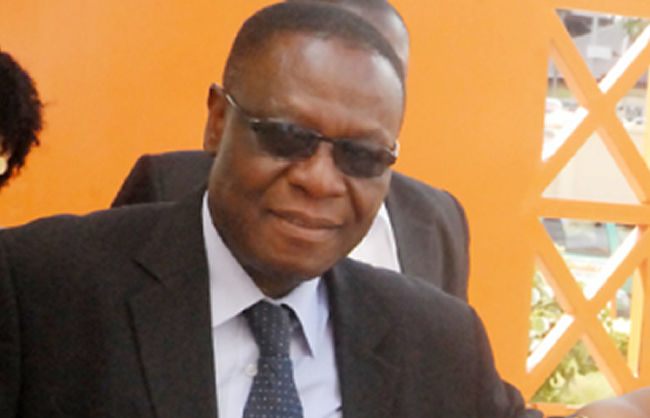
A former Inspector General of Police, Mr Sunday Ehindero, has advised the government on measures to end the recurring killings in Jos, Plateau State.
Ehindero, in an interview with our correspodent, noted that though security agencies were making efforts, they remained overstretched due to the growing security challenges across the country.
He stressed that the police and other security agencies were already deployed nationwide, urging the government to empower, motivate, and properly equip them to function effectively.
Speaking on the need to rejig Nigeria’s security architecture, the former police chief described the current structure as defective and in urgent need of review.
According to him, the existing framework is skewed towards certain agencies, leaving the police and other internal security outfits inadequately positioned to tackle rising insecurity.
Drawing from his experience in office, Ehindero recalled that during his tenure in 2006, when Plateau State witnessed violent incidents in Langtang and Wase, he recommended the establishment of a Mobile Police Squadron in Gagarko.
He said the intervention yielded immediate results, as the area recorded no further incidents throughout his tenure.
Ehindero, therefore, advised that more Mobile Police Squadrons be established in flashpoint areas such as Bokkos and Qua’an Pan in Plateau State.
“My advice is that more Mobile Police Squadrons be established in places like Bokkos and Qua’an Pan. By doing so, we reduce incident response time, which can sometimes be internally generated,” he said.
He added that such squadrons must be adequately equipped with intelligence-gathering tools, drones, and upgraded arms to effectively confront emerging security threats.
The former IG also called for the provision of armoured personnel carriers and operational vehicles to enhance mobility, noting that personnel welfare must be prioritised to boost morale.
He further recommended increased recruitment into the Mobile Police Force, alongside intensified and continuous training.
Ehindero reminded that the mobile police was originally established in 1962 as a striking force to respond swiftly to crises.
On the role of security institutions, he pointed out that the 1999 Constitution clearly defines the responsibilities of both the military and the Police.
He explained that while the military is tasked with defending the country against external aggression and supporting civil authorities when necessary, the Police are primarily responsible for maintaining internal security, including crime prevention and law enforcement.
According to him, the military is only expected to intervene when the police and other agencies are overwhelmed and unable to restore order.
“What should be done is to rejig the security architecture of the country and empower the Police and other security agencies in matters of internal security,” he said.
Sharing operational insights, Ehindero noted that non-lethal methods such as tear gas can be highly effective in disarming violent groups.
“My experience as Commissioner of Police in charge of Mobile Police was that tear gas was more effective in disarming armed carriers than a gun. At the inhalation of tear gas, armed men were disillusioned and easily disarmed and arrested,” he stated.
He also emphasised the need for Nigeria to adopt modern security technologies, particularly drones for surveillance and combat operations.
Citing global practices, Ehindero said drones can be deployed from central command centres to monitor and neutralise threats before they escalate.
He expressed concern about the rising number of casualties among senior military officers in direct combat, questioning the continued reliance on conventional methods.
“Now that our Generals are dying through direct combat with terrorists, is it not time that drones be used for our borders?” he asked.
Ehindero maintained that Nigeria would achieve better security outcomes if the military focuses on external threats, while the Police and other law enforcement agencies take full charge of internal security operations.
He expressed optimism that with proper restructuring, adequate funding, and deployment of modern technology, the country can significantly reduce crime and violence.