


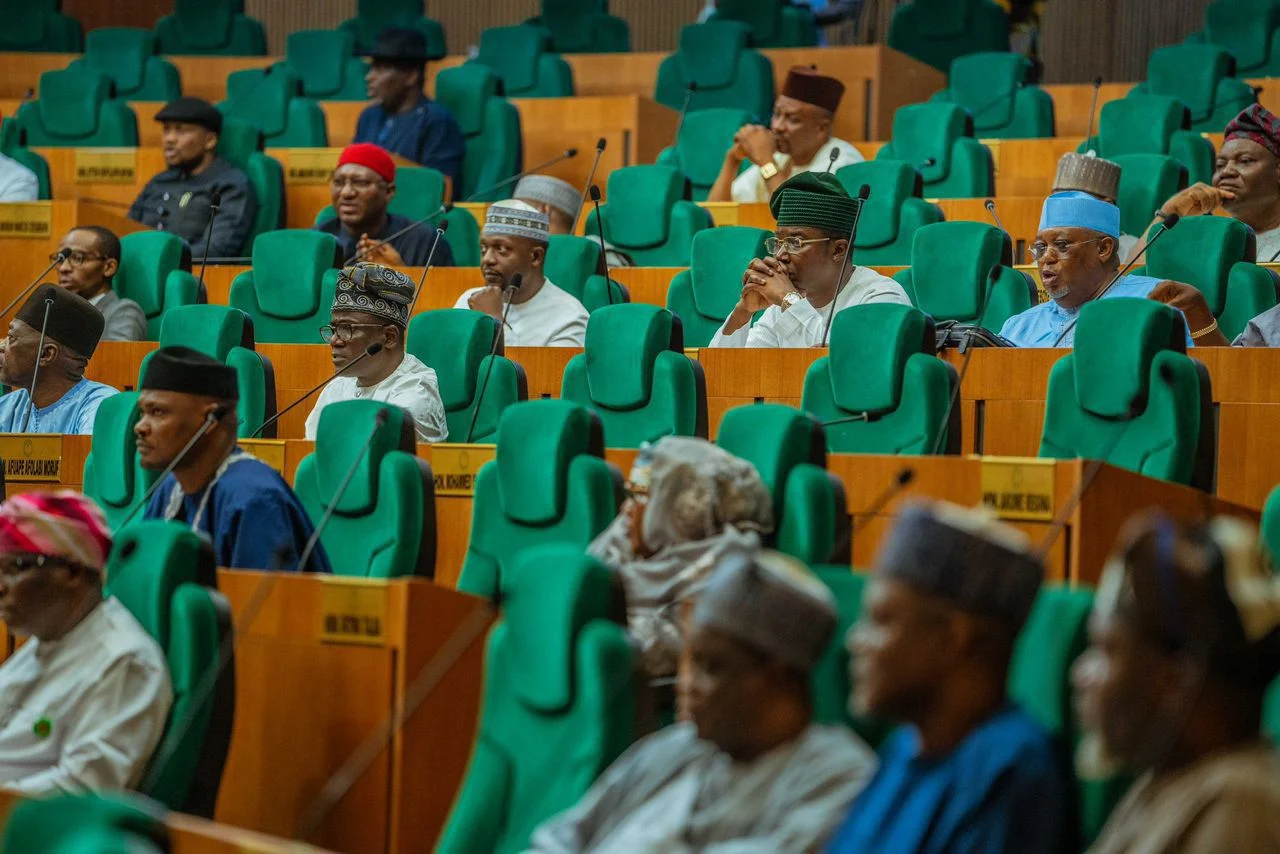
The House of Representatives is planning to introduce stricter regulations in Nigeria’s real estate sector through the proposed establishment of a National Real Estate Regulatory Authority (NRERA), aimed at curbing property fraud, protecting homebuyers and boosting investment in the housing market.
Chairman of the House Committee on Housing and Habitat, Abdulmumini Jibrin, disclosed this on Monday in Abuja during a stakeholders’ conference on the proposed authority, themed, “One Vision, One Ecosystem, One National Housing and Real Estate Plan.”
Jibrin explained that the proposed legislation would address major regulatory challenges in the real estate industry, including overlapping responsibilities among government agencies, weak institutional structures and inadequate consumer protection.
According to him, an assessment conducted by his committee showed that Nigeria had yet to maximise the economic opportunities available in the housing sector due to poor regulation, institutional weaknesses and the absence of a coordinated national framework.
He noted that although the Minister of Housing and Urban Development was responsible for implementing government housing policies, several agencies and institutions operating within the sector fell outside the ministry’s direct control.
“There are enormous challenges. We have a wonderful Minister of Housing. But as the Minister of Housing of the Federal Republic of Nigeria, he does not have jurisdiction over all the agencies and institutions that have to do with housing. There is a link; there is a gap. So, there is duplication of functions,” he said.
The lawmaker explained that the proposed authority would strengthen existing institutions, eliminate regulatory confusion and establish clearly defined responsibilities for stakeholders across the housing value chain.
He added that the problems confronting the sector were not limited to unethical activities by property developers, stressing that prospective homebuyers also needed adequate information and financial awareness before investing in housing projects.
Jibrin observed that some buyers entered into property agreements without properly evaluating their financial capacity, while developers faced challenges such as inflation, changing government policies and other economic pressures that could affect project completion.
He, however, clarified that the proposed authority would not interfere with the constitutional powers of state governments or the statutory responsibilities of professional organisations.
“The bill to create the National Real Estate Regulatory Authority is not going to take over the powers of any state government. We are not going to compete. We are only going to cooperate. And for professional bodies, nobody is taking away your responsibility. It will be protected,” he stated.
He maintained that the authority would focus on strengthening existing government agencies and ensuring they effectively carried out their legal responsibilities.
Meanwhile, the Minister of Housing and Urban Development, Muttaqha Rabe Darma, said the Federal Government was stepping up efforts to address the institutional and structural problems affecting Nigeria’s housing sector.
Darma disclosed that the ministry had previously organised a stakeholders’ engagement in July to examine the country’s housing challenges, with estimates suggesting that Nigeria had a housing deficit exceeding 50 million units.
He also identified limited access to mortgage financing as a major obstacle to homeownership, noting that despite Nigeria’s large population, only a small number of citizens could access mortgage facilities.
The minister explained that although institutions such as the Federal Mortgage Bank and other mortgage organisations existed, the number of mortgages provided annually remained insufficient to meet the country’s housing demand.
While expressing support for the proposed regulatory authority, Darma urged lawmakers and stakeholders to consider placing it under the Ministry of Housing and Urban Development to ensure proper coordination with existing government policies.
He referenced Singapore, Dubai, Malaysia, the United Kingdom and Rwanda as examples of jurisdictions where similar regulatory institutions operate within ministries responsible for housing and the built environment.
Darma further called for effective coordination between the proposed authority, the National Housing Finance Authority and the Federal Government’s ongoing mortgage policy development.
Also speaking, the Managing Director and Chief Executive Officer of the Ministry of Finance Incorporated, Armstrong Ume Takang, urged lawmakers to carefully examine the proposed legislation to prevent conflicts with existing laws and avoid discouraging private-sector investment.
Takang identified potential conflicts involving the Land Use Act, the regulation of professional activities and the possibility of excessive government oversight as major issues requiring attention.
He stressed that the proposed authority should complement existing institutions rather than create additional bureaucratic structures that could increase government spending or complicate business operations.
He also assured stakeholders that the government was willing to collaborate with lawmakers and private-sector operators to establish a transparent, efficient and sustainable regulatory framework for the industry.
In his keynote address, Speaker of the House of Representatives, Tajudeen Abbas, called for the introduction of a digitised property verification system to tackle fraudulent transactions, multiple ownership claims and disputes arising from land and property purchases.
Abbas proposed that the new authority maintain a centralised and verifiable database of property developers, estate agents and real estate projects.
According to him, the system would allow prospective buyers to verify the identities, licences and compliance records of property operators before making financial commitments.
He also recommended that payments made by buyers for eligible off-plan property developments be deposited into protected accounts, with developers permitted to access the funds only after meeting independently verified construction milestones.
The proposed measures are expected to form part of broader efforts to improve transparency, strengthen consumer protection and build confidence among investors in Nigeria’s real estate market.