

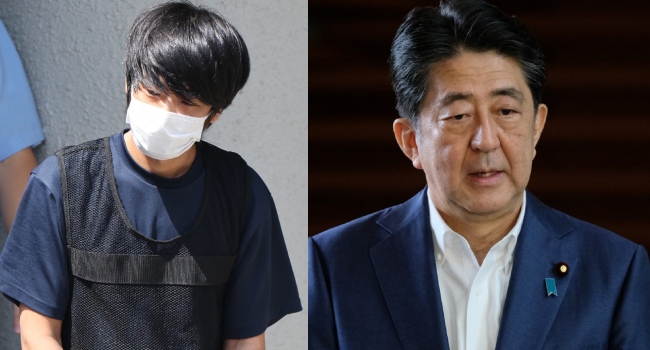
The gunman charged with killing Japan’s former prime minister Shinzo Abe was found guilty Wednesday and jailed for life, as the judge declared the broad-daylight assassination “despicable and extremely malicious”.
The shooting more than three years ago forced a reckoning in a country with little experience of gun violence, and ignited scrutiny of alleged ties between prominent conservative lawmakers and a secretive sect, the Unification Church.
As he handed down the sentence at a court in the city of Nara, judge Shinichi Tanaka said Tetsuya Yamagami, 45, had been “determined” to shoot Abe.
The fact he “shot him from behind and did so when (Abe) was least expecting it” points to the “despicable and extremely malicious” nature of his act, he said.
A queue of people waited Wednesday morning for tickets to enter the courtroom, highlighting intense public interest in the trial.
Yamagami looked down and expressed little emotion during the sentencing for charges including murder and firearms control law violations, after he used a handmade gun to kill Japan’s longest-serving leader during his campaign speech in July 2022.
The defence team of Yamagami — who had admitted to murder at the trial opening in October — told a press conference they had not yet decided whether to appeal, which under Japan’s legal system must be done within two weeks.
Prosecutors had argued that the defendant’s motive to kill Abe was rooted in his desire to besmirch the Unification Church.
The months-long trial highlighted how his mother’s blind donations to the church plunged his family into bankruptcy and how he came to believe “influential politicians” were helping the sect thrive.
Abe had spoken at events organised by some of the church’s groups.
Advertisement
Judge Tanaka said “it is undeniable that the defendant’s upbringing influenced the formation of his personality and his mindset… and that it even played a distant role” in his actions.
But “each criminal action he took was based on nothing but his own decision-making, the process of which deserves strong condemnation”, he added.
Katsuya Nakatani, a 60-year-old member of the public who was in the courtroom, said the judge had convinced him that “even if there was room for extenuating circumstances… opening fire with so many people around is, after all, something that cannot be forgiven”.
“I even began to think it might have been a stroke of luck that only one person died,” he said.
Another man outside court held a banner urging the judge to take Yamagami’s difficult life circumstances “into the fullest consideration”.