


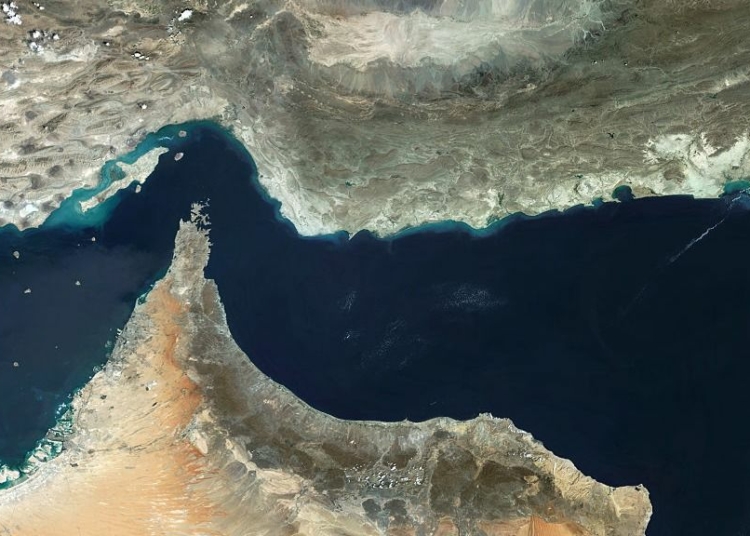
Over forty countries have begun discussions on the future and how to reopen the Strait of Hormuz following Iran’s blockade, a move that has effectively choked off one of the world’s most critical energy corridors.
The urgency reflects the scale of the disruption: roughly 20 per cent of global oil and LNG flows pass through this single chokepoint, and even partial closures can destabilize markets.
The move becomes more pronounced as global energy system is being tested in real time, and the response is starting to shift from reaction to coordination.
At the same time, markets are reacting exactly as expected in a supply shock environment.
The U.S. crude prices surged more than 11 per cent after President Donald Trump signaled further escalation against Iran, underscoring how quickly markets reprice risk when access, not just supply, is threatened.
Diplomatic efforts are also gaining momentum. Bahrain is pushing for a vote on a revised resolution to address the Hormuz crisis, highlighting the growing call for a coordinated international response and the urgency of restoring stability to global energy flows.
But what’s emerging now is something more structural. Leaders in the energy sector are beginning to frame the crisis not as a regional conflict, but as a global economic issue.
The CEO of ADNOC has called for coordinated international action, describing the disruption of Hormuz as a form of economic coercion that affects everything from fuel prices to the cost of food and medicine.
That framing matters. Because this is not just about barrels, it is about access to them.
For decades, energy security has largely been defined by reserves and production capacity. This crisis is exposing a different vulnerability, it’s the ability to move energy where it’s needed.
Even when oil exists, it is becoming harder to deliver because shipping routes are constrained, insurance costs are rising, and transit times are increasing with infrastructure becoming a target
The result is a system where supply disruptions are amplified by logistics. And that changes how both governments and companies need to think about future strategy.
The fact that dozens of countries are coordinating on Hormuz, and that formal diplomatic efforts like Bahrain’s proposed resolution are advancing, signals a shift toward collective energy security frameworks.
This is likely to accelerate several long-term trends:
Countries will push harder for alternative export pathways—pipelines, secondary ports, and non-Hormuz shipping corridors.
Pipelines, storage, and domestic refining capacity become more valuable when global flows are uncertainty.
Import-dependent countries may deepen ties with stable suppliers, even at higher cost, in exchange for reliability.
Multinational responses whether through naval protection, strategic reserves, or policy alignment will become more common.
Crises like this tend to do more than move prices, they reshape priorities. The current disruption is reinforcing a simple but important reality, energy security is no longer just about how much you produce, but about whether you can access it when it matters.
The Hormuz situation may accelerate decisions that were already underway, just not with the same urgency. For governments, it is a wake-up call to secure supply chains, for companies, it is a reminder that logistics and infrastructure are as critical as production, and for investors, it is a signal that value is shifting toward resilience.
Because in today’s market, the biggest risk is not running out of energy, it’s not being able to reach it.