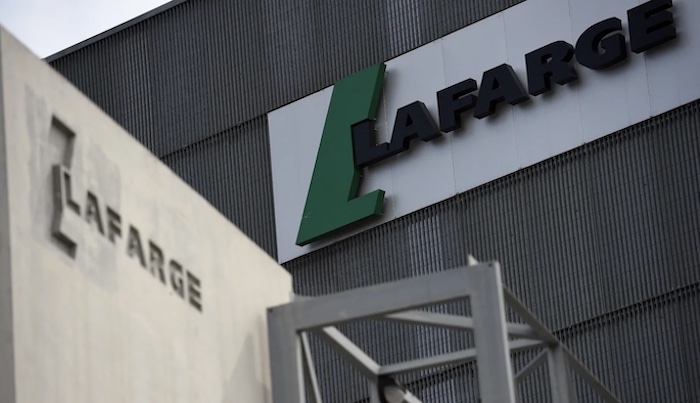
A Paris court on Monday found Lafarge, a subsidiary of cement giant Holcim, guilty of financing terrorism and breaching European sanctions to keep its plant operating in northern Syria during the country’s civil war.
The ruling marks the first time a company has been tried and convicted in France for financing terrorism. Reacting to the judgment, Sherpa and the European Center for Constitutional and Human Rights (ECCHR), the organisations that initiated the lawsuit, described it as “a historic decision in the fight against multinational corporations’ impunity.”
The court also convicted eight former Lafarge employees, including ex-chief executive Bruno Lafont, who was sentenced to six years in prison. His lawyer told Reuters he would appeal the ruling. Christian Herrault, the company’s former deputy managing director, was handed a five-year sentence, with his lawyer similarly confirming plans to appeal.
Judges found that Lafarge paid a total of €5.59 million ($6.54 million) to jihadist groups, including Islamic State and the al Qaeda-affiliated Nusra Front—both designated terrorist organisations by the European Union—between 2013 and September 2014.
Delivering the judgment, presiding judge Isabelle Prévost-Desprez said the payments contributed to strengthening extremist groups responsible for deadly attacks in Syria and beyond.
“It is clear to the court that the sole purpose of the funding of a terrorist organisation was to keep the Syrian plant running for economic reasons. Payments to terrorist entities enabled Lafarge to continue its operations,” she said.
“These payments took the form of a genuine commercial partnership with the Islamic State,” she added.
In Alleged Coup Attempt
The court imposed a €1.125 million ($1.32 million) fine on Lafarge, the maximum penalty available for a corporate entity, in line with prosecutors’ request.
In a statement, the company acknowledged the ruling, saying: “Lafarge SA acknowledges the court’s finding, which concerns a legacy matter involving conduct that occurred more than a decade ago and was in flagrant violation of Lafarge’s Code of Conduct.”
“The decision is an important milestone in Lafarge SA’s actions to address this legacy matter responsibly and the company is reviewing the court’s reasoning,” it added.
Holcim did not immediately respond to requests for comment.
It remains unclear whether the other convicted former employees—who received prison sentences ranging from one to seven years, along with fines—will also appeal.
The case centres on Lafarge’s Jalabiya cement plant in northern Syria, which the company acquired in 2008 for $680 million. The facility began operations in 2010, shortly before the outbreak of the Syrian uprising in 2011.
According to court findings, Lafarge paid more than €800,000 to secure safe passage for employees travelling between the nearby town of Manbij and the plant, crossing the Euphrates River. An additional €1.6 million was used to purchase raw materials from quarries controlled by Islamic State.
Lafarge merged with Switzerland-based Holcim in 2015.
In a related case in the United States, Lafarge pleaded guilty in 2022 to charges that its Syrian subsidiary paid approximately $6 million to Islamic State and the Nusra Front to facilitate movement through checkpoints after the conflict began. The company agreed to pay $778 million in fines and forfeitures as part of that settlement.
Separately, Lafarge remains under investigation in France for alleged complicity in crimes against humanity linked to its operations in Syria.