

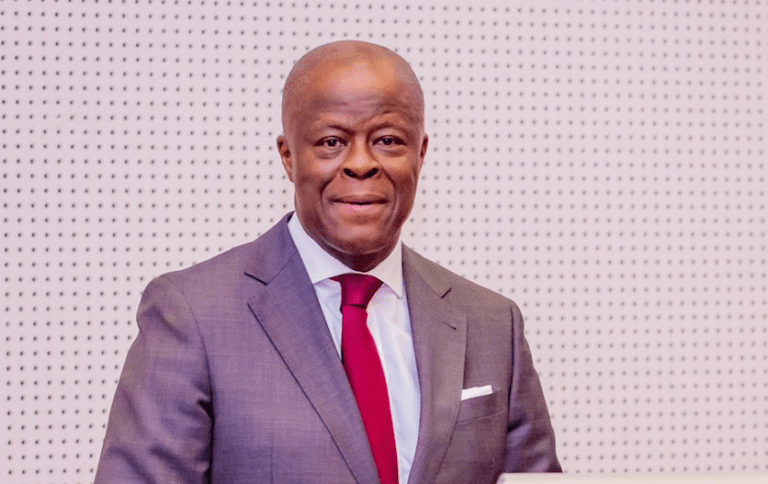
The Minister of Finance and Coordinating Minister of the Economy, Wale Edun, has said that the Federal Government is working on full implementation of the Supreme Court ruling on local government autonomy.
Edun disclosed this while delivering a keynote address at the ongoing Agora Policy Conversation at the Yar’Adua Event Centre in Abuja on Tuesday, stressing that the Federal Government already acknowledged the Supreme Court ruling on federal allocation to democratically elected local governments.
The minister, however, said the compliance with direct payment of the allocation to the local governments is still a work in progress.
He cited the primary healthcare and primary education funding as part of the funding structures that needs to be revised before the allocations can be directly made to the local governments.
“We’re here a year after a landmark Supreme Court ruling that affirmed the autonomy of the 774 local government areas. By this ruling, the judgment thus provides an opportunity for local governments to discharge their mandates as engines of growth and to bring development closer to the people.
“In democracy, rule of law is paramount. The Supreme Court has ruled, and it’s the duty, the obligation, and the determination of the Federal Government of Nigeria to implement the ruling of the Supreme Court. That’s what has been done so far over the last one year or so.
“Firstly, the Supreme Court stated that only local governments that are democratically elected should have access to funds from the federation account.
“Since the ruling, that’s what the government of the Federal Republic of Nigeria has implemented. The latest was Lagos State which had just had its election earlier this month.
“That aspect of the Supreme Court has been implemented determinably.
“The second key item is to ensure direct payment to the local governments. And as we have heard, when you have a policy, the challenge and the requirement to implement it is one that needs determination, political will, capacity, and those items have been brought to bear in terms of implementing the payment.
“What we have to remember is that it’s a work in progress. It’s not sometimes as simple as flicking a switch. For example, in this case, we have a situation of primary healthcare structure, you have primary education funding.
“The current funding structure is one that you need to be very much tinkered with in order for the complete direct payment of funds to each individual local government. These are some of the situations,” he said.
Edun also harped on the significance of the local government administration in the actualisation of President Bola Tinubu’s Renewed Hope Agenda which, according to him, can only be obtained through grassroots development.
While noting that the president’s policies have so far stimulated economic resilience and macroeconomic stability, Edun disclosed that the next phase is to stabilise the economy, curtail inflation, and boost revenue generation.
He said that the current report of the National Bureau of Statistics which pegged the first quarter of Nigeria’s economic growth in 2025 at about 3.4 percent is half of the target.
“The policy determination of President Bola Ahmed Tinubu is to lift millions of Nigeria out of poverty. The key starts with the grassroots.”